

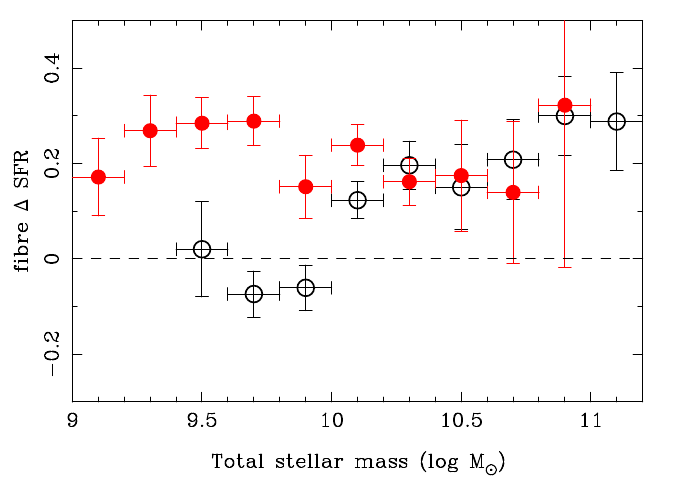
What makes more stars: bars or mergers?
Star formation at the center of galaxies can be triggered by both internal and external processes. In their new work, Ellison et al. argue that the internal processes may be more important.
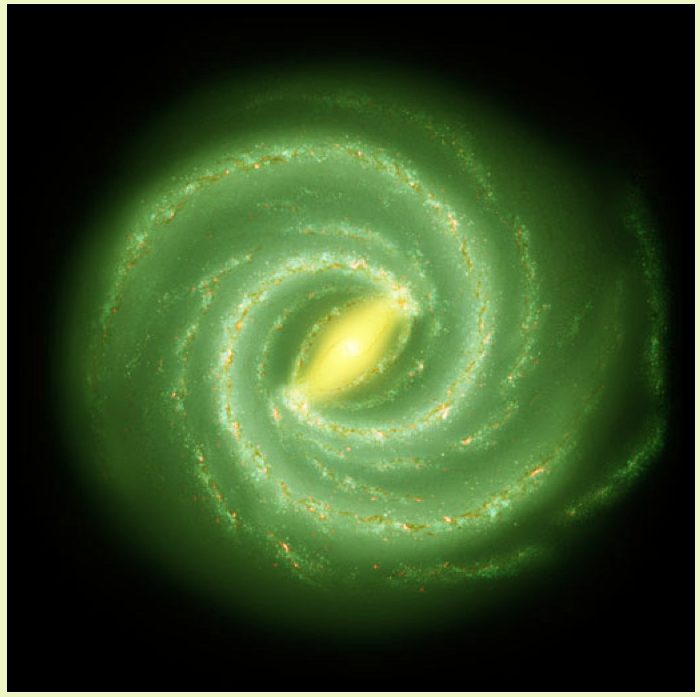
Going Green… On a Galactic Scale!
Our Milky Way seems to be passively evolving towards the red sequence… very efficiently!
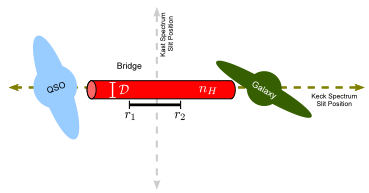
Dissecting a Merger between a Quasar and a ‘Green Valley’ Galaxy
Mergers play an important role in any galaxy’s evolution. A coincidental observation of a quasar and companion galaxy linked by a photoionized gas bridge offers an exclusive look at the merger process at moderate redshift.
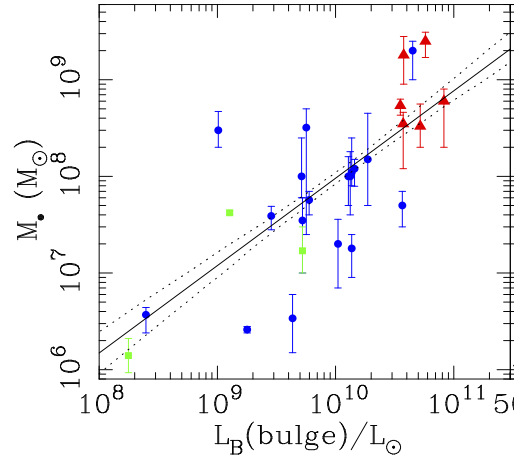
Are quasars and star formation linked?
Using data from Herschel’s science demonstration field, the authors of this paper investigate the connection between star formation and activity of a galaxy’s central engine.
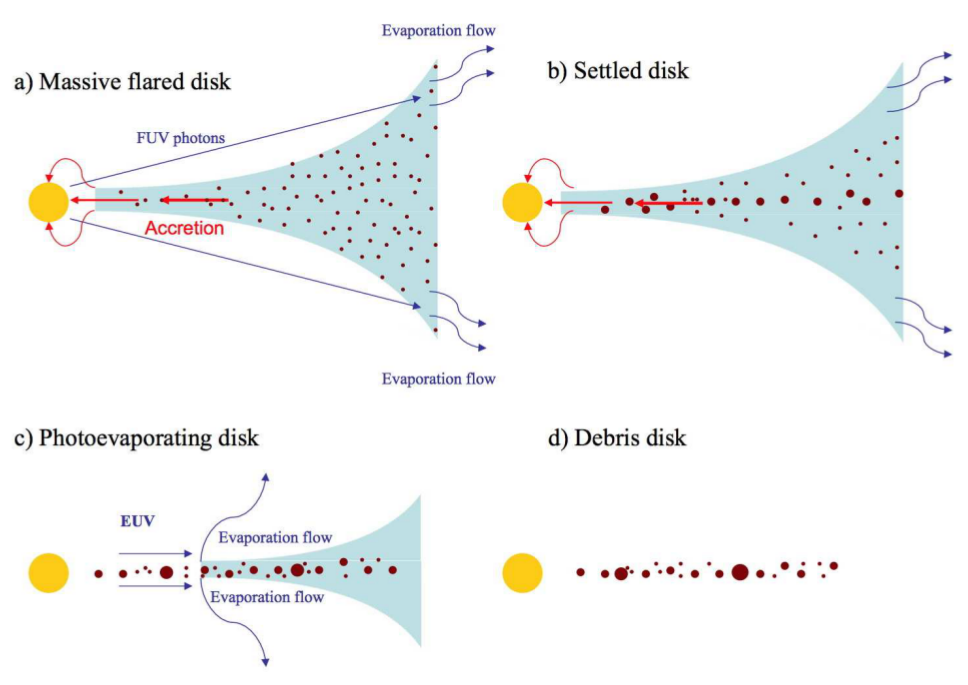
Review Article: Protoplanetary Disks and Their Evolution
In a new review article, Jonathan Williams and Lucas Cieza at the Institute for Astronomy (IfA) describe the life-story of protoplanetary disks from formation from collapsing molecular clouds to the end-state of a planetary system. Infrared telescopes like Spitzer and sub-millimeter radio telescopes like the the James Clerk Maxwell Telescope, the Submillimeter Array (SMA), and the Combined Array for Research in Millimeter Astronomy (CARMA) have greatly revolutionized the study of protoplanetary disks because they can probe the emission at the longer wavelengths where the disk emission is strongest.