by Betsy Mills | Jan 1, 2013 | Daily Paper Summaries
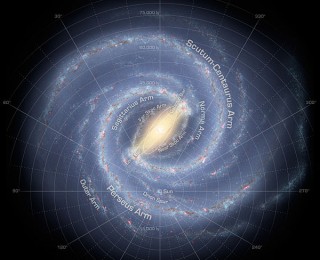
Everything in our galaxy is moving– you, the earth underneath you, the sun, other stars– everything. However, it turns out that figuring out how fast some of these things are moving is surprisingly difficult, and can have Galactic-sized implications!

by Elisabeth Newton | Nov 29, 2012 | Daily Paper Summaries
“Galactic archaeology” is the term that has come to refer to using the motions and chemical compositions of stars of different ages to learn about the history of the Milky Way. It seems to me that “galactic paleontology” might be a bit more accurate. I hope to see galactic archaeology v. galactic paleontology fought out in the comments!

by Courtney Dressing | Nov 8, 2012 | Daily Paper Summaries
How long does planetary migration take? Crockett et al. look for the answer by searching for hot Jupiters around extremely young stars.

by Courtney Dressing | Sep 14, 2012 | Daily Paper Summaries
How well do stellar models match? Would astronomers using different stellar models and identical data determine consistent fits?
by Elisabeth Newton | Aug 1, 2012 | Daily Paper Summaries
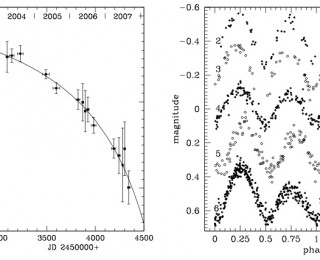
V1309 Sco first caught astronomers attention in 2008, when it displayed an outburst, suddenly getting a hundred times brighter. Due its location near the Galactic center, V1309 Sco has been monitored by the OGLE, which is looking for microlensing events, since 2001. The authors of this paper were able to look back into this archive of data and see what V1309 Sco was doing before it erupted.
by Anna Rosen | Jul 18, 2012 | Daily Paper Summaries
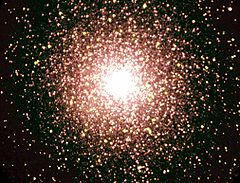
Globular clusters are some of the most massive and densest star clusters observed. What are the progenitors of old globular clusters that we see orbiting the Milky Way and other galaxies? What evolutionary and dynamical effects have these clusters experienced? What determines the physical properties of old globular clusters? Why are there two “distinct” classes of globular clusters and what properties determine these physical states? These are the questions the authors aim to answer.
