by Michelle Kislak | Jan 18, 2012 | Daily Paper Summaries
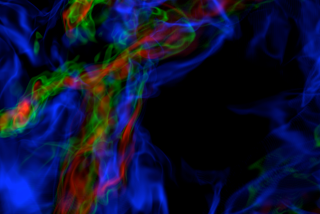
The first simulations of low-mass star formation on parsec scales to include protostellar feedback successfully reproduce observed mass functions, luminosities, and clustering properties.
by Elisabeth Newton | Jan 12, 2012 | Current Events
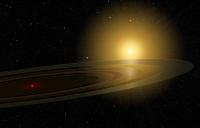
Today at the “Extraordinary Exoplanets” press release (which could righty be called “Extreme Exoplanets”), there were three very interesting and very distinct discoveries announced. William Welsh announced Kepler-34b and Kepler-35b, two new circumbinary planets from the Kepler team. John Johnson and Phil Muirhead presented three new sub-Earth sized planets orbiting an M dwarf. Finally, Erik Mamajek showed us the first ever transit of an extrasolar “ring” system.
by Guest | Dec 12, 2011 | Daily Paper Summaries
Just as seismologists determine the structure of the Earth through surface vibrations, so asteroseismologists do the same for stars
by Courtney Dressing | Dec 8, 2011 | Current Events
The First Kepler Science Conference is occurring this week at NASA Ames. Check out this summary of the conference to learn about the exciting results from the Kepler mission.
by Dan Gifford | Nov 29, 2011 | Daily Paper Summaries
Using a clever technique, the authors identify a sub-population of rotating Wolf-Rayet stars.
by Courtney Dressing | Nov 10, 2011 | Daily Paper Summaries
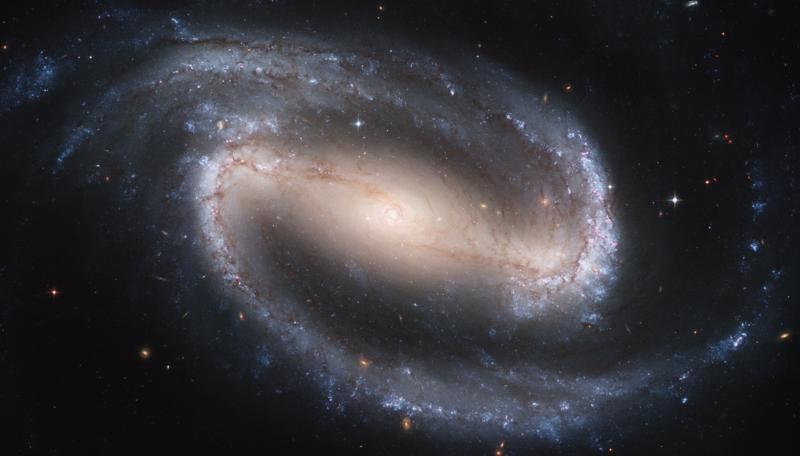
Paper title: Bars rejuvenating bulges? Evidence from stellar population analysis Authors: Paula Coelho and Dimitri A. Gadotti First author’s affiliation:Núcleo de Astrofísica Teórica, Universidade Cruzeiro do Sul, São Paulo, Brasil SummaryAs you may recall from Nathan Sanders’ April post, some spiral galaxies have central bulges with high concentrations of stars. Coelho and Gadotti examine a sample of 575 of these galaxies to investigate whether the presence or absence of a bar (a bar-shaped overdensity of stars) influences the rate of star formation in the central bulge. Astronomers expect to see a higher star formation rate in the bulges of barred galaxies because bars can transport gas from the outer regions of the galaxy into the center and supply fuel for growing stars. Previous detections of star-formation indicators (such as enhanced Hα emission) have indicated that the current star formation rates are higher in barred spirals than in unbarred spirals, but Coelho and Gadotti take the alternative approach of determining the ages of the stellar populations in the bulges. They find that the bulges of barred galaxies are systematically younger than the bulges of unbarred galaxies, which is consistent with the expectation that bars should promote star formation. The Galaxy SampleIn a previous paper, Gadotti derived stellar masses, bulge stellar masses, bar properties, and other parameters for a sample of face-on galaxies observed by Sloan Digital Sky Survey (SDSS). All of the galaxies had stellar masses above 10^10 solar masses and redshifts between 0.02 and 0.07. Selecting face-on galaxies reduced the effect of dust and simplified the process of identifying bars and bulges in the galaxies. In this paper, Coelho...
