by Chris Faesi | Oct 27, 2011 | Daily Paper Summaries
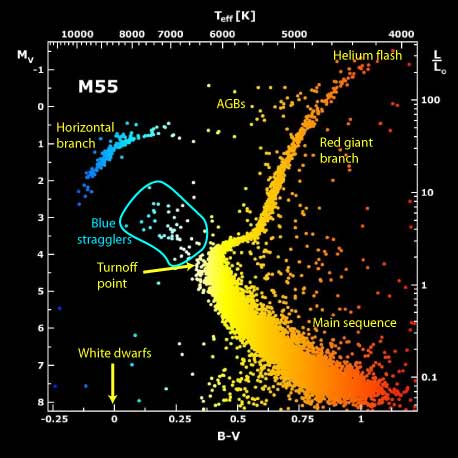
Blue stragglers are stars that, given their mass, should have already evolved beyond the main sequence, and their existence has been a mystery to astronomers for decades. These stars must somehow have gained mass during their main sequence lifetimes; stellar collisions and mass transfer were proposed as the most likely mechanisms that could cause this to happen. A unique combination of observations, simulations, and statistical analysis was recently used to constrain their formation process.
by Nathan Sanders | Oct 3, 2011 | Daily Paper Summaries
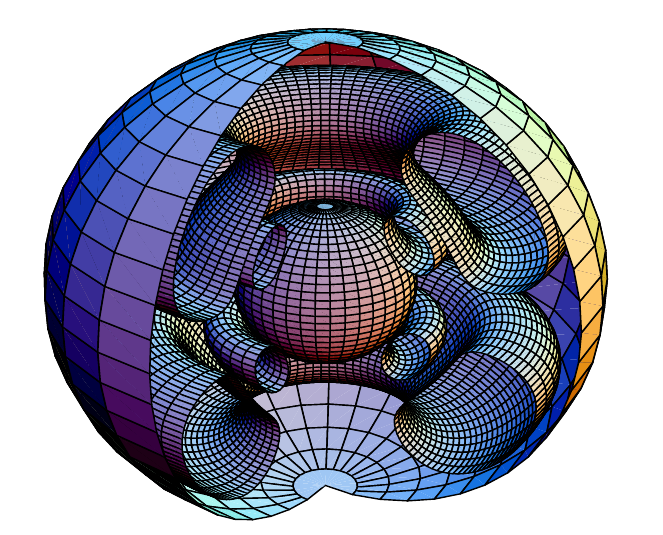
What aspects of a star’s life are affected by its rate of rotation? Just about everything!
by Courtney Dressing | Sep 15, 2011 | Daily Paper Summaries
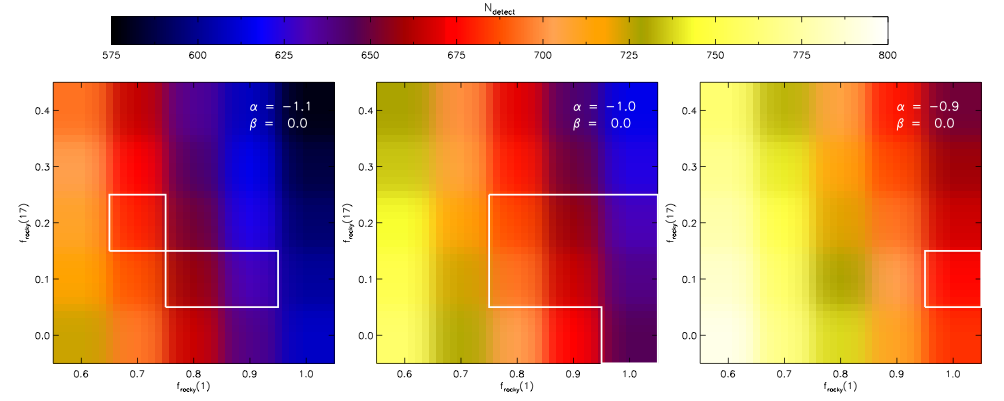
Wolfgang & Laughlin combine observations from the HARPS radial velocity survey and the Kepler transit survey to investigate the mass-radius-period distribution of exoplanets. They find that most small planets are rocky.
by Anna Rosen | Sep 12, 2011 | Daily Paper Summaries
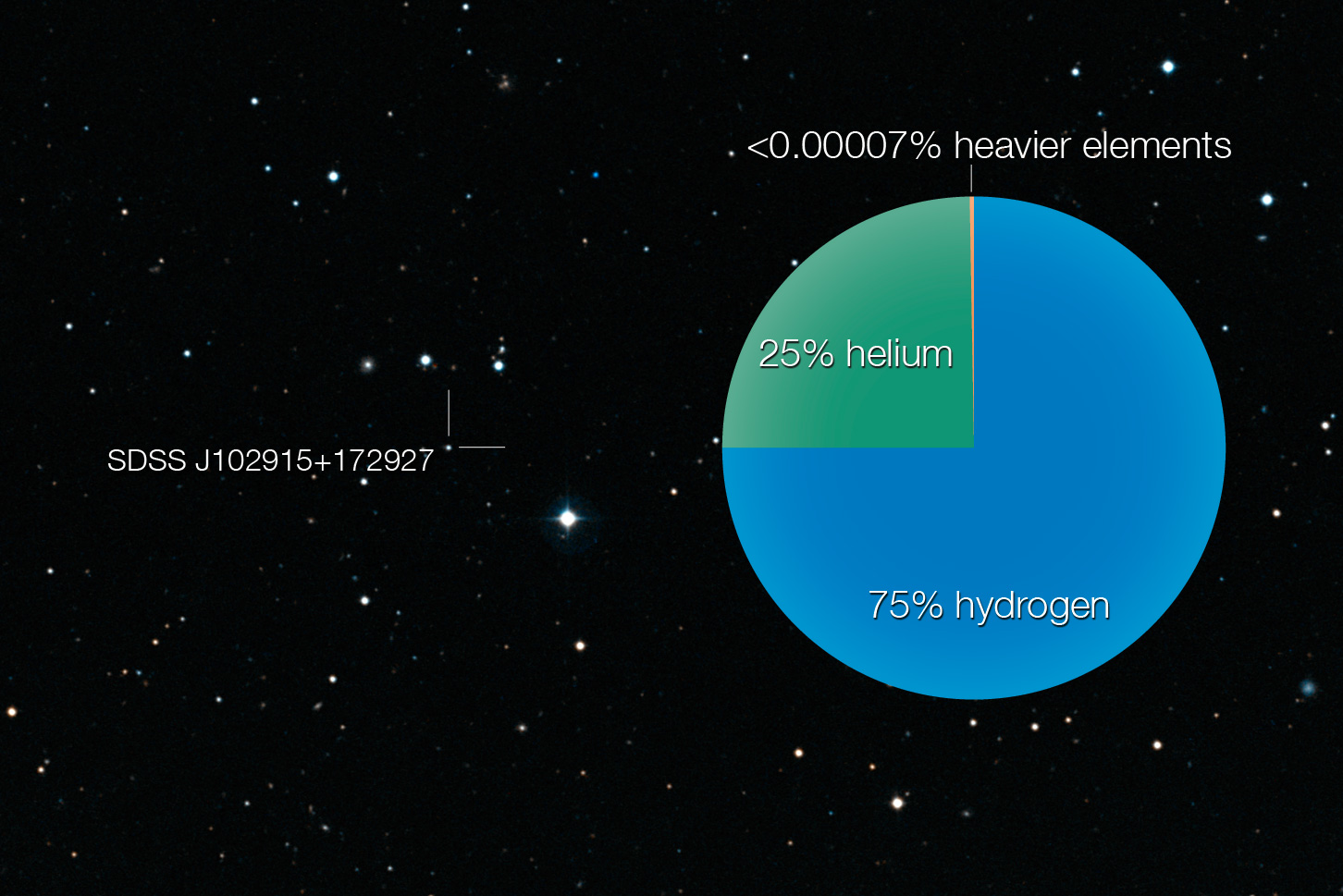
Astronomers have discovered an extremely metal-poor, low mass star located in the Galactic Halo. SDSS J102915+172927 appears to have fewer metals than ever predicted for stars of this mass since many models of star formation suggest that a star with these properties should not have even formed in the early universe.
by Courtney Dressing | Sep 1, 2011 | Daily Paper Summaries
How do the planet candidates discovered by Kepler compare to the planets detected by radial velocity surveys? Can we combine the Kepler radii with the RV masses to determine whether small planets are rocky Super-Earths or gaseous mini-Neptunes?
by Maria Drout | Aug 24, 2011 | Daily Paper Summaries
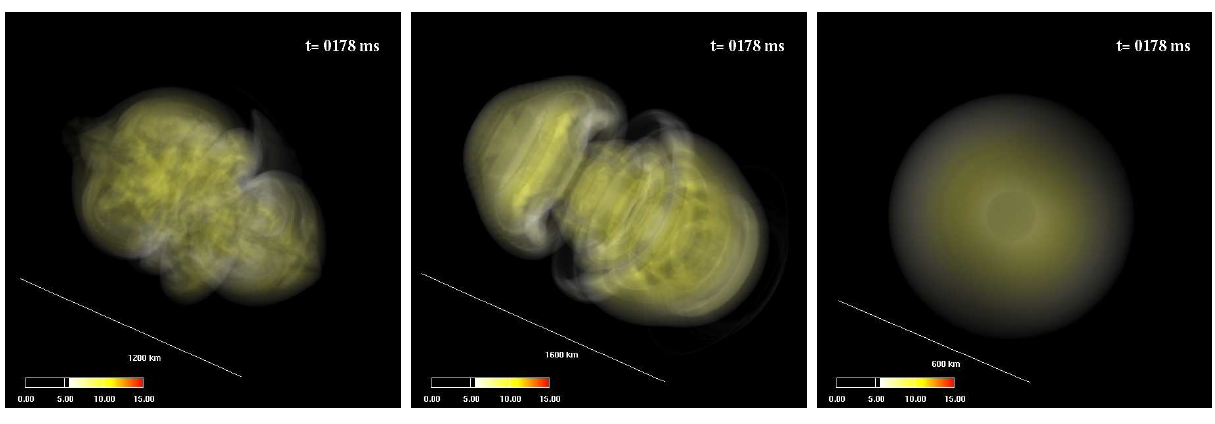
Three-dimensional Hydrodynamic Core-Collapse Supernova Simulations for a 11.2 M⊙ Star with Spectral Neutrino Transport Tomoya Takiwaki, Kei Kotake, Yudai Suwa First author’s institution: Center for Computational Astrophysics, National Astronomical Observatory of Japan Core-collapse supernovae are some of the most energetic explosions in the universe and astronomers have devoted an incredible amount of both brain power and computational power to unraveling this astrophysical phenomenon. Despite this fact, the problem is far from solved.The ‘standard model’ for these explosions begins when a star with an initial mass greater than ~8 solar masses has progressed through a series of nuclear fusion processes in its core, culminating in the burning of silicon into iron-56. At this stage, fusion can proceed no further and the outward pressure supplied by the energy produced during nuclear burning ceases. If the overlying star is massive enough, the core will be unable to support itself and begins to collapse. In this high energy environment photodisintegration (effectively the reverse of nuclear fusion) and electron capture convert the iron core into free neutrons. When the core reaches approximately nuclear density, pressure exerted by the strong nuclear force and neutron degeneracy cause the collapse to halt. The remaining infalling matter then “bounces” off the proto-neutron star, causing an outward propagating shock wave.Ok, now hang with me. This is where it starts to get complicated… Simulations indicate that this initial shock is NOT what causes the supernova explosions we observe. Rather, additional photodisintegration and neutrino release cause the wave to lose energy and halt after less than a second. This produces a “standing shock” approximately 150 km from the proto-neutron star. In order...
