by Elisabeth Newton | Aug 17, 2011 | Daily Paper Summaries
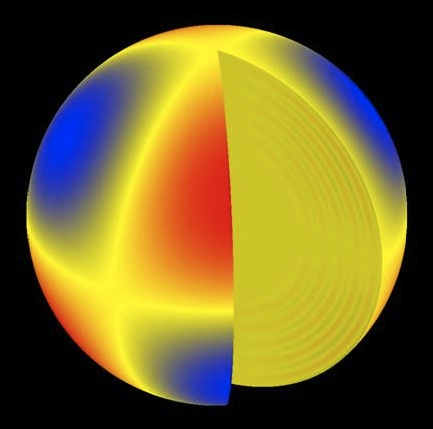
If there’s one type of star you’d think astronomers would know a lot about, it’s probably solar-type stars. After all, humans have been staring at our very near neighbor for millennia and in the recent century have dedicated entire space missions to studying this archetype. But there is always more to be learned and new tools like asteroseismology continue to open up avenues of study previously closed.
by Nathan Goldbaum | Aug 14, 2011 | Daily Paper Summaries
In this paper, the author proposes that the departure from this simple scaling with mass arises because of a simple fact: the natal molecular cloud must first fragment into clumps, which must in turn fragment into stars.
by Courtney Dressing | Aug 3, 2011 | Daily Paper Summaries
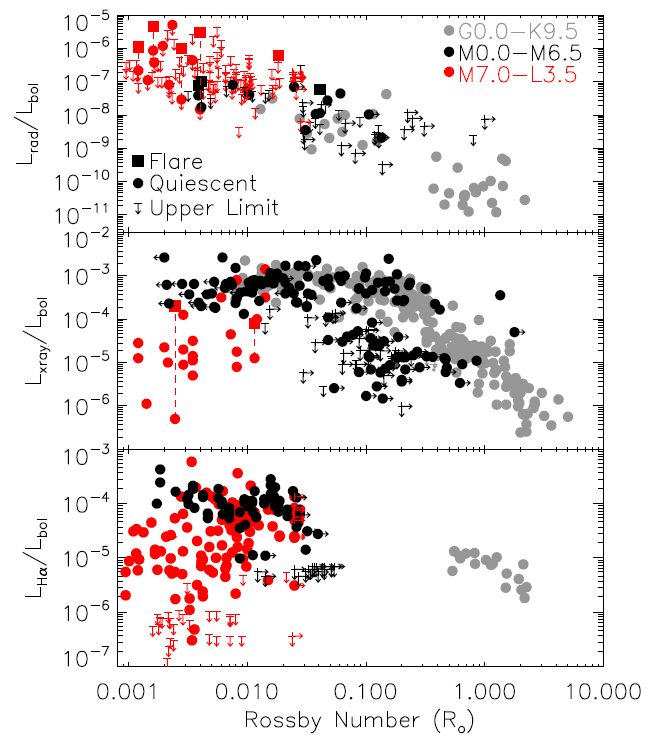
McLean et al. observe a new sample of late-M and L dwarfs with the Very large Array to search for a relation between rotation rate and radio activity for ultracool dwarfs.
by Courtney Dressing | Jul 6, 2011 | Daily Paper Summaries
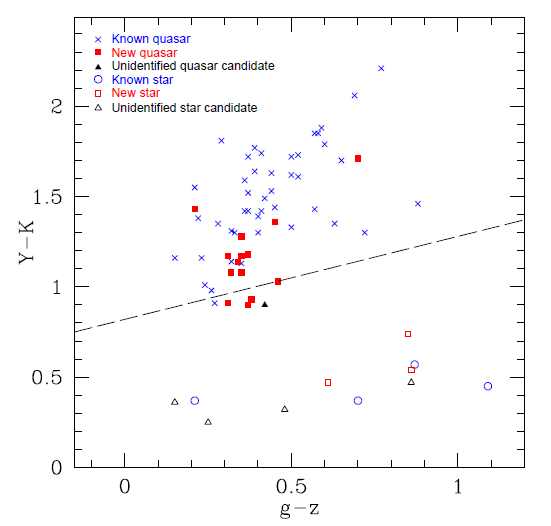
What happens when redshifted quasars masquerade as stars? How do astronomers isolate them from the stellar population?
by Katherine Rosenfeld | Jun 29, 2011 | Daily Paper Summaries
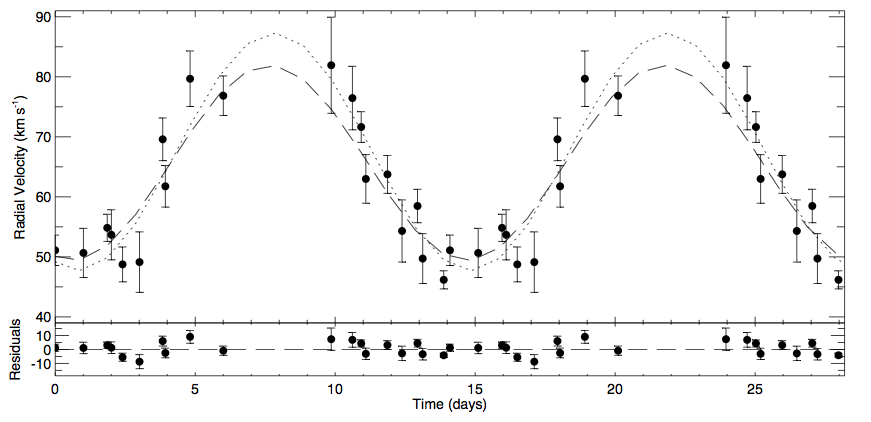
Corroboration and confirmation is the name of this game. Making the same measurement twice — using a different technique — is a powerful way not only to confirm the initial result, but also the method used. This paper confirms a recent detection of a binary system using light-travel time techniques.
by Courtney Dressing | Jun 22, 2011 | Daily Paper Summaries
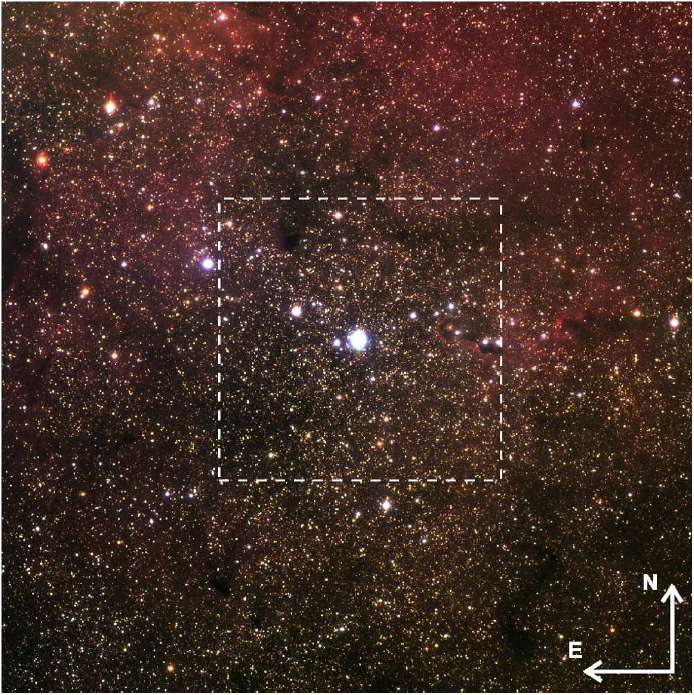
Neuhäuser et al. are searching for young Jovian planets orbiting stars in open clusters. What are the advantages of looking for planets in clusters?
