
Searching for Pandora
Habitable exomoons appear all over science fiction, but could they exist in real life? Could we detect them if they did?

Habitable exomoons appear all over science fiction, but could they exist in real life? Could we detect them if they did?
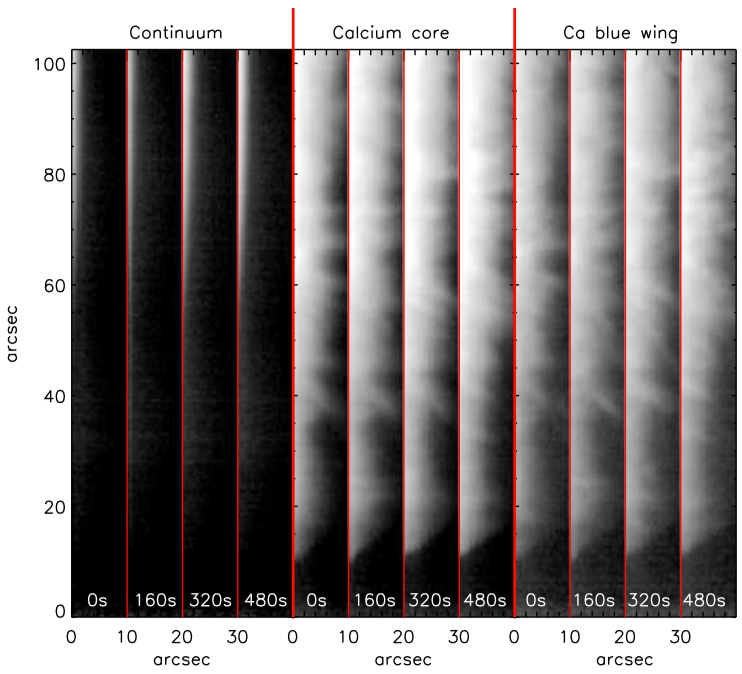
In previous astrobites, we’ve emphasized how important spectroscopy is to an astrophysicist’s understanding of the universe. From radial velocity measurements involved in the discovery of planets, determination of the ionization history of the universe, characterization of P Cygni profiles and more, spectroscopic analysis is a crucial part of an astrophysicist’s toolbox. These sources are faint! If you are impressed by the results obtained by galactic and extra-galactic spectroscopy, be prepared to marvel at the extremely high signal to noise data that can be obtained by observing our brightest source in the sky, the Sun. The sun is truly a spectroscopist’s delight.
Stars are essentially element factories: most of the elements which we know (and dearly love, for life’s sake) were produced by some aspect of stellar evolution, either during their long, uneventful tenancy on the main sequence, shorter and swifter time as a red giant branch star, or their catastrophic death as supernovae.
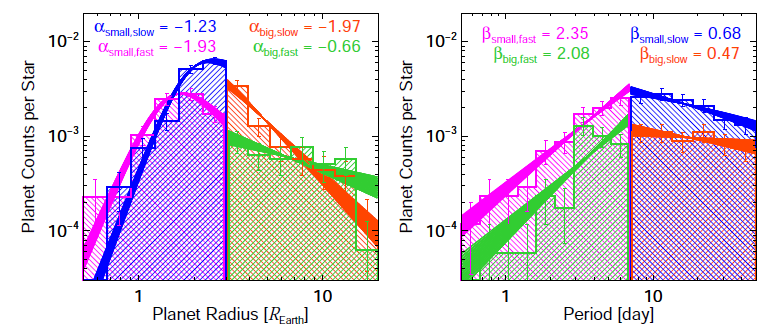
What does the Kepler data tell us about the number of planets per star and the distribution of planets in radius and orbital period? Andrew Youdin addresses that question by considering the selection effects in the Kepler sample and fitting a joint powerlaw in radius and orbital period.
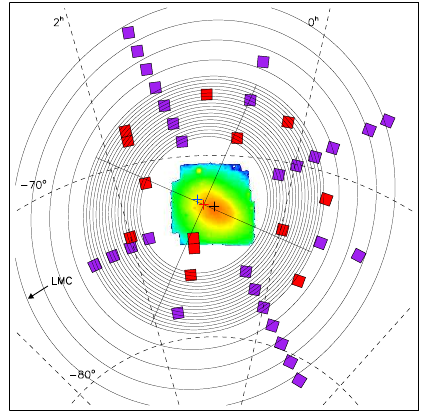
The SMC is one of the best studied galaxies in the sky, but there is still plenty to learn from the stars far from its center.
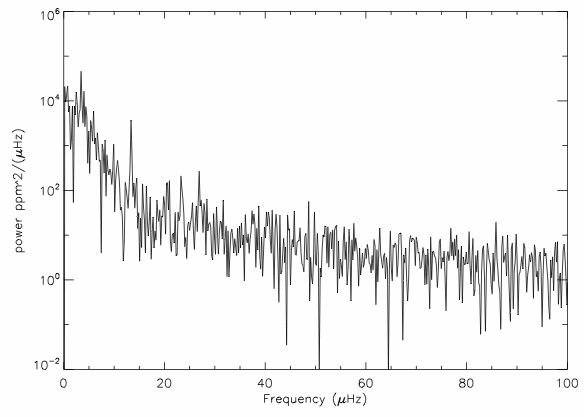
Stellar variability has received more attention recently due to the problems it poses in the detection of exoplanets; however the study of variability is a field of its own. What causes activity? How does magnetic activity vary with different stars? This paper looks at results from the CoRoT satellite (for Convection, Rotation and planetary Transits), which was launched in December of 2006. This paper is concerned with the long-term photometric microvariability of stars and how stellar activity relates to rotation period and temperature.