by Susanna Kohler | Nov 18, 2011 | Daily Paper Summaries
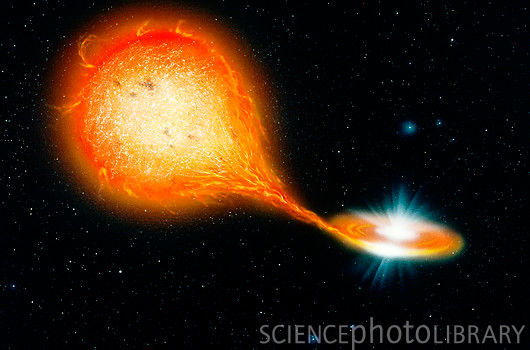
This paper presents the first evidence of two distinct populations of pulsars, which the authors speculate stem from a difference in how they are formed.
by Anna Rosen | Nov 7, 2011 | Daily Paper Summaries
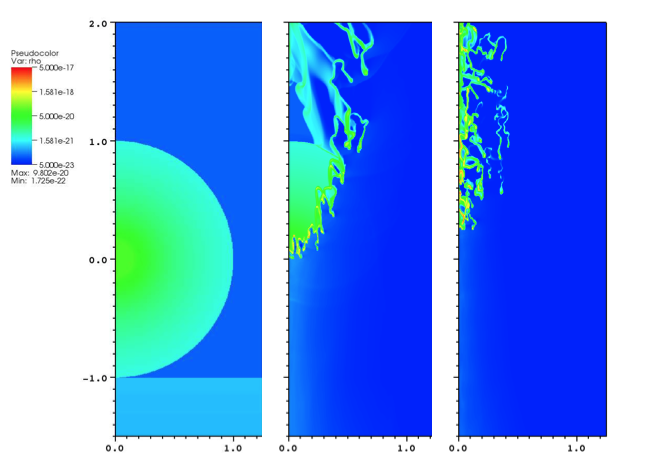
Could the interaction of the pre-solar core with a nearby supernova trigger the formation of our Solar System?
by Elizabeth Lovegrove | Oct 24, 2011 | Daily Paper Summaries
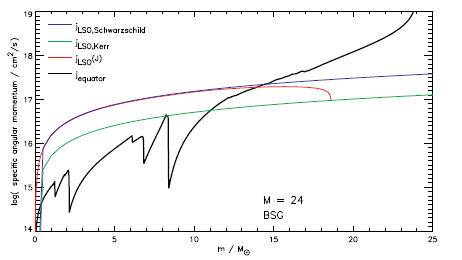
The collapsar model of gamma ray burst production posits that a black hole forms at the center of the star and sucks in the rest of the star’s mass, but that the inner regions have sufficient angular momentum to form an accretion disk which then radiates some fraction of its power in the form of a relativistic jet of matter beaming out of the star. But what if it were the outer, not the inner, layers of the star that had most of the angular momentum? The answer is a very different sort of gamma-ray transient.
by Guest | Oct 17, 2011 | Daily Paper Summaries
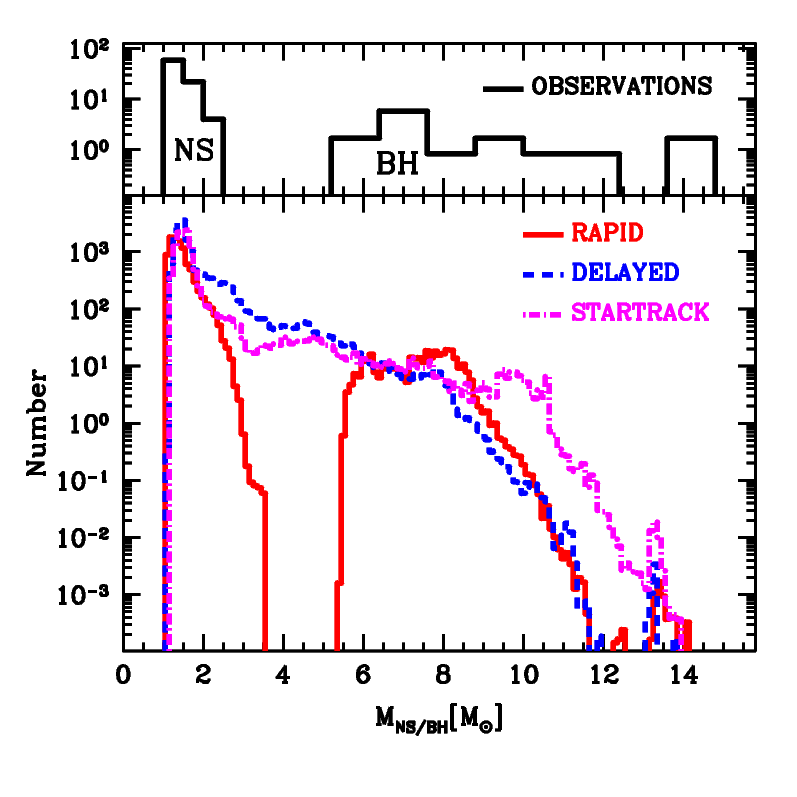
You might think that stars with an approximately continuous distribution of masses would lead to remnants with an approximately continuous distribution masses. But you’d be wrong.

by Kim Phifer | Aug 28, 2011 | Daily Paper Summaries
How homogenous is the population of Type Ia supernovae?
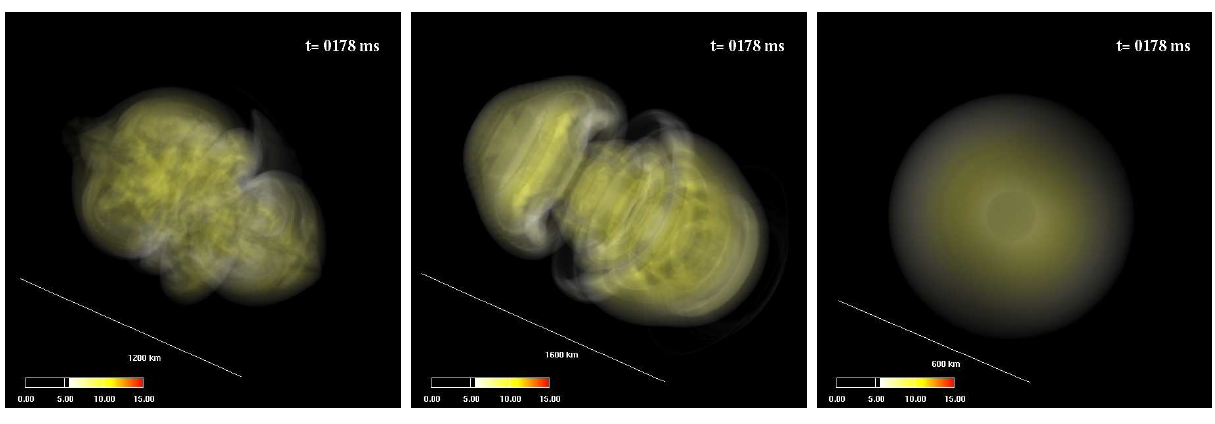
by Maria Drout | Aug 24, 2011 | Daily Paper Summaries
Three-dimensional Hydrodynamic Core-Collapse Supernova Simulations for a 11.2 M⊙ Star with Spectral Neutrino Transport Tomoya Takiwaki, Kei Kotake, Yudai Suwa First author’s institution: Center for Computational Astrophysics, National Astronomical Observatory of Japan Core-collapse supernovae are some of the most energetic explosions in the universe and astronomers have devoted an incredible amount of both brain power and computational power to unraveling this astrophysical phenomenon. Despite this fact, the problem is far from solved.The ‘standard model’ for these explosions begins when a star with an initial mass greater than ~8 solar masses has progressed through a series of nuclear fusion processes in its core, culminating in the burning of silicon into iron-56. At this stage, fusion can proceed no further and the outward pressure supplied by the energy produced during nuclear burning ceases. If the overlying star is massive enough, the core will be unable to support itself and begins to collapse. In this high energy environment photodisintegration (effectively the reverse of nuclear fusion) and electron capture convert the iron core into free neutrons. When the core reaches approximately nuclear density, pressure exerted by the strong nuclear force and neutron degeneracy cause the collapse to halt. The remaining infalling matter then “bounces” off the proto-neutron star, causing an outward propagating shock wave.Ok, now hang with me. This is where it starts to get complicated… Simulations indicate that this initial shock is NOT what causes the supernova explosions we observe. Rather, additional photodisintegration and neutrino release cause the wave to lose energy and halt after less than a second. This produces a “standing shock” approximately 150 km from the proto-neutron star. In order...
