by Shang-Min Tsai | Feb 21, 2017 | Daily Paper Summaries
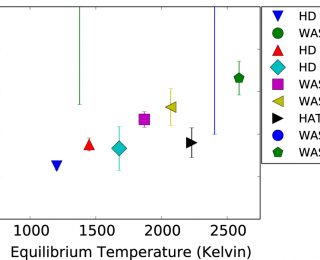
Hot Jupiters, on the other hand, are extreme worlds. They orbit very close to their host stars (< 0.1 AU) and are locked by the tidal force into synchronous rotation, always having the same side facing their stars. This makes for interesting atmospheric dynamics. In today’s paper, we take a look into these exotic worlds. The authors examined what essentially controls the day-night temperature differences and compare their theory to numerical simulations (so called general circulation models or GCM).
by Thankful Cromartie | Feb 16, 2017 | Daily Paper Summaries
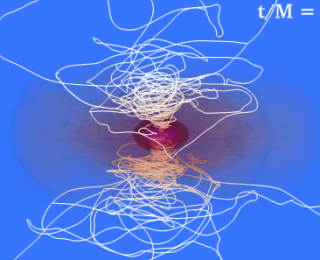
Short gamma ray bursts are one of the biggest cosmic mysteries of modern astronomy. Today’s post investigates one possible culprit for this phenomena – the merging of two neutron stars.

by Bhawna Motwani | Jan 11, 2017 | Daily Paper Summaries
Ever knew that the Moon’s orbit can offer clues about the source of your jewelry? Read on today’s bite to find out how!
by Gourav Khullar | Dec 13, 2016 | Daily Paper Summaries
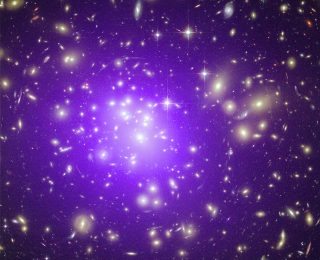
A recently proposed theory of gravity that got the astrophysical community’s attention is put to tests by observations. Does it succeed? Let’s find out!
by Tim Lichtenberg | Nov 1, 2016 | Daily Paper Summaries
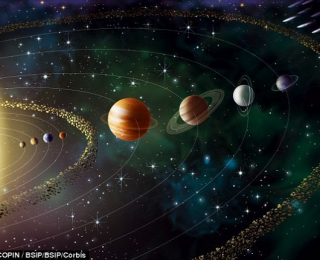
The puzzling architecture of the Solar system has long been a headache for planetary dynamicists. An alternative model of the gas giants’ movements may shed new light on the issue.
by Anson Lam | Sep 27, 2016 | Daily Paper Summaries
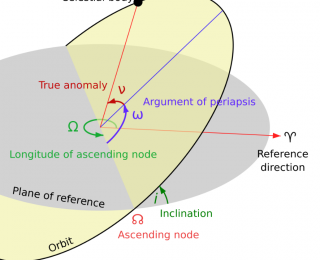
Spinning stars can potentially double the number of seasons that a planet experiences due to surface temperature variations on the stellar surface.
