
Driving planetary dynamos by giant impacts
Earlier than one billion years ago, Earth’s magnetic field had to be driven differently than today. But how? And what can we learn from this about magnetic fields on exoplanets?

Earlier than one billion years ago, Earth’s magnetic field had to be driven differently than today. But how? And what can we learn from this about magnetic fields on exoplanets?
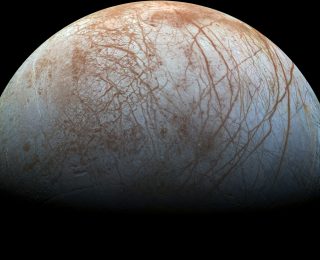
Water worlds – do they exist? Or is there an omnipotent self-regulation mechanism which makes terrestrial planets look like Earth?
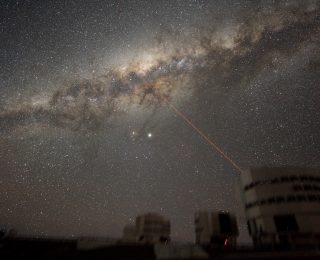
White dwarf stars are the final evolutionary state of most stars. They are everywhere in the Galaxy and are relatively easy to model. So can we learn about our Galaxy solely by studying them? The authors of today’s paper show us a way.
Image credits: ESO/Y. Beletsky.
The latest science from a few early-career researchers.
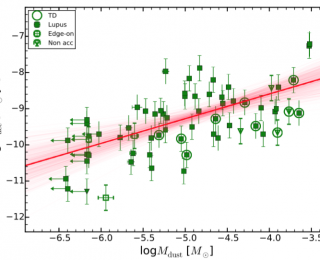
Do predictions from classical disk theory work with state-of-the-art measurements?
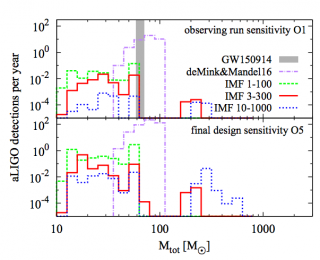
What can aLIGO tell us about the earliest stars? Read today’s astrobite to find out!