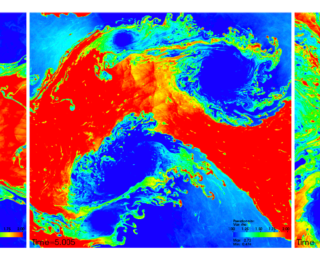
Never underestimate a droid: deep learning for turbulence
Can we teach a machine to reproduce the physics of turbulence? An exploration of using deep learning to simulate magnetohydrodynamic turbulence!

Can we teach a machine to reproduce the physics of turbulence? An exploration of using deep learning to simulate magnetohydrodynamic turbulence!
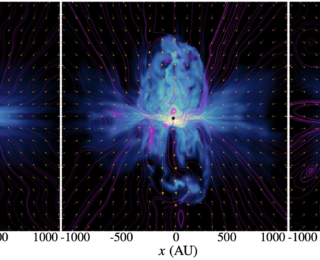
Turbulence in the magnetic field surrounding a protostar can affect the power and launch angle of bipolar outflows.
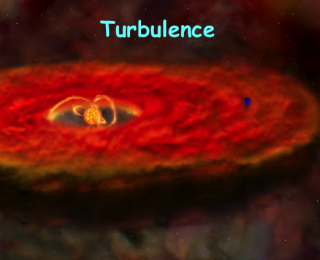
Turbulence plays a key role in determining what types of planets can form in a disk. We are finally on the verge of measuring this property for the first time using CO spectral lines, but it will only work if we factor in how quickly CO can be depleted.
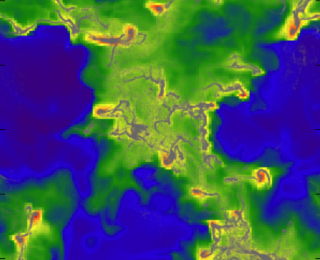
Dust grains play an important in many facets of astrophysics. See how their lives are revealed in realistic simulations for the first time!
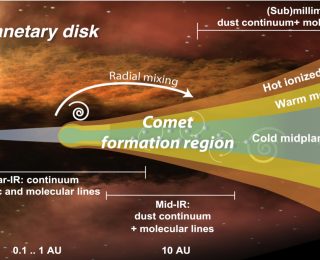
In the last few years, astronomers have used ALMA to measure circumstellar disk masses for the first time, but found most of the mass to be missing. If these low disk masses are real, they would suggest planet formation is much faster than we think! But could it be that this missing mass is there and we just can’t see it?
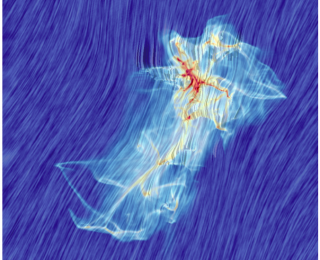
Colliding gas clouds are believed to be the nurseries of baby stars. Could we tell observationally whether a cloud has experienced collisions?