
by Dan Gifford | Sep 4, 2011 | Career Navigation
It’s that time of year! For those of you thinking about grad school, check out how you might prepare yourself for the application process and narrow down your list of schools.
by Courtney Dressing | Sep 1, 2011 | Daily Paper Summaries
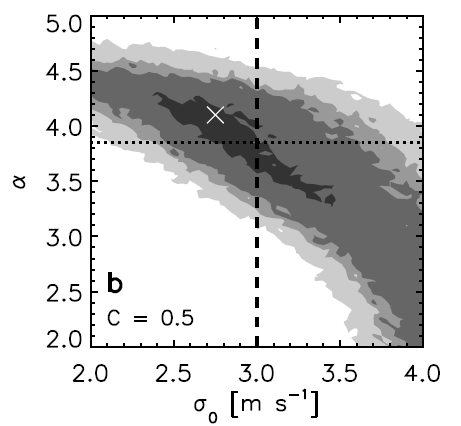
How do the planet candidates discovered by Kepler compare to the planets detected by radial velocity surveys? Can we combine the Kepler radii with the RV masses to determine whether small planets are rocky Super-Earths or gaseous mini-Neptunes?
by Adele Plunkett | Aug 31, 2011 | Daily Paper Summaries
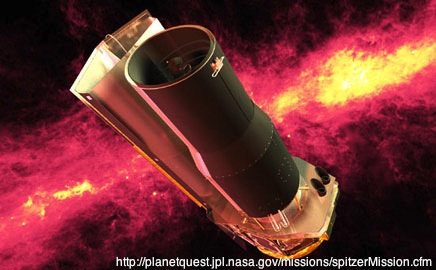
Many aspects of the star forming process, especially the process to form massive stars (greater than 8 solar masses), remain unknown. This paper distinguishes between two stages of star formation by fitting models to observations of several young stellar objects in the giant molecular cloud G333.
by Nathan Goldbaum | Aug 30, 2011 | Daily Paper Summaries
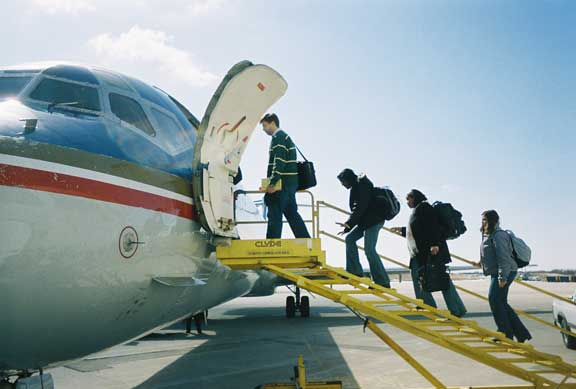
• Title: Experimental test of airplane boarding methods • Authors: John H. Steffen, Jon Hitchkiss • First Author’s Institution: Fermilab Center for Particle AstrophysicsToday’s astrobite doesn’t have much to do with astronomy. In fact, at yesterday’s morning coffee discussion here at UCSC, there was a bit of surprise that this particular paper was cross-listed to the astrophysics section of arxiv.org at all. I guess the authors know that astronomers tend to spend an unusually large fraction of their lives in airplane cabins, so it would be worthwhile to notify us of the latest developments in the science of air travel.The question this paper would like to answer is a deceptively simple one: what is the optimal way to board an airplane? As the answer to this particular question can save airlines money, a significant amount of effort has already been expended on computational models of airplane boarding. In 2008, the lead author of this study published a candidate for the holy grail of the field: the optimum boarding strategy. Here, the authors experimentally verify whether the boarding procedure worked out by Steffen in 2008 is truly the optimum boarding strategy.There are two types of inefficiency in airplane boarding. The first, called aisle interference, happens when passengers stop in the aisle to put away their luggage. The second, called seat interference, happens when a passenger has to wait for another passenger in their row to sit down before they can enter the row. Seat interferences don’t necessarily impact boarding time, but they can cause aisle interferences, which do increase boarding time. Different boarding methods entail different tradeoffs between the number...
by Lauren Weiss | Aug 29, 2011 | Current Events, Personal Experiences
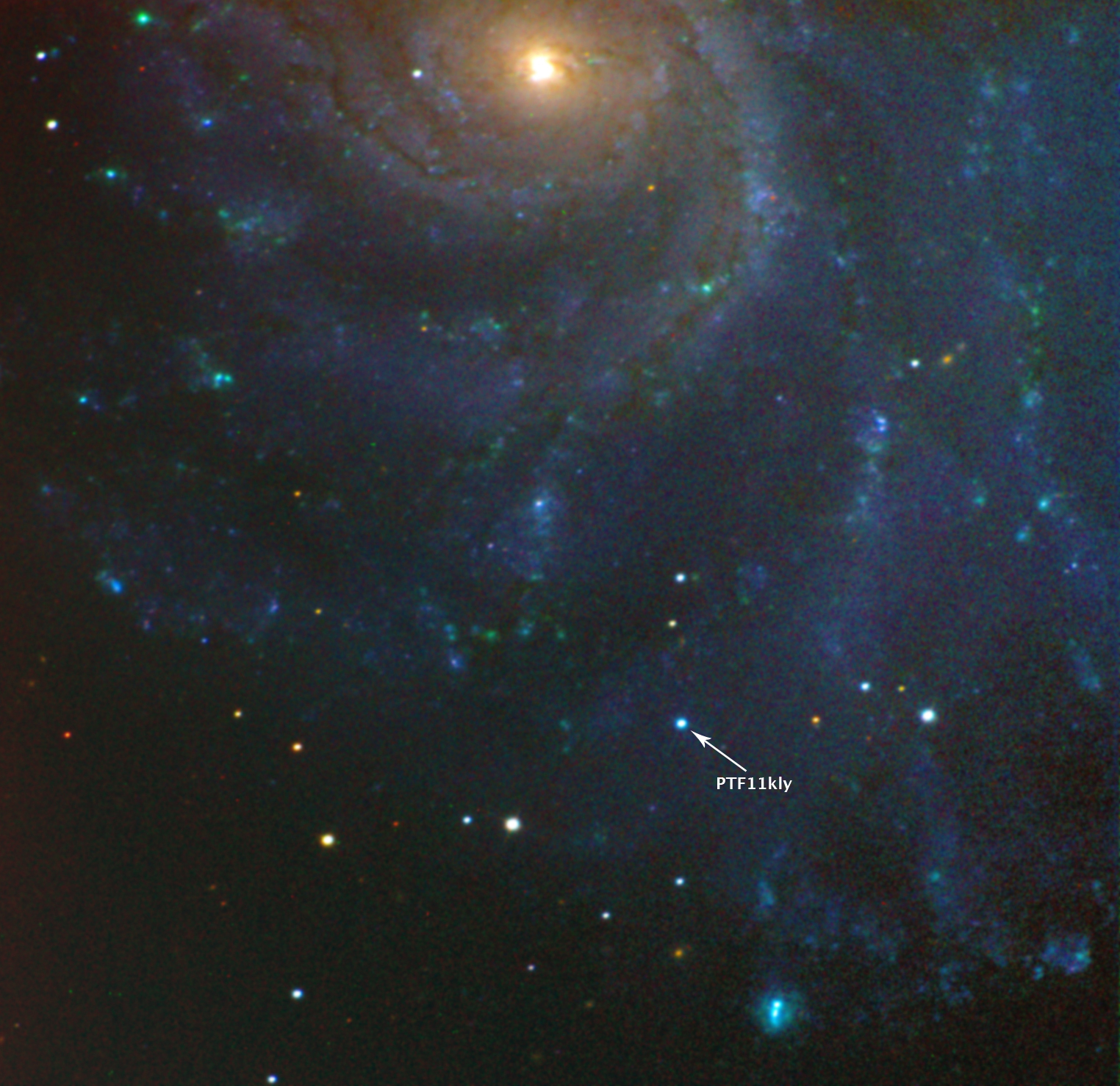
Last night, I was in the Berkeley-based remote control room of the Keck telescope watching Professor Josh Bloom and his team follow up what Bloom claims to be the “supernova of the generation.” PTF11kly, a type Ia supernova discovered by the Palomar Transient Factory in California, is one of the earliest and closest type Ia supernovae ever observed.How did I stumble into such an important observation? Josh invited the Berkeley first-year graduate students to watch his team remotely observe on the Keck telescope. Even without the prospect of standing witness to scientific history in the making, the five of us were excited to watch the complex operation of Keck, the largest optical telescope in the world. While Josh facilitated observations from a control room in Waimea, Hawaii, the rest of his team controlled the instrument from a duplicate control room at UC Berkeley. From the windowless basement room with an array of plush carpets covering the otherwise sinister black-and-white tiled floor, the other first-year graduate students and I watched history happen. Using the LRIS spectrographon the Keck telescope, Josh’s team obtained one of the earliest spectra of a type Ia supernova ever observed.In yesterday’s post, Kim Phifer describes how the thermonuclear explosion of a white dwarf generates a type Ia supernova and how we can use type Ia supernova to measure distances. Historically, type Ia supernovae have been used to measure the rate of the expansion of the universe. Precise measurements of the distances and recession velocities of type Ia supernovae resulted in the discovery that the universe is expanding at an accelerating (not decelerating) rate. The cause of the acceleration is...
