Welcome to the virtual winter American Astronomical Society (AAS) meeting! Astrobites is attending the conference as usual, and we will report highlights from each day here. If you’d like to see more timely updates during the day, we encourage you to search the #aas237 hashtagon twitter. We’ll be posting once a day during the meeting, so be sure to visit the site often to catch all the news!
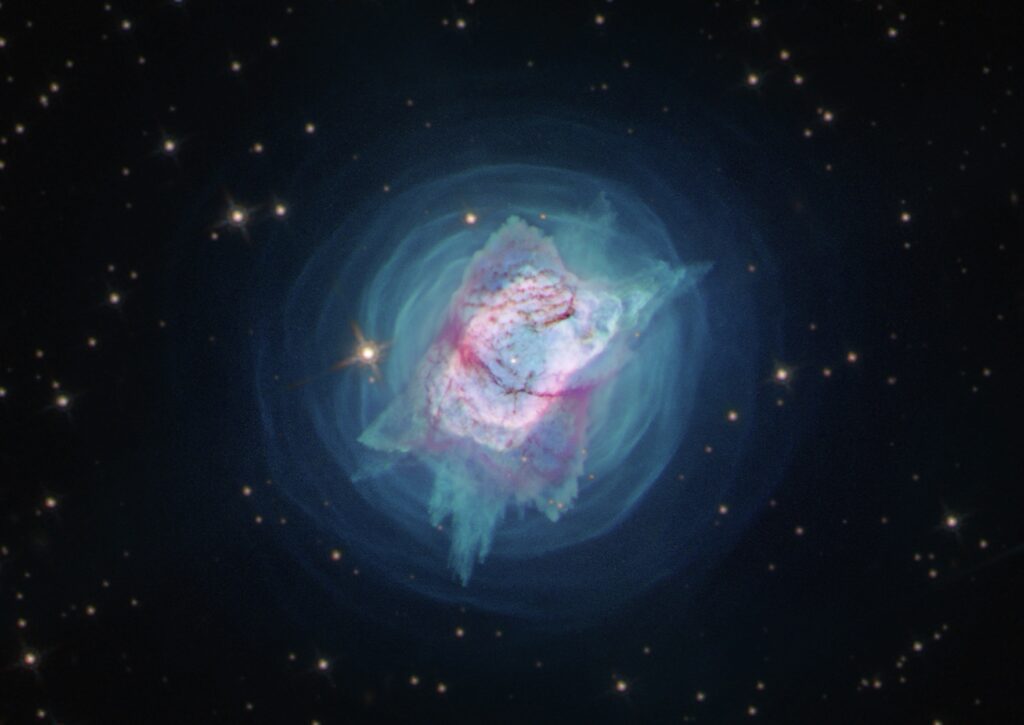
The Jewel Bug Nebula (NGC 7027), as captured by the Hubble Space Telescope. [NASA, ESA and J. Kastner (RIT)]
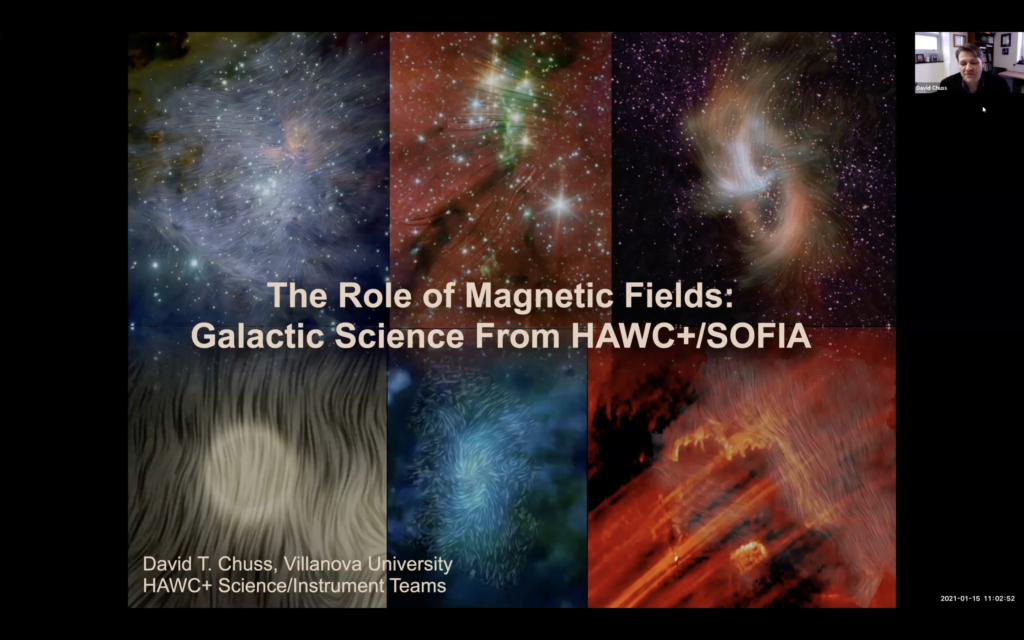
Plenary: The Role of Magnetic Fields: Galactic Science from HAWC+/SOFIA (by Ellis Avallone)
The first plenary of the last day of AAS was all about galactic magnetic fields. Dr. David Chuss from Villanova University is an expert in submillimeter polarimetry, a technique that utilizes the polarization of light in submillimeter wavelengths to obtain information about low-magnitude magnetic fields. Today’s talk focused on results from the HAWC+ instrument, a polarimeter on the plane-turned-telescope SOFIA. HAWC+ is especially adept at detecting galactic magnetic fields, which are notoriously difficult to measure and are often neglected. By measuring the polarization of light from magnetically aligned dust grains, we can accurately trace magnetic fields throughout our galaxy.
An hourglass-shaped magnetic field in the Orion Nebula.
A central question that drove the development of HAWC+ surrounds the role of magnetic fields in star formation. Star formation is surprisingly inefficient (both within and outside our Milky Way), and dynamic support from magnetic fields in molecular clouds can prevent the collapse of gas into stars. Magnetic fields in turn are “frozen” into matter, where they trace the motions of matter while also influencing system dynamics through magnetic pressure. It was theorized that in a gas cloud with magnetically regulated star formation, the gas would be free to collapse along magnetic field lines. However, in regions where gas motions were perpendicular to the magnetic field, magnetic pressure would prevent the gas from fully collapsing. This interaction between the magnetic pressure and gas dynamics would cause the magnetic field to follow an hourglass shape. When HAWC+ observed the Orion nebula, the closest massive star-forming region to Earth, it found the hourglass magnetic-field orientation indicative of magnetically regulated star formation. Chuss then notes that polarimetry can also be used to estimate magnetic field strengths, which can provide further insight into the balance between gas and magnetic field dynamics. With both magnetic field strength and orientation measurements, we can map the distribution of magnetic flux, which then gives us the relative importance of gravitational and magnetic motions throughout a star forming region.
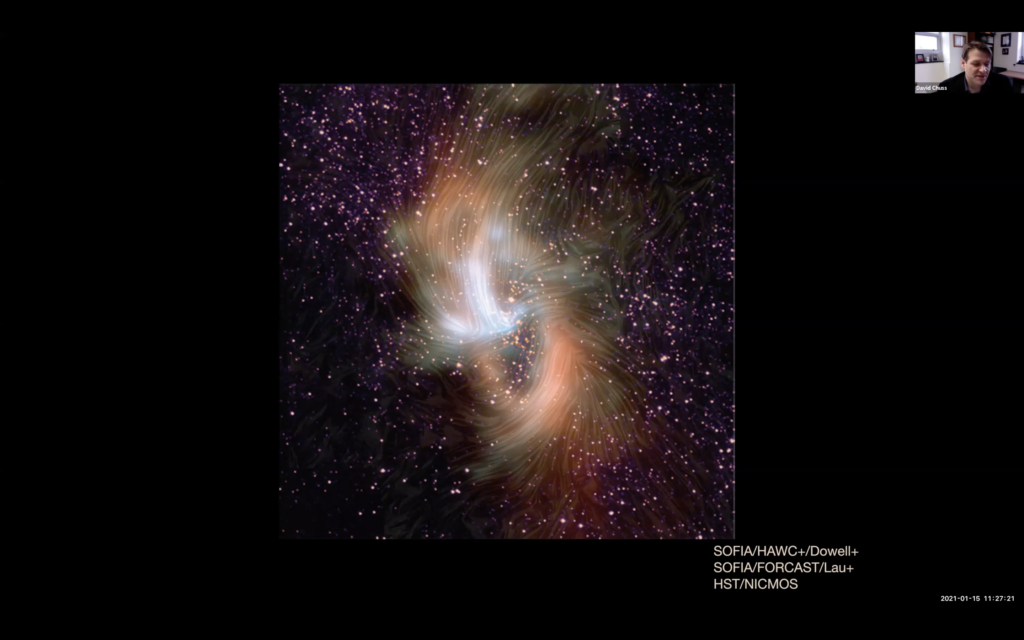
Magnetic fields trace dust rings around our galactic center.
For the final portion of the talk, Chuss turned to our galactic center. Magnetic fields can also affect the dynamics of material near the centers of galaxies, and our own Milky Way provides us with an up-close example. HAWC+ looked at the region directly surrounding our central black hole, Sagittarius A*, and found magnetic field lines tracing a ring of warm dust that surrounds the region. Additionally, HAWC+ found that the magnetic fields of the cool and warm dust near the galactic center are quite different in orientation from one another. Finally, Chuss discussed the magnetic fields of radio filaments in the galactic center. These bands of electrons radiate via synchrotron emission and are bound by magnetic fields that are perpendicular to the galactic plane. HAWC+ observations suggest that reconnecting magnetic fields at the surface of cloud structures are causing electrons to be accelerated to relativistic speeds.There are still many open questions surrounding magnetic fields in our galaxy. With HAWC+, we can begin to unravel how deeply magnetic fields permeate processes in our universe.
Special Session: Astronomy Education in a Rapidly Changing World: Best Practices from Research and Instruction (by Briley Lewis)
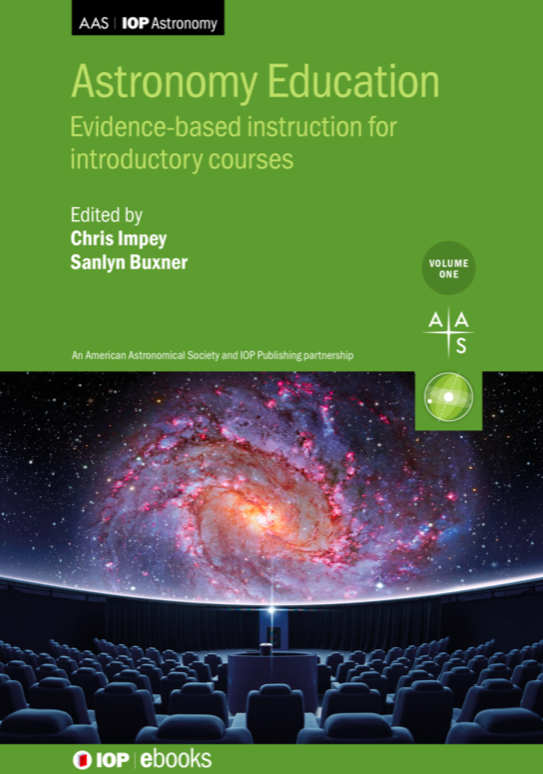
Cover of the recent AAS/IOP ebook edited by Drs. Chris Impey and Sanlyn Buxner, Astronomy Education, Volume 1.
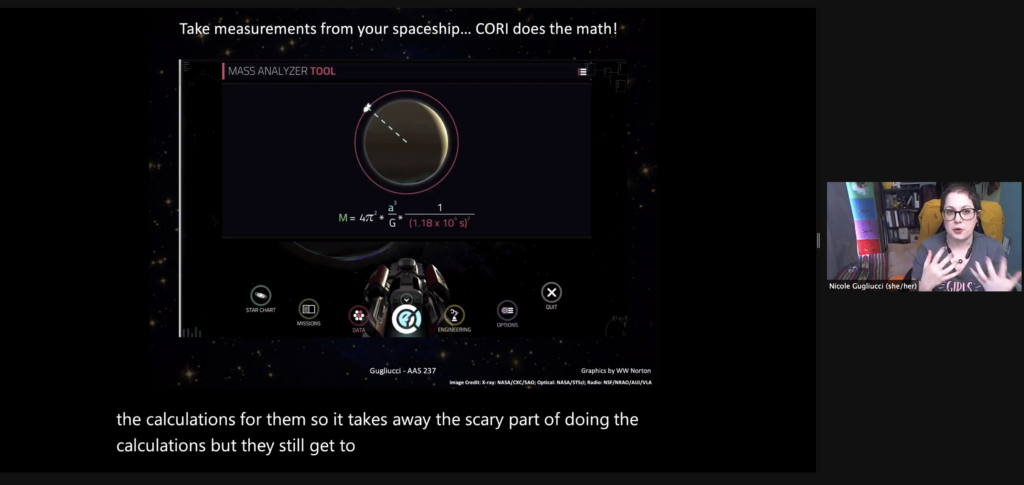
As all current students and teachers know, the past year has been an off-road adventure in online teaching for many of us. Today’s special session addressed this unique challenge in education, focusing on how to support astronomy education during the pandemic. To start, Sanlyn Buxner (University of Arizona & Planetary Science Institute) introduced a great general resource: two volumes of astronomy education content recently published by AAS-IOP Astronomy. The first focused on learner-centered teaching in astronomy, and the second, more recent volume dealt with online learning specifically. Next, Molly Simon (Adler Planetarium) discussed using citizen science, an interactive activity well-suited for online learning. Zooniverse, which started with Galaxy Zoo, is now the largest citizen science platform with over 2 million registered volunteers worldwide and many different subjects (even beyond astronomy!). In her research, Simon realized that manipulating spreadsheets, a traditional lab activity, is not necessarily the best approach to build data literacy; instead, she has developed new materials using Zooniverse that have students draw conclusions from graphs and other data representations. These materials are accessible fully online, consisting of a lecture tutorial, citizen science activity, and guided inquiry experience. They’re doing pilot testing now, so if you want to implement it in your classroom, reach out to Molly!Nicole Gugliucci (Saint Anselm College)brought in yet another engaging online learning activity: video games! The game “At Play in the Cosmos” by Norton ties in with their eBook and includes autograding options, and it takes students on a spaceship adventure that even guides them through relevant physics equations. Students responded positively to this, saying they liked fun ways to apply concepts like this!
Screenshot of the astronomy game used in Nicole Gugliucci’s classroom, showing the spaceship and accompanying physics.
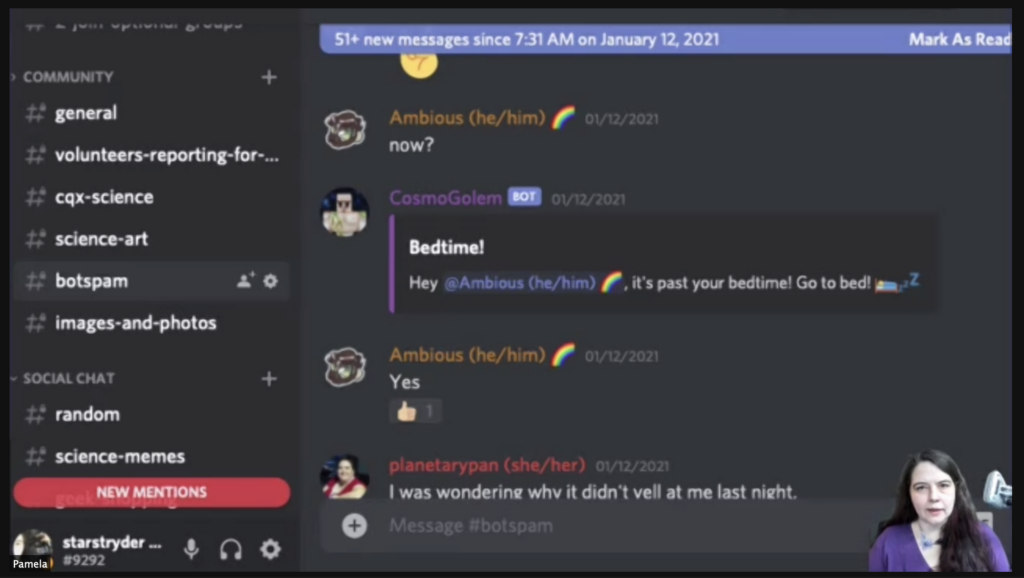
In a presentation called “Interrupting the d00mscroll with Astronomy”, Pamela Gay (Planetary Science Institute) describes a different approach to education in the pandemic, saying that “sometimes you just have to help people get through the moment so tomorrow they can learn.” With the Cosmoquest collaboration, they have been creating content for live internet audiences. In the pandemic, she says they realized delivering content isn’t enough right now, people need a place to come together. They’ve started doing “Community Coffee” sessions on Twitch, bringing together art and science on a Monday morning to get the week started. Using Discord, they’ve built a community chat server for people to hang out. It’s moderated by a team across the world to keep a safe and inclusive space, and they’ve created open-source bots to interact with people — they even have one that will give you a reminder to stop scrolling and go to bed! They’re doing all sorts of cool things to help people get through this together and enjoy astronomy, even building a scale model of the solar system in Minecraft.
An example of the “bedtime” reminder on the Cosmoquest Discord server.
Lastly, Matthew Wenger (University of Arizona) shared about his experiences building self-paced massive open online courses (MOOCs) on Coursera. A different approach to learning than the traditional college classroom, these types of free online courses target adults seeking education out of interest. Along with collaborators, Wenger has built two different astronomy courses, and he emphasized that peer reviewed writing assignments have been key for building student engagement in this online format. Students get to interact with one another, and bonus: writing is a great way to deepen understanding and reach higher levels of Bloom’s Taxonomy of Learning like “evaluating” and “analyzing”! This special session gave so many great ideas for not only dealing with online learning, but helping students thrive. As one commenter said, online learning has lots of possibilities, it’s not just a lesser stand-in for face-to-face instruction!
Special Session: Supporting Marginalized Students in Astronomy: A Discussion Among Program Leaders on Best Practices and Ongoing Challenges (by Ellis Avallone)
This session, moderated by Prof. Kelle Cruz from Hunter College, invited leaders of diversity, equity, and inclusion initiatives to discuss the successes and challenges associated with these programs. Leaders of notable bridge programs and research internships were in attendance, including those from the Fisk-Vanderbilt Bridge Program, the Columbia University Bridge Program, Cal-Bridge, and AstroCom NYC. The panel discussed several topics, ranging from securing funding to implementing change in a department’s culture. The discussion started off with an introduction to bridge programs. These programs are designed to bridge the transition between undergrad and graduate school, and they typically focus on supporting and retaining marginalised students. The panelists noted that one of the challenges to running a bridge program is that, due to the length of most graduate programs, it takes a long time (on the order of 10 years) to see the results of a given bridge program and understand how it has impacted their students. A positive aspect of this is that the most successful programs provide long-term mentorship and support for their students, even after they’ve moved on to graduate school or industry. The session also included a discussion on how to best enact change within departments that want to tackle DEI projects but do not currently have support systems in place. A few panelists mentioned the importance of outside societies, whose primary focus is to evaluate a department and recommend concrete actions the department can take to improve their diversity (e.g. the AAS Site Visit Oversight Committee). Additionally, the AIP TEAM-UP report (covered by astrobites at AAS236) includes several recommendations on how departments can best support marginalized students. Finally, the panelists emphasized that cultural change within a department has to come from department leadership working with marginalized folks, and the panel advised students to identify allies within their departments who are focused on implementing substantial change.
Press Conference: The Modern Milky Way (by Haley Wahl)
The first press conference of the final day of AAS 237 was all about new discoveries in our home galaxy. The first speaker was Sailee Sawant from the Florida Institute of Technology, who talked about charge-injection devices. These devices employ simple, cost-effective, yet powerful techniques that allow astronomers to image a very dim companion to a very bright star (they allow extreme contrast imaging). The team has been successful in detecting and resolving previously uncatalogued sources, along with Sirius B (the very faint companion to the star Sirius A). Press release
This image of the Integral Sign galaxy (UGC 3697) shows a galaxy with one of the largest known warps. [DECaLS]
Next up was Xinlun Cheng and Borja Anguiano from the University of Virginia talking about the galactic warp, which is the bending of the disk of our galaxy. Using stellar motions from Gaia, they were able to characterize the Milky Way’s warp and show that it could have originated from a galactic perturbation from a satellite galaxy less than 3 billion years ago. Press release
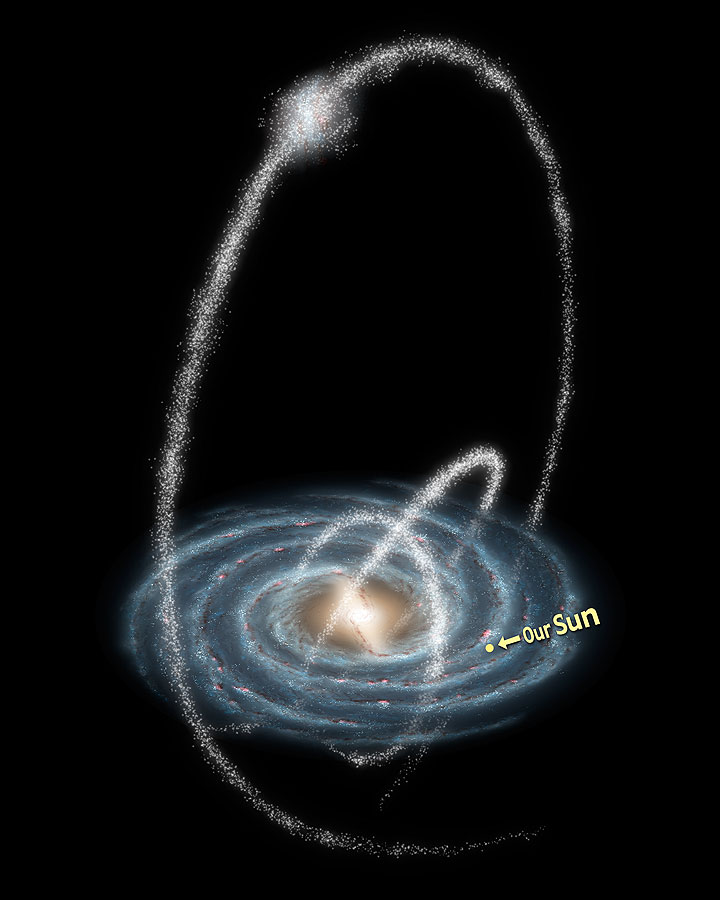
Artist’s impression of a stellar stream arcing high in the Milky Way’s halo. [NASA]
The next talk was given by Jeffrey Andrews of Northwestern University, who discussed Theia 456, a possible new stellar association in the galactic disk. He and his team found that Theia 456 is a new stellar structure in the Milky Way and spans 200 pc, or 25 degrees across the sky (that’s ~50 times the diameter of the full Moon). The stars in the structure most likely have a common origin because of their consistent age and metallicity. The team concludes by saying that this is just the beginning, and that there are possibly more of these stellar structures out there! Press releaseThe final talk of the session was given by Kat Barger from Texas Christian University, who talked about the Milky Way’s defense against an incoming gas cloud. She discussed Complex A, a giant gas cloud that is currently bumping elbows with our galaxy. The halo of our galaxy, however, is fighting against it and slowly dissolving the gas cloud. Complex A is currently the best-mapped gas cloud that did not originate from the Milky Way, and it helps us decipher how galaxies obtain the gas they need to form stars.
AAS Strategic Assembly Town Hall (by Haley Wahl)
This town hall, which was rescheduled from Wednesday, focused on the strategic plans of the AAS. President Paula Szkody (University of Washington) started off by introducing the AAS vision statement, which says, “We seek a world where all people value and benefit from a scientific understanding of astronomy that enhances their connection to and enjoyment of the universe around us.” She then went on to the AAS values, which state principles such as, “We act with scientific integrity and transparency as we responsibly and impartially acquire, share, manage, and use scientific data and understanding.” See image below for full set of values.
Full list of AAS values.
After some discussion, she shared the five strategic priorities of the AAS:
Build equitable and inclusive practices within the astronomy research community
Address significant global issues that affect astronomy
Improve astronomical science dissemination, scientific publication and literacy, STEM education, and professional learning across all career paths chosen by astronomers
Cultivate our network of partnerships to strengthen new initiatives, advance our mission, and strive toward our vision
Improve transparency and interconnections among the AAS Board, Divisions, Committees, and Members to accomplish our goals
The rest of the meeting was devoted to answering questions from the Slack channel (#aas-strategic-assembly-town-hall). Visit the AAS strategic planning website for more information about their strategic plans!
SOFIA Town Hall (by Abby Waggoner)
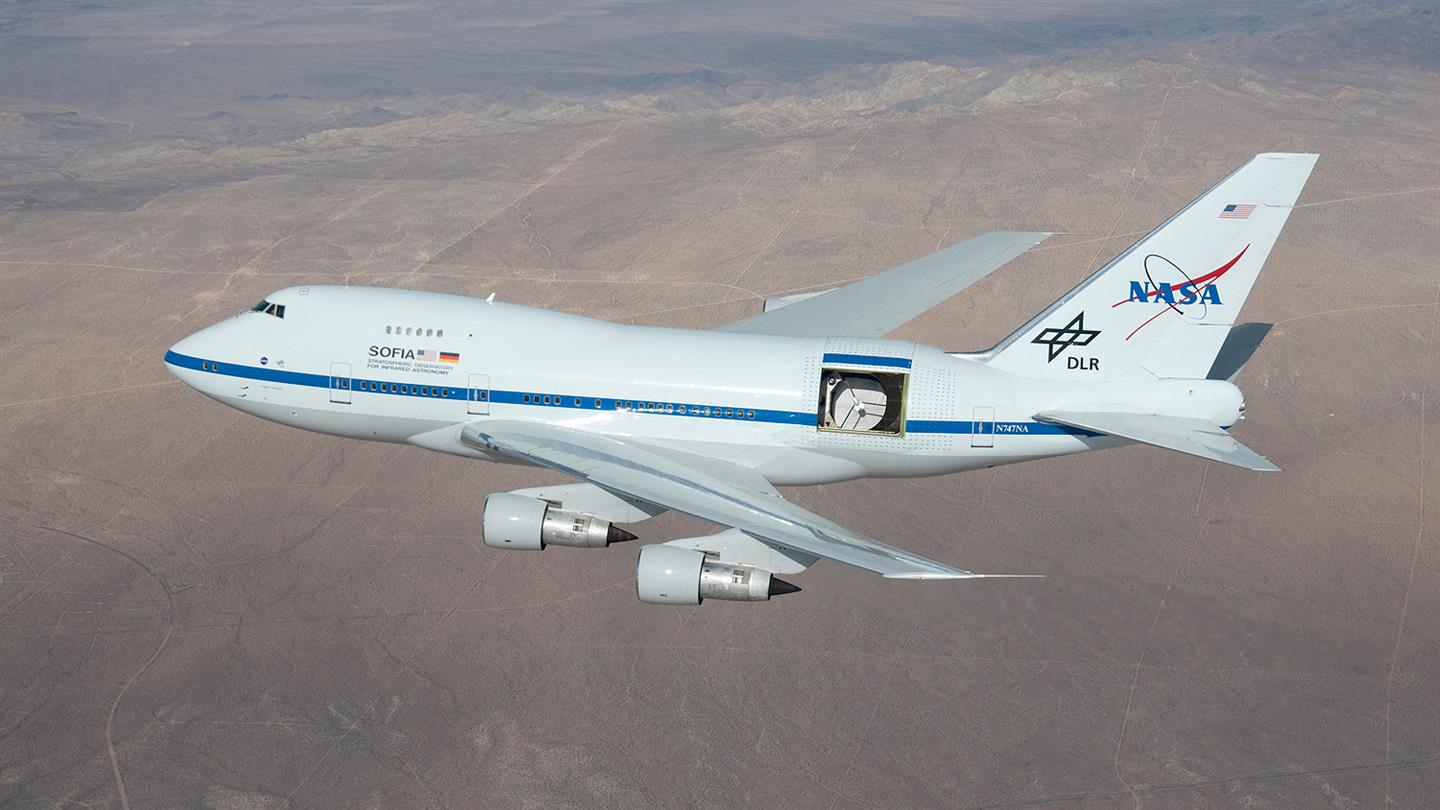
SOFIA, a modified Boeing 747SP carrying a 2.7-m telescope. [NASA]
In this town hall, Margaret Meixner, the Science Mission and Operations Director, welcomed us to discuss SOFIA, an infrared observatory that flies in an airplane in the Earth’s stratosphere. She began by listing SOFIA’s science highlights from the past year:
The first detection of molecular water on the Moon’s surface
Results suggesting that gravitational collapse of molecular clouds and star formation can occur even in the presence of strong magnetic fields
The detection of a “cold” quasar, a galaxy in which the central supermassive black hole is actively accreting matter, yet the star formation in the galaxy is still going strong (a surprising result, since black holes are thought to halt star formation)
Evidence of the building blocks of complex organic molecules, found in disks around massive stars via high-resolution spectroscopy
The first detection of the molecule 13CH in the interstellar medium.
Meixner highlighted that SOFIA observations were suspended March–August 2020 due to the pandemic, and the observatory is currently suspended in Hamburg, Germany for scheduled maintenance. The image below shows every flight path SOFIA took in the past year.
SOFIA flight paths for 2020.
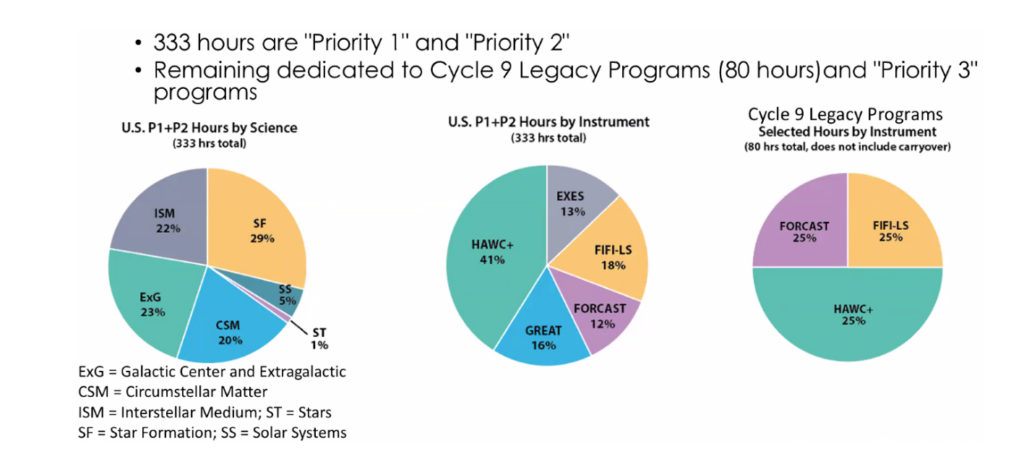
Next up, James Jackson, the Associate Director for Research, gave us an overview of the Cycle 8 observations and Cycle 9 proposing cycle. Because of the pandemic-related shutdown, Cycle 8 is now scheduled to continue until July 2, 2021, but unfortunately the 2020 Southern Hemisphere deployment is no longer feasible. Instead, a number of flights will be conducted from Germany to accomplish high priority programs. Cycle 9 proposals vastly exceeded the available 820 hours of observing time, with 3,243.5 hours requested worldwide. The Cycle 9 breakdown is shown below. Jackson also highlighted a virtual workshop titled “Rock, Dust, and Ice: Interpreting Planetary Data” happening in March 2021.The final section of the town hall was an overview of the current and future SOFIA instrumentation, from William Reach, the Associate Director for Science Operations. The future of SOFIA aims to address questions concerning star and planet formation, the path to life, and calibrating the distant universe. These science cases will be addressed by developing new instrument capability that will improve sensitivity, map polarization, increase mapping speed, and more. The presenting group concluded by highlighting that SOFIA continues to make new discoveries, and with the upcoming instrumentation upgrades, SOFIA will be able to target more and more areas of the sky and astronomy.
Plenary: Stress-testing the Cold Dark Matter Paradigm: Trouble on Small-scales? (by Luna Zagorac)
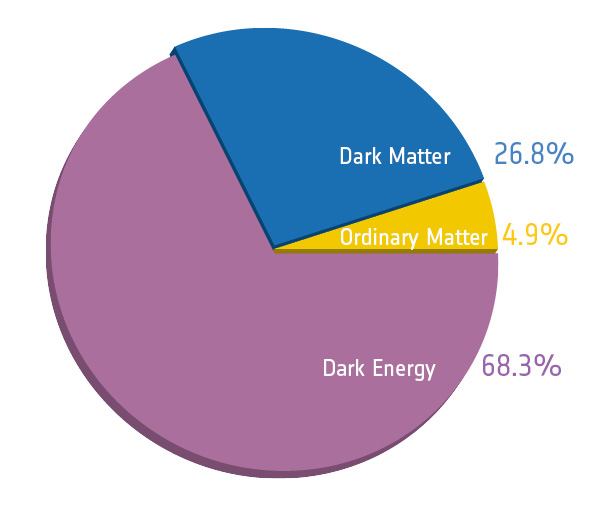
The relative amounts of the different constituents of the universe. [ESA/Planck]
The plenary by Professor Priyamvada Natarajan (Yale Univ.), which described projects undertaken with many collaborators, had as its central theme the interplay of high-resolution simulations and exquisite data sets, and how this interplay can be used to learn more about our universe. Comprising only a small fraction of the total energy density of the universe, baryons (i.e., “ordinary matter”) make up the astrophysical objects and systems we can image directly with instruments like the Hubble Space Telescope. On the other hand, substantially more of the energy density is in so-called dark matter (DM), which cannot be probed in the same way. However, if we accept that dark matter is cold (meaning it moves slowly with respect to the speed of light), and given cosmological parameter values from the cosmic microwave background, we can now use very sophisticated simulations to make mock “observations” of dark matter on computers. Comparing results from real and “mock” observations, Natarajan stress-tests our understanding of cold dark matter (CDM).
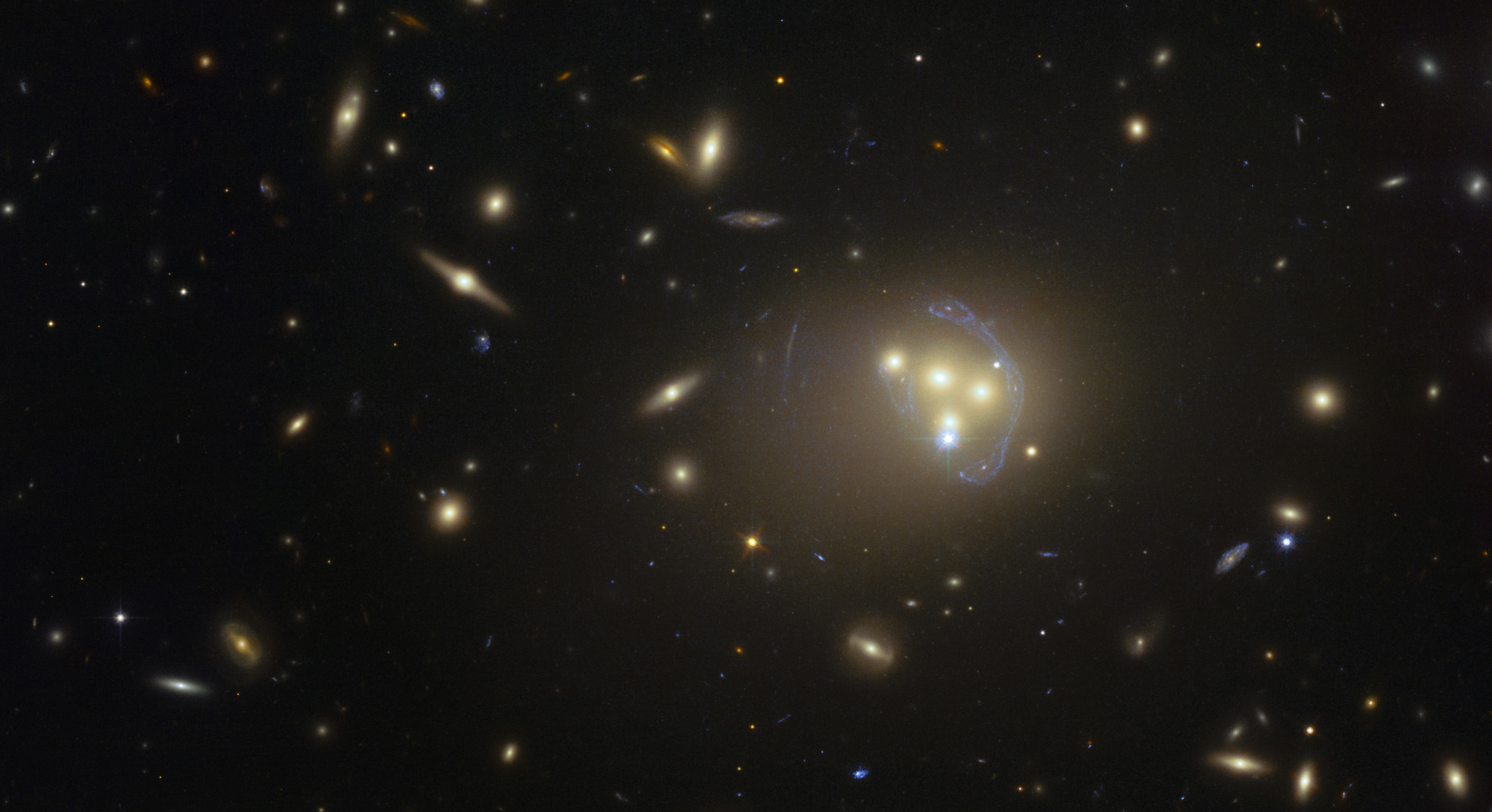
This Hubble image shows part of the galaxy cluster Abell 3827. The blue structures surrounding the central galaxies are gravitationally lensed views of a much more distant galaxy behind the cluster. [ESO]
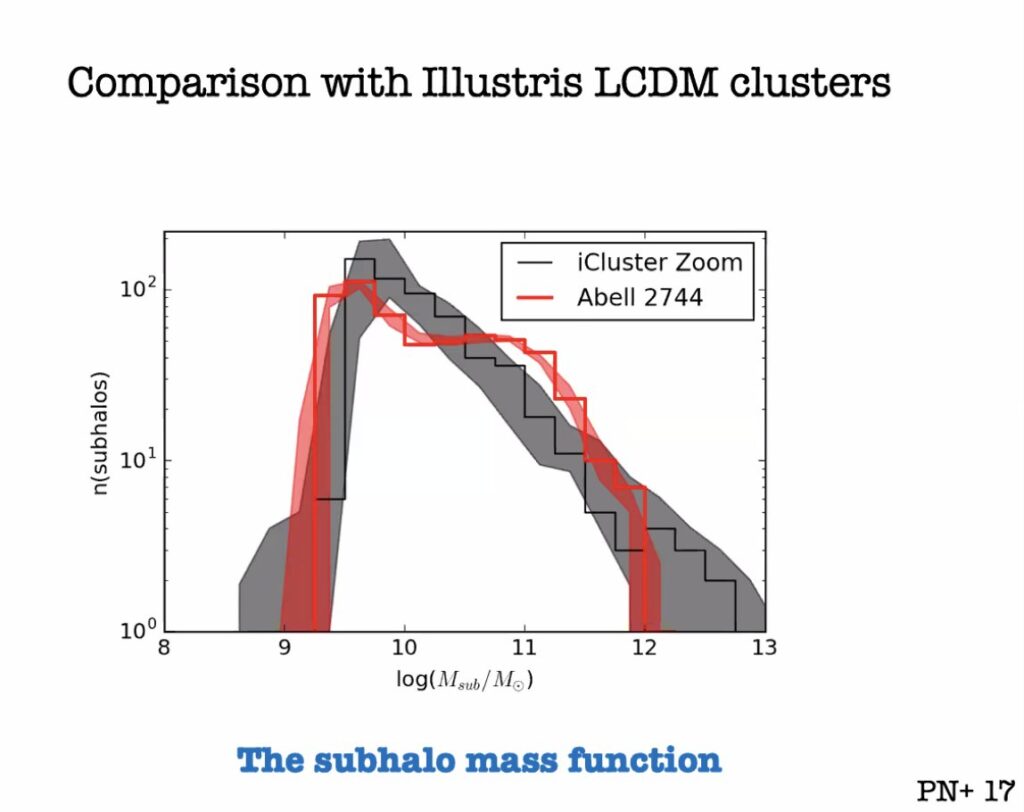
In particular, she uses clusters of galaxies for such comparisons, focusing on gravitational lensing. This is useful for several reasons, including the fact that galaxy clusters originally provided evidence for DM, and they offer constraints on DM and dark energy at once. In gravitational lensing, how much the light bends is proportional to the mass of the lensing object, and it’s also dependent on the ratio of angular distances to the object being lensed and the object doing the lensing. Therefore, if the lensing data are good, we can use them to both constrain cosmological parameters (probing dark energy) and map distribution of matter (probing dark matter). If the object doing the lensing is massive enough, we can even see multiple images of a lensed object. By mapping the objects we see multiply lensed, we can reconstruct the so-called caustics of the lensing object, which relate to its shape and concentration in its very inner parts (see FigureSL3here for an illustration). This allows us to build a subhalo mass function: in other words, we can predict how many smaller dark matter clumps of a given mass live within a smooth dark matter distribution called a halo. This is predicted by the CDM paradigm, and the simulations agree with the data here: CDM isn’t feeling too stressed about it!
This plot shows two subhalo mass functions, with mass of subhalo in solar masses on the horizontal axis and number of subhaloes of that mass on the vertical axis. A comparison of a subhalo mass function derived from a simulation (solid black with grey uncertainty) and a subhalo mass function derived from Hubble data (red with shaded uncertainty). Note that the two lines don’t differ significantly.
What does stress CDM out is galaxy–galaxy lensing: a regime in which both the lensed and lensing objects are restricted to being galaxies. With galaxy–galaxy lensing we can probe the mass within the inner 5–10 kpc of the galaxy, gaining detailed information about mass distribution (and therefore dark matter distribution) within that range. Turns out, there is an order of magnitude discrepancy between simulations and data here: lenses are ten times less efficient in CDM simulations than in the data! After ruling out issues with the simulation or data resolution, this leaves us with two possibilities: 1) We have a poor understanding of the interplay between DM and regular matter in the cluster cores, or 2) there are deeper problems with the CDM paradigm! This is exciting, Natarajan explained, since gaps like these (see: Mercury’s orbit and General Relativity) sometimes lead to discoveries of new physics. With even better simulations being developed and many space-based missions on the horizon (such as JWST, Roman, and Euclid), Natarajan concluded this is an exciting time to be stress-testing CDM.Live-tweeting by Luna Zagorac
Press Conference: Evolving Stars & Nebulae II (by Abby Waggoner)
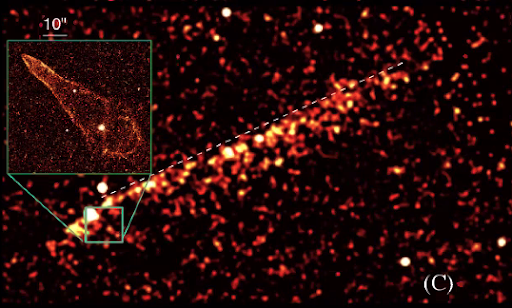
Pulsar PSR B2224+65, as presented by Daniel Wang.
The final press conference of AAS 237 was the second set of briefings on evolving stars and nebulae. The session began with Dr. Daniel Wang, from the University of Massachusetts, Amherst. In this talk, Dr. Wang discussed the pulsar PSR B2224+65 (image to the right), which had a strange jet (in the green box) pointing in the “wrong” direction. Using X-ray light, hot energetic particles were detected in the jet, suggesting that the jet’s unanticipated direction could be caused by magnetic fields. Press release
RGB image of the Butterfly Nebula, which shows extinction due to dust. [STScI, APOD/J. Schmidt; J. Kastner (RIT) et al.]
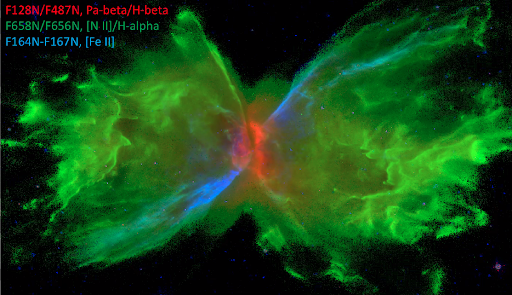
Next up, Dr. Joel Kastner, from the Rochester Institute of Technology, discussed recent observations of the NGC 6302 planetary nebula, more commonly known as the Butterfly Nebula. Typically, we expect nebulae to be spherical, since gas should expand equally in all directions after a supernova. But the Butterfly Nebula, as demonstrated in the picture to the right, is clearly not spherical. Dr. Kastner tells us the strange shape is likely caused by a combination of shocks and winds, which can be identified by tracing excitation and extinction in the nebula. The final presentation of the press conference was given by Dr. Paula Moraga Baez, from the Rochester Institute of Technology, and Dr. Jesse Bublitz, from the Green Bank Observatory. Dr. Moraga Baez and Dr. Bublitz told us about recent observations and measurements of the NGC 7027 nebula (shown in the cover image). Perhaps most notably, they discussed the observations of CO+ — which represents the first mapping of CO+ in a planetary nebula and only the second CO+ map of any object. CO+ is significant because it can tell us about the physics and chemistry in NGC 7027 when observed together with molecules such as H2 and HCO+. Press release
Lancelot M. Berkeley Prize: H0LiCOW! Cosmology with Gravitational Lens Time Delays (by Gourav Khullar)
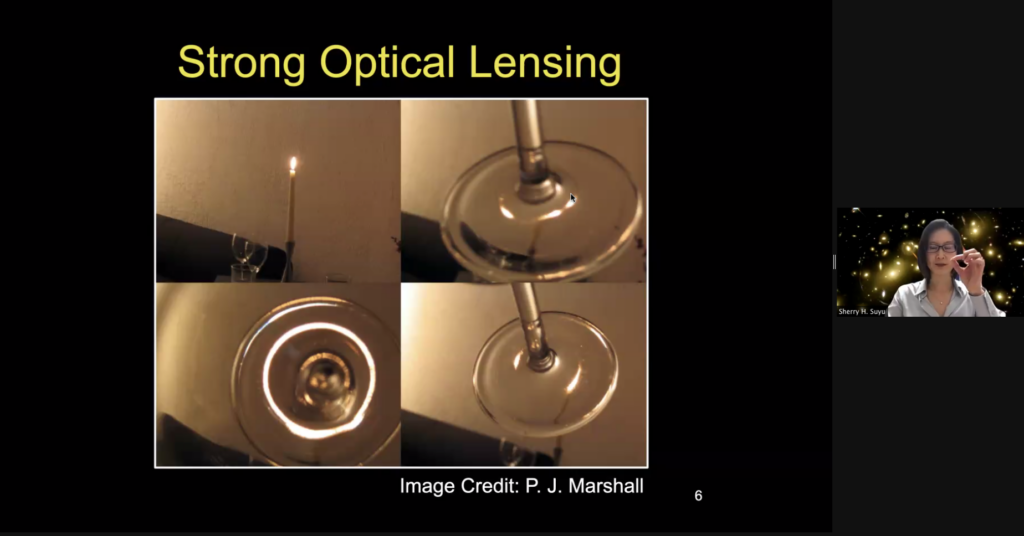
The last plenary talk for the meeting was by Prof. Sherry Suyu (Max Planck Institute for Astrophysics), winner of this year’s Lancelot M. Berkeley − New York Community Trust Prize for Meritorious Work in Astronomy (Berkeley Prize). Prof. Suyu started the plenary session by thanking her H0LiCOW collaborators and family for this prize, and she then jumped into an introduction to the concept of the Hubble constant, the expansion of the universe, and how measurements of this cosmological parameter have spanned decades, with different levels of precision. She also discussed the H0 tension — the tension that exists between a direct local measurement of H0 via thecosmic distance ladder(with Cepheid stars), and another measurement via theearly-universe cosmic microwave background. Following this, the introduction to gravitational lensing via accessible examples (see the example in the image below) was a great precursor to the science of galaxy- and cluster-scale lenses.
Example of how strong gravitational lensing works, using a candle as a background source and a wine glass as the lens.
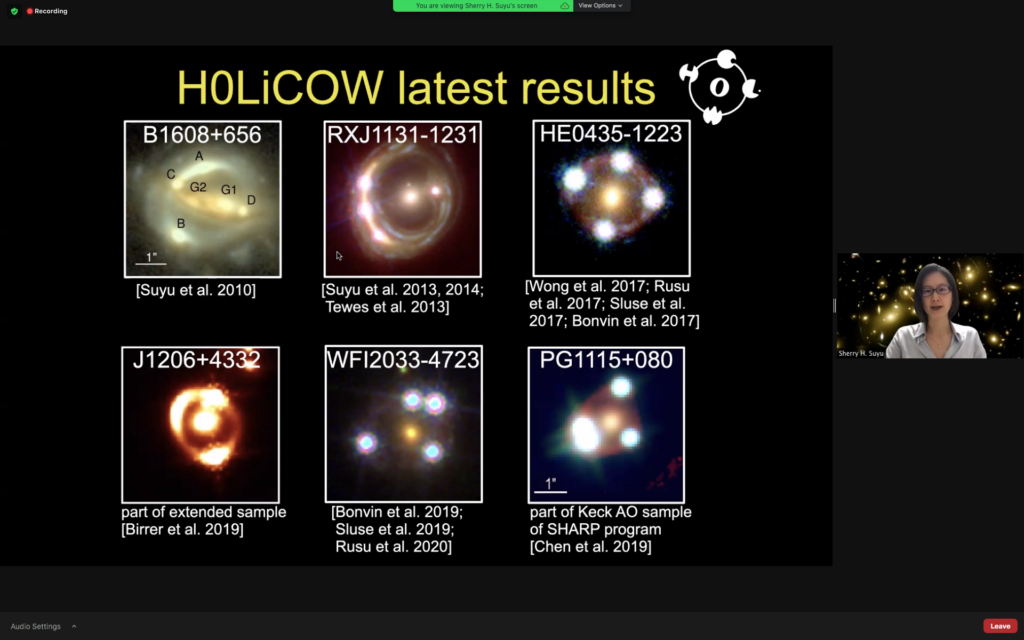
Prof. Suyu then shared her work as part of the H0LiCOW (H0 Lenses in COSMOGRAIL’s Wellspring) collaboration, where the objective has been to use six lensed quasars (and measurements of quasar variability from different images) to measure gravitational lensing time delays. Mathematically, time delay measurements involve the Hubble constant, which makes this methodology an independent means of measuring H0 (with ~2.4% precision) that could potentially solve the H0 tension. Prof. Suyu shared the work that her team has done to track a single quasar (and all its lensed images) across two decades, and the associated results from high-cadence (daily) and high signal-to-noise-ratio measurements of flux from this object, with huge success.
The latest results from H0LICOW.
Prof. Suyu also talked about the HOLISMOKES (Highly Optimised Lensing Investigations of Supernovae, Microlensing Objects, and Kinematics of Ellipticals and Spirals) collaboration, which is specifically interested in studying the progenitors of Type Ia supernovae (like SN Refsdal) as well as measurements of H0. Finally, Prof. Suyu gave a nod to future facilities like JWST and Rubin Observatory — which will generate a sample of quasars on the order of ~100 — that can allow us to study the above phenomena from a statistical perspective.Interview with Sherry Suyu by Gourav Khullar
Live-tweeting of the session by Tarini Konchady
Closing Remarks (by Briley Lewis)
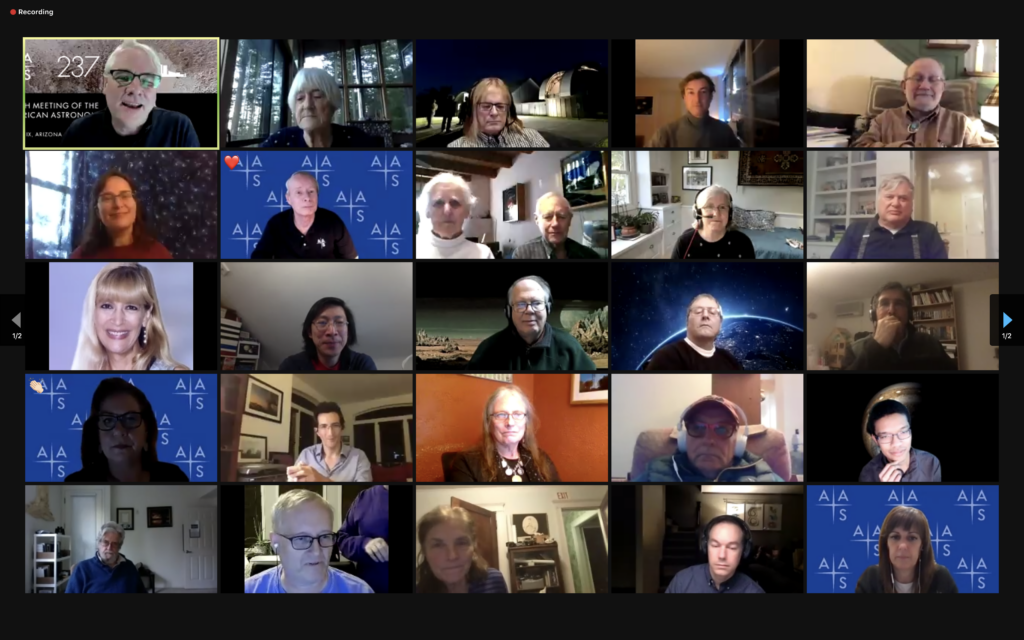
Astronomers gather over zoom to wrap up a great week of #AAS237!
To wrap up the week, AAS President Paula Szkody (University of Washington) and AAS Executive Officer Kevin Marvel said a quick few words. (Unfortunately, there can’t be a big closing reception with free food per usual! Hopefully in 2022!) They announced that the format for the AAS 238 meeting this summer is still to be determined, depending on the COVID-19 situation. They also thanked the large number of people that it takes to make this conference happen: the attendees, the volunteers, the session chairs, the Chambliss judges, the coordinators, the exhibitors, the sponsors, everyone involved! Kevin Marvel emphasized that “there’s no way we can have a conference without attendees” and this virtual conference brought together a lot of people, some of whom wouldn’t have been able to join in person. That brings us to the end of this whirlwind week of science — thanks for following along with Astrobites!

 The first plenary of the last day of AAS was all about galactic magnetic fields. Dr. David Chuss from Villanova University is an expert in submillimeter polarimetry, a technique that utilizes the polarization of light in submillimeter wavelengths to obtain information about low-magnitude magnetic fields. Today’s talk focused on results from the HAWC+ instrument, a polarimeter on the plane-turned-telescope SOFIA. HAWC+ is especially adept at detecting galactic magnetic fields, which are notoriously difficult to measure and are often neglected. By measuring the polarization of light from magnetically aligned dust grains, we can accurately trace magnetic fields throughout our galaxy.




 The final section of the town hall was an overview of the current and future SOFIA instrumentation, from William Reach, the Associate Director for Science Operations. The future of SOFIA aims to address questions concerning star and planet formation, the path to life, and calibrating the distant universe. These science cases will be addressed by developing new instrument capability that will improve sensitivity, map polarization, increase mapping speed, and more.
The presenting group concluded by highlighting that SOFIA continues to make new discoveries, and with the upcoming instrumentation upgrades, SOFIA will be able to target more and more areas of the sky and astronomy.
The final section of the town hall was an overview of the current and future SOFIA instrumentation, from William Reach, the Associate Director for Science Operations. The future of SOFIA aims to address questions concerning star and planet formation, the path to life, and calibrating the distant universe. These science cases will be addressed by developing new instrument capability that will improve sensitivity, map polarization, increase mapping speed, and more.
The presenting group concluded by highlighting that SOFIA continues to make new discoveries, and with the upcoming instrumentation upgrades, SOFIA will be able to target more and more areas of the sky and astronomy.