• RSS
  • Submit a Guest Post
  • Undergraduates: Submit your Research!
  • Suggest a Paper Topic!
astrobites
  • About
    • About Astrobites
    • Meet the Authors
    • Statement of Inclusivity
    • Copyright & Permissions
  • Latest Research
    • Daily Paper Summaries
    • Classics
    • Undergrad Research
    • Physical Review Coverage
  • Beyond astro-ph
    • Beyond astro-ph Library
    • Interviews
    • Career Navigation
    • Personal Experiences
    • Current Events
    • Teaching with Astrobites
  • Guides
    • EM Spectrum
    • Galaxies & AGNs
    • Spectroscopy and Spectral Lines
    • Adaptive Optics
    • Gravitational Waves
    • Transient Astronomy
    • Astrophysical Software
    • Graduate School
    • Writing a personal statement for grad apps
    • First Observing Run
    • …More Guides!
Select Page
A Warm Jupiter around an Evolving Star: Exploring Planet Migration

A Warm Jupiter around an Evolving Star: Exploring Planet Migration

by Matthew Green | Mar 31, 2016 | Daily Paper Summaries

What can this planet tell us about the evolution of planetary systems?

Double Bubble Galaxy

Double Bubble Galaxy

by Mara Johnson-Groh | Mar 30, 2016 | Daily Paper Summaries

M31 discovered to be blowing vast bubbles of gamma rays, just like our own galaxy.
Super Stars on Stage

Super Stars on Stage

by Benny Tsang | Mar 29, 2016 | Daily Paper Summaries

Super star clusters are the superstars in astronomy. Do we know how they come to be?
The First Planets: Diamonds in the Sky

The First Planets: Diamonds in the Sky

by Ashley Villar | Mar 28, 2016 | Daily Paper Summaries

What did the first planets look like?
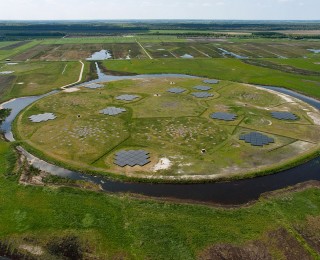
A new galactic component of cosmic rays?

A new galactic component of cosmic rays?

by Kelly Malone | Mar 24, 2016 | Daily Paper Summaries

Today’s paper investigates the mass composition of galactic cosmic rays using radio astronomy measurements
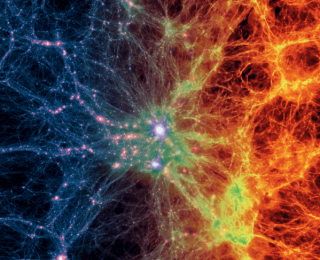
Teaching Computers How Galaxies Form

Teaching Computers How Galaxies Form

by Benny Tsang | Mar 23, 2016 | Daily Paper Summaries

After learning about galaxy formation, computers can imitate millions of hours of calculations in just a few minutes.

« Older Entries
Next Entries »

Loading

Follow our socials

  • Bluesky
  • Facebook
  • Instagram
  • RSS Feed

More Posts About

AAS AGN astronomy astrophysics binary stars black holes cosmology dark matter dwarf galaxies exoplanets galaxies galaxy evolution gravitational waves habitability JWST Kepler Milky Way observations planetary science planet formation protoplanetary disks radio astronomy simulations solar system spectroscopy star formation stars stellar evolution supernovae theory

Posts by Category

  • Accessibility
  • Applications
  • Beyond
  • Book Reviews
  • Career Navigation
  • Classics
  • Climate Change
  • Course Assignments
  • Crossposts
  • Current Events
  • Daily Paper Summaries
  • Game Reviews
  • Guides
  • Historical Astronomy
  • Instrumentation
  • Interviews
  • Outreach
  • Personal Experiences
  • PRJ
  • Quick Notes
  • Satellites
  • Teaching
  • Undergraduate Research

More Astronomy

  • AAS
  • AAS Nova
  • astro-ph
  • AstroBetter
  • APOD

Read Astrobites in Other Languages

  • Astrobitos (Spanish)
  • Astropontos (Portuguese)
  • staryab (Farsi)

Listen to Astrobites

  • astro[sound]bites

Discover More Incredible Science

  • ScienceBites Network
  • RSS

© 2026 Astrobites | All Rights Reserved | Supported by AAS | Designed by Elegant Themes | Powered by WordPress