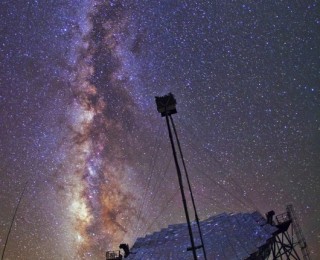
Looking for dark matter from dwarf galaxies
Today’s paper takes a look at combined data from two different gamma-ray experiments in the search for the products of dark matter annihilation

Today’s paper takes a look at combined data from two different gamma-ray experiments in the search for the products of dark matter annihilation
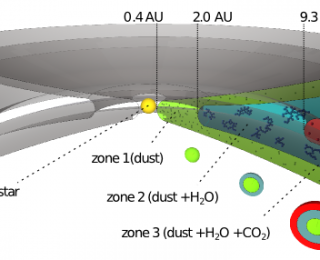
Planets are km-size bodies, but it is particularly puzzling how solid grains have grown to sizes beyond cm to m. Water ices can improve the sticking of such grains, but does this imply that ices from other molecules improve the sticking as well?
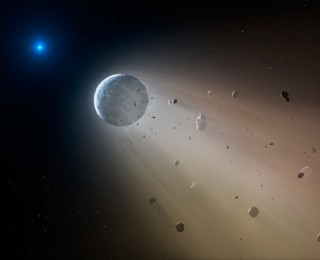
Astronomers may have finally observed the event that explains polluted white dwarfs and their debris disks.
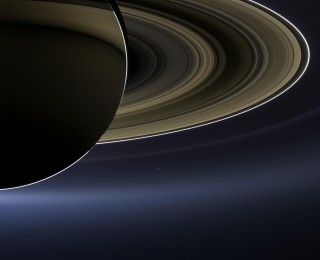
How can we find other pale blue dots? Today’s paper studies what could be the most time-effective way to search for Earth-like exoplanets, just by looking at their colors.
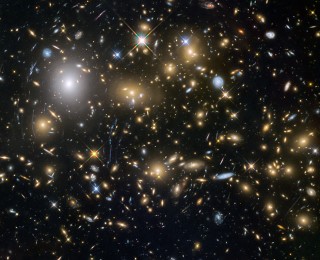
Our current understanding of the Universe suggests that its largest structures, such as clusters and groups of galaxies, would have formed only within the second half of the Universe’s current age. However, today’s paper explores the proposed observational evidence that such structures may actually have began forming a lot earlier than we expected. This poses intriguing questions about the way we model the cosmos, how we interpret our observations, and whether we might need to rethink cosmology.
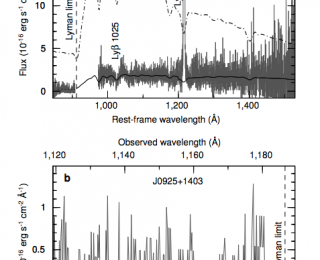
How did the universe go from being neutral and opaque to transparent and reionized at z ~ 6? Today’s paper gives us some observational evidence for what might be responsible.