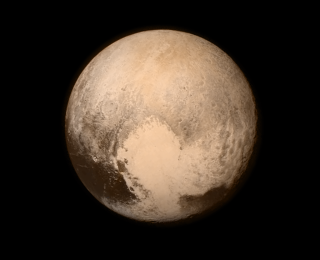
by Becky Smethurst | Jul 16, 2015 | Daily Paper Summaries
Pluto: the last and final of the ‘original’ 9 planets of the Solar System to be visited by a probe. NASA’s New Horizons arrived at this tiny world at the edge of the Solar System earlier this week bringing into sharp focus for the first time. Science was a plentiful from every new image that was released, so here’s a quick recap for you, just in case you blinked and missed it…
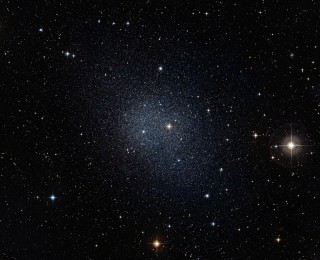
by Andrew Emerick | Jul 14, 2015 | Daily Paper Summaries
Dark matter dominated dwarf spheroidal galaxies are some of the best places to test predictions on how dark matter behaves in the Universe. Predictions for how the dark matter should be distributed in these galaxies disagrees with what is actually observed, however. The authors of today’s Astrobite investigate how the dark matter profiles may evolve over time from what is predicted to what we see today.
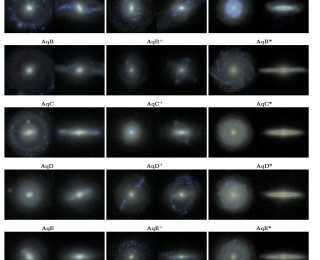
by Ben Cook | Jul 8, 2015 | Daily Paper Summaries
The authors of today’s paper created simulated galaxies, for which true properties are known. They then used synthetic observations to compare the true answers to the values observers would expect to recover.
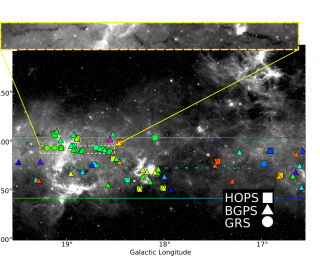
by Caroline Huang | Jul 3, 2015 | Daily Paper Summaries
How many spiral arms does the Milky Way have? You might be surprised to learn that astronomers are still not completely sure.
by Stacy Kim | Jul 2, 2015 | Daily Paper Summaries
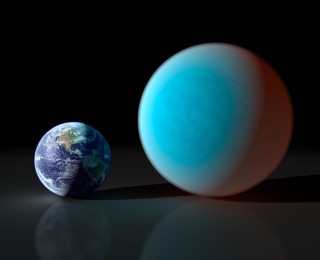
Why do some planets slightly more massive than Earth have gas envelopes, while others don’t?
by Michael Zevin | Jul 1, 2015 | Daily Paper Summaries
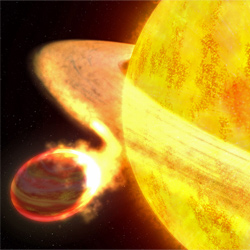
The past 20 years of exoplanet discovery have unveiled many peculiar planets in the Milky Way. Today’s paper investigates if two classes of these odd planets could be the same planet at different points in their evolutionary history – if hot Jupiters can transform into super-Earths!
