by Becky Smethurst | Jun 18, 2015 | Daily Paper Summaries
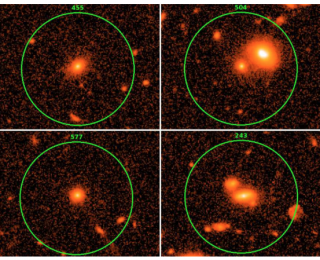
How do galaxies and black holes co-evolve and grow together? The authors of this paper search for a link between active black holes with high and low amounts of radio emission and search for a connection to mergers of galaxies which can grow both the mass of galaxies and black holes simultaneously.
by Andrew Emerick | Jun 16, 2015 | Daily Paper Summaries
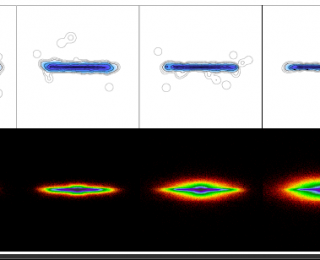
Star formation and supernova explosions play an important role in galaxy formation and evolution, in a process known as feedback. Today’s astrobite discusses how modifying the amount of feedback from supernova explosions affects the properties of the disc of a Milky Way galaxy, and how it affects the hot, gaseous halo surrounding massive galaxies.
by Suk Sien Tie | Jun 12, 2015 | Daily Paper Summaries
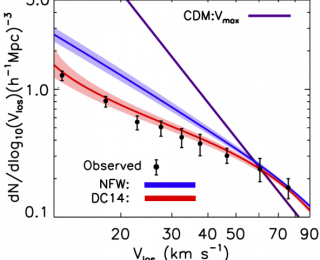
Dark matter permeates the Universe and surrounds every galaxies in the form of dark matter halos. We don’t really know dark matter works, as predictions of standard cosmology, Lambda Cold Dark Matter (ΛCDM), are way off from observations. Is this the death of Cold Dark Matter, or there are something more to it?
by Meredith Rawls | Jun 11, 2015 | Daily Paper Summaries
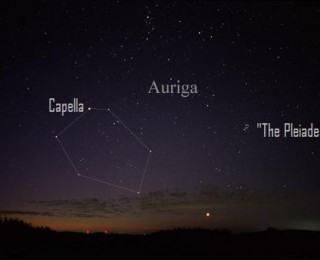
While you might expect astronomers to already have a complete understanding of bright stars easily visible to the naked eye like Capella, observations have historically failed to line up with stellar evolution theories. Today’s paper revisits Capella with a new suite of observations to finally uncover some of its secrets.

by Ben Cook | Jun 11, 2015 | Daily Paper Summaries
You can now log on to Reddit and ask the Astrobites team all your astronomy, physics, and grad-school related questions!Ask Us Anything!Astrobiters will be answering your questions all day long. Come join the...
by David Wilson | Jun 9, 2015 | Daily Paper Summaries
Among the many ideas proposed to explain the formation of our Solar system, one of the leading theories is the “Grand Tack”. This scenario suggests that, early in their formation, Jupiter and Saturn undertook a sweeping voyage, migrating from the outer Solar System to within the orbit of Mars. The two huge planets then entered an orbital resonance with each other, before their cosmic dance took them back out to their current positions. The model neatly explains, amongst other things, the current locations of Mars, the Asteroid Belt and the outer planets—which are hard to recreate in models assuming a more static Solar System.
