by Elisa Chisari | Oct 16, 2013 | Daily Paper Summaries
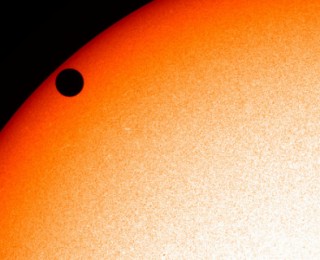
We are used to thinking about planet transits in visible wavelengths. What can we learn from planet transits in the radio band? Today, we discuss what these transits might tell us about the magnetic activity and the atmosphere of a star.
by Ryan Foltz | Oct 11, 2013 | Daily Paper Summaries
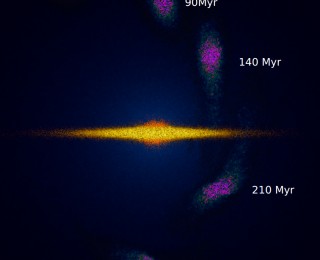
Using the upcoming Gaia telescope to measure ripples in the Milky Way will allow us to detect the impact of clumps of dark matter on our host galaxy.
by Shannon Hall | Oct 10, 2013 | Daily Paper Summaries
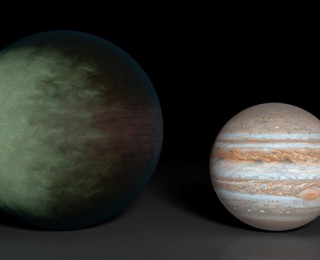
An international team of astronomers have used data from NASA’s Kepler and Spitzer space telescopes to create the first map of clouds on an exoplanet.
by Chris Faesi | Oct 9, 2013 | Daily Paper Summaries
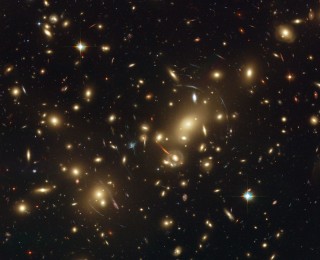
New results from stacked weak lensing measurements of over a hundred thousand galaxies show that, on large scales, light from stars appears to trace the dark matter distribution of the Universe remarkably well.
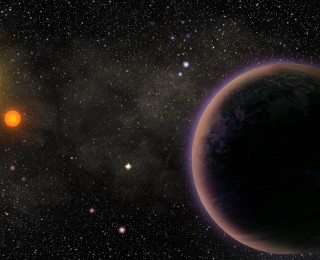
by Nick Ballering | Oct 7, 2013 | Daily Paper Summaries
Dust traps may be the key to forming Kepler-16b and other circumbinary planets.
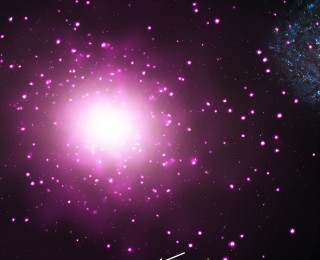
by Shannon Hall | Oct 4, 2013 | Daily Paper Summaries
The densest galaxy in the local Universe may have been found. M60-UCD1 is most likely a tidally-stripped remnant of a more massive progenitor galaxy. Strader et al. predicts that the progenitor of M60-UCD1 was ~ 50-200 times more massive, suggesting that it was once an elliptical galaxy that has been stripped of most of its mass.
