Rough in the Diamonds
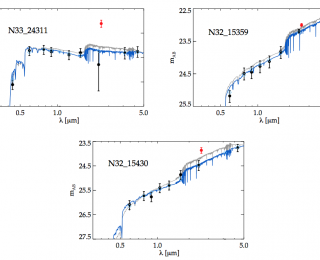
How do emission lines from nebulae affect broad-band photometry of high redshift galaxies?

How do emission lines from nebulae affect broad-band photometry of high redshift galaxies?
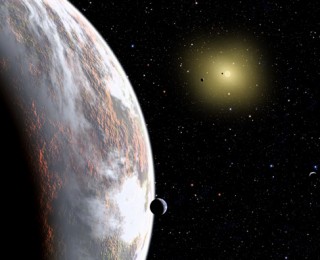
This paper describes the detection of transits for a planet previously identified via radial velocities (RVs). Measuring the properties of the planet with both the transit and RV method allows the authors to determine the density, which suggests it should have a lot of volatiles (e.g. H2O, CO2, etc). This discovery is particularly exciting because the planet orbits a bright, nearby star: ideal for follow-up observations to characterize its atmosphere!
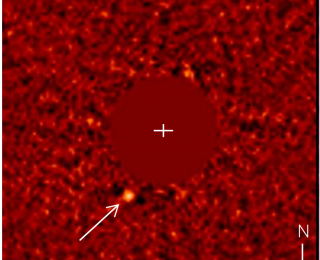
The newly discovered planet, HD 65086 b, is the lowest mass planet to be directly imaged.
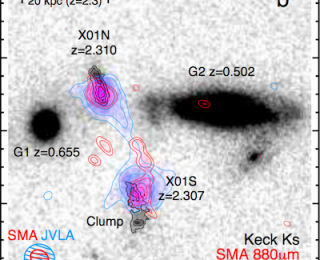
A team of researchers present multiwavelength observations of a rare merger between two massive, gas-rich starburst galaxies at a redshift of 2.3. This kind of merger could help explain the presence of the most massive elliptical galaxies at high redshift.
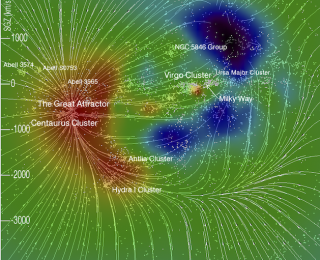
Astronomers map out the local universe in a way that is both intuitive and fascinating, marking the birth of the new science of “Cosmography”.
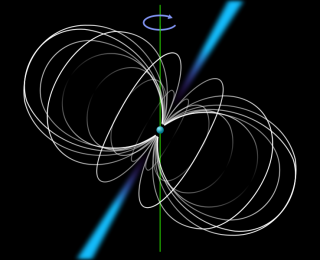
The authors of this article observe a sudden slowing in the rotation rate of a known magnetar. Although hundreds of glitches (a sudden increase in rotation rate) have been observed in radio pulsars and magnetars, this is the first direct evidence for an anti-glitch.