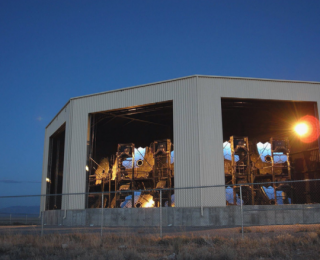
Cosmic Rays from the Telescope Array
An array of cosmic ray telescopes in western Utah is determining the origin of the most energetic particles in the Universe.

An array of cosmic ray telescopes in western Utah is determining the origin of the most energetic particles in the Universe.
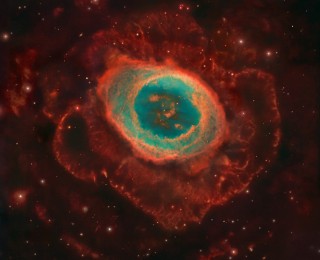
Recent images from the Hubble Space Telescope reveal a much more complex structure of the Ring Nebula than previously thought. The team presents a 3-D model of lobes and rings, with multiple ionization fronts and knots.
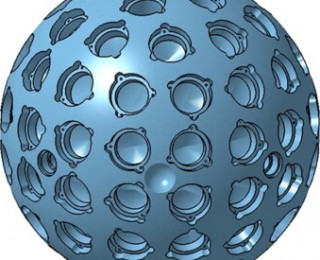
Frame Dragging is a phenomenon predicted by General Relativity, but its effects have been difficult to measure. A small, round satellite called LARES aims to change that.
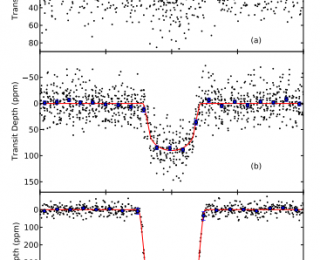
Barclay et al. find a “candidate” planet smaller than Mercury in the Kepler data…will it pass their tests and be confirmed as the smallest known planet?
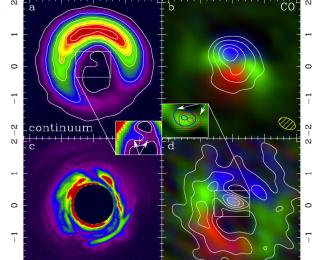
There’s a lot going on in the HD 142527 protoplanetary disk — accretion, gap opening, and a horseshoe-shaped dust ring. The authors of this paper used ALMA to take a closer look at the gas and dust in this busy disk.
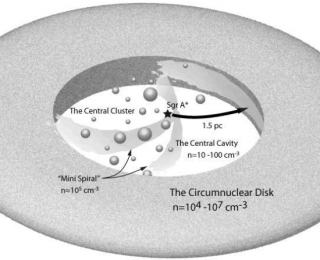
In this article, the authors measure the cosmic ray ionization rate within a few parsecs of the galactic center. They find that the cosmic ray ionization rate is an order of magnitude larger than the galactic standard and also that the molecular gas near the galactic center is much warmer than the typical galactic molecular cloud.