by Justin Vasel | Mar 3, 2012 | Daily Paper Summaries
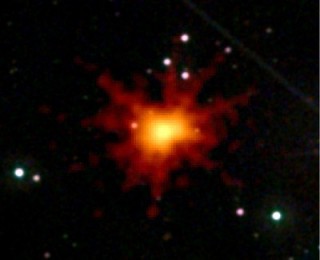
Gamma ray bursts are high-energy events generally associated with supernova explosions in other galaxies. Though it is possible to study these events via the gamma photons that arrive here on Earth, energetic neutrinos are better suited to probe the optically-thick afterglow of gamma ray bursts and provide a more detailed description of the processes involved. This paper delves into the details of studying these neutrinos.
by Adele Plunkett | Mar 2, 2012 | Daily Paper Summaries
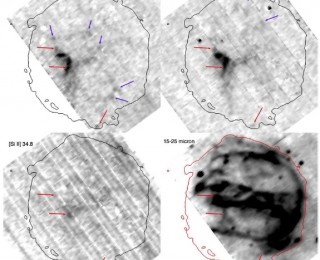
Paper title: Spitzer Imaging and Spectral Mapping of the Oxygen-rich Supernova Remnant G292.0+1.8 Authors: P. Ghavamian, K. Long, W. Blair, S. Park, R. Fesen, B. Gaensler, J. Hughes, J. Rho, P. F. Winkler First Author’s Affiliation: Towson University, MarylandA star ends its life in a violent supernova (SN) explosion according to one of two (general) mechanisms — (1) core-collapse, forming a neutron star or black hole and an extremely energetic shock wave; or (2) thermonuclear explosion of a white dwarf, leaving no central remnant and releasing a very characteristic amount of energy used to infer the distance to these standard candles. Core-collapse SNe can be further classified according to their progenitor stars as type II, Ib or Ic, while thermonuclear supernovae are known as type Ia. More discussion on types of SNe can be found here, or in this Science in the News piece by another astrobiter.One way to better understand how SNe progress is by studying the leftovers, or remnants, of these events (if you like supernova remnants, check out this astrobite too). For example, G292.0+1.8 is a collection of cosmic remains from an unrecorded supernova event that probably occurred about 3000 years ago, and it is unique for its oxygen-dominated optical spectra — hence, its classification as an oxygen-rich supernova remnant (SNR). Moreover, G292 is the remnant of a core-collapse SN, with filaments of gas and dust emitting light as shocks from the SNR propagate outward into the circumstellar medium. The goal of today’s paper is to study emission from G292 at different wavelengths in order to investigate the energy and the morphology of core-collapse SNe.Observations of...
by Courtney Dressing | Mar 1, 2012 | Daily Paper Summaries
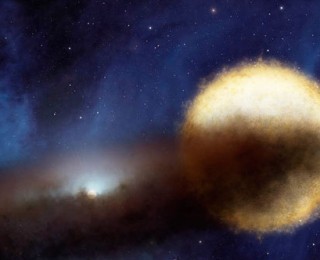
Every 27.1 years, the ε Aurigae system gets dimmer and stays dim for two years. What is causing the dip in brightness? Have Hoard et al. uncovered the invisible monster?
by Lauren Weiss | Feb 29, 2012 | Daily Paper Summaries
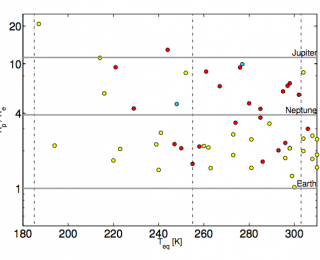
Of Kepler’s 2,321 planet candidates, many are in the “habitable zone.”

by Kirit Karkare | Feb 28, 2012 | Daily Paper Summaries
A new infrared camera is now flying 41,000 feet above the Earth’s surface!
by Caroline Morley | Feb 28, 2012 | Daily Paper Summaries
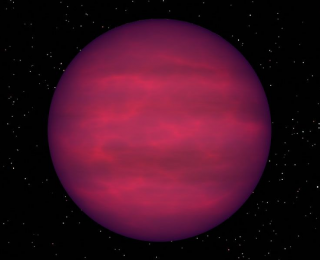
This paper describes an incredibly variable brown dwarf. To fit this variability with models, a combination of thick clouds and clearer areas are needed. This means that there are big dusty storms that cover large fractions of 2M2139’s surface!
