Flashy and Fashionably Late: the Fascinating Time Lag in Blazar Flares
The authors of today’s featured paper investigated how a decades-long stakeout of a sample of blazars uncovered new insights into a serious case of cosmic “jet-lag”.
The Shapley Supercluster is widely recognised as the most massive gravitationally bound structure in the local universe.The supercluster is made up of 11 galaxy clusters and groups and extends across ~ 260 megaparsecs. At its core, which this paper focuses on, are five clusters. This core hosts several radio haloes,which are caused by shock-heated gas from the Intracluster medium (ICM) and is evidence of ongoing cluster merger activity. This supercluster core is highly dynamically active (full of cluster-cluster mergers), which could influence the evolution of galaxies within the core. This paper examines the evolution of galaxies by observing the cold gas within galaxies (i.e. the neutral hydrogen) and compares several galaxy properties to do so (see also: this previous Astrobite featuring ram-pressure stripped galaxies in the Shapley Supercluster).
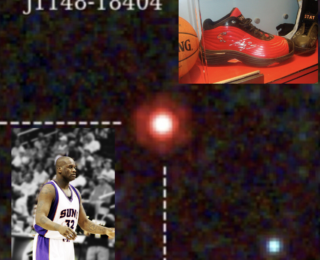
Today’s bite reports the discovery of the most distant red galaxy ever confirmed!
Characterising exoplanet atmospheres is one of the primary challenges for the coming decades and absolutely essential for our understanding of these alien worlds. Join us today as we dive into some of the ways we can study these distant worlds from the comforts of our labs here on Earth.
A new solution to Einstein’s general relativity suggests wormholes could be real and traveling through them might be possible.
How do astrophysicists research and model planet formation in protoplanetary discs? Learn how to simulate a protoplanetary disc using DustPy: software commonly used in state-of-the-art research!