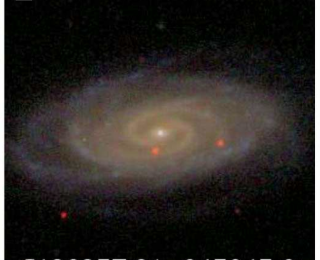
Bulgeless galaxies with growing black holes
Mergers make bulges in galaxies and black holes generally live in bulges, so mergers must grow black holes – simple. That was until we found bulgeless galaxies containing growing black holes…

Mergers make bulges in galaxies and black holes generally live in bulges, so mergers must grow black holes – simple. That was until we found bulgeless galaxies containing growing black holes…
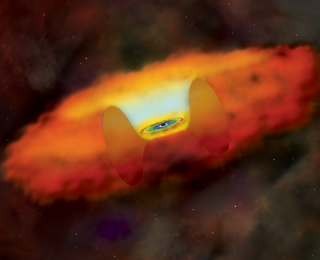
We can measure the expansion of the universe with velocities and distances of extragalactic objects. But measuring distances is tough! The authors of this paper have developed a new technique for measure the distances of AGN using the “echo” of light from heated dust.
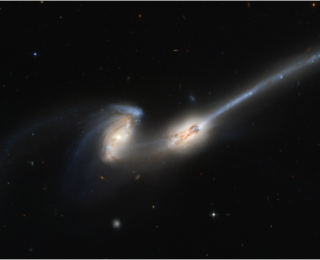
Every galaxy is thought to contain a black hole at the centre – but why are some active and some not? What process has ‘switched-on’ these active galaxies? Theorists suggest that major galaxy mergers could play a part for the highly luminous active galaxies but we’re currently lacking conclusive observational evidence to support this theory.

This month’s undergraduate research post features an intriguingly-shaped disk harboring planets, and a study to unmask sneaky, previously-misclassified AGN.
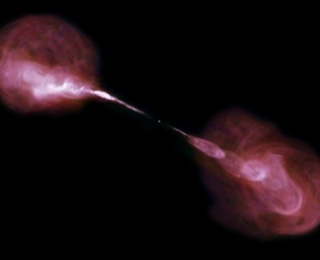
Has a multi-wavelength study of AGN across a large redshift range revealed that these energetic giants do not impact upon their host galaxy as significantly as previously thought?
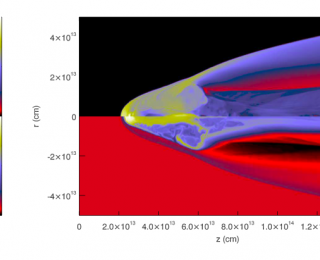
What happens when an astrophysical jet moving at enormous speeds plows into the gas and dust around it? Some of that matter gets dragged along for the ride — and according to this author, this process could create the two different types of jets that we see.