by Becky Smethurst | Jun 18, 2015 | Daily Paper Summaries
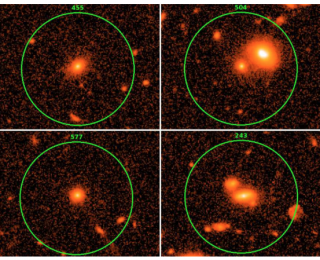
How do galaxies and black holes co-evolve and grow together? The authors of this paper search for a link between active black holes with high and low amounts of radio emission and search for a connection to mergers of galaxies which can grow both the mass of galaxies and black holes simultaneously.
by Suk Sien Tie | May 22, 2015 | Daily Paper Summaries
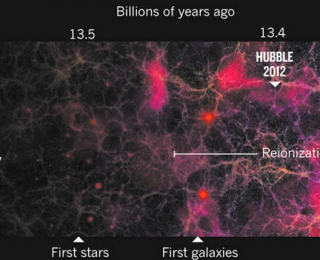
Cosmic reionization is a period in the Universe history when it switched from being predominantly neutral to mostly ionized. We still haven’t quite pinned down the source(s) that caused this transition, but we have our suspicions. It could be quasars. It could be galaxies. Or could it be something else?
[Figure from universe-review.ca/F05-galaxy06.htm]
by Becky Smethurst | Feb 26, 2015 | Daily Paper Summaries
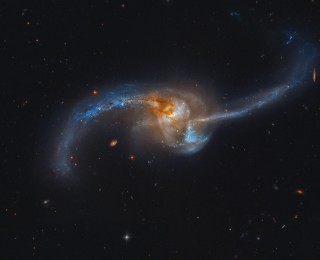
By measuring the black hole mass and velocity dispersion of currently merging galaxies each in various stages of a merger, the authors conclude that the growth of the central super massive black hole occurs in the early stages of each merger and outpaces any bursts of star formation or central bulge growth.
by Elisa Chisari | Dec 11, 2014 | Daily Paper Summaries
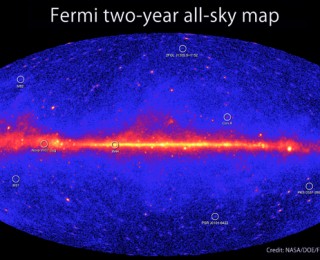
When two observations share some common information, they can be “cross-correlated” to extract it. In today’s example, we discover what the matter halos and energetic phenomena in the Universe have in common through a cross-correlation.
by Becky Smethurst | Oct 2, 2014 | Daily Paper Summaries
Direct observational evidence for positive feedback from the interaction of outbursts from active black holes and the surrounding medium has been lacking so far, until now…
by Andrew Emerick | Jun 10, 2014 | Daily Paper Summaries
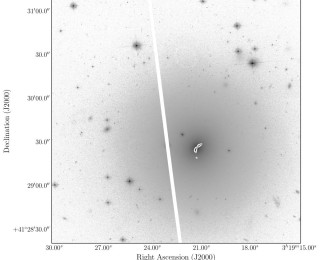
The diffuse gas contained within galaxy clusters can dramatically affect the galaxies moving within it. This includes bending the jets coming out of active galactic nuclei in galaxy clusters. The authors in today’s Astrobite report on extremely bent jets recently discovered in galaxy NGC 1272.
