by Courtney Dressing | May 11, 2011 | Daily Paper Summaries
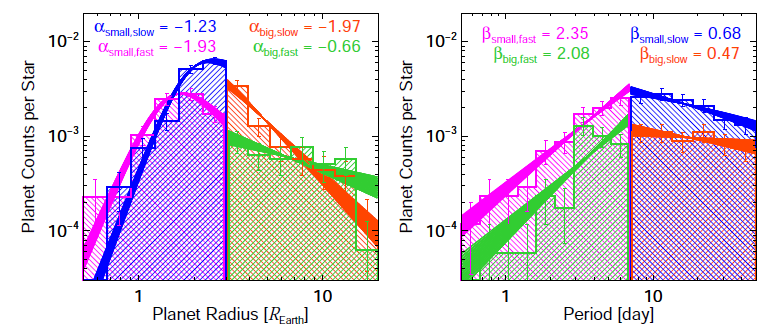
What does the Kepler data tell us about the number of planets per star and the distribution of planets in radius and orbital period? Andrew Youdin addresses that question by considering the selection effects in the Kepler sample and fitting a joint powerlaw in radius and orbital period.
by Courtney Dressing | Apr 23, 2011 | Personal Experiences
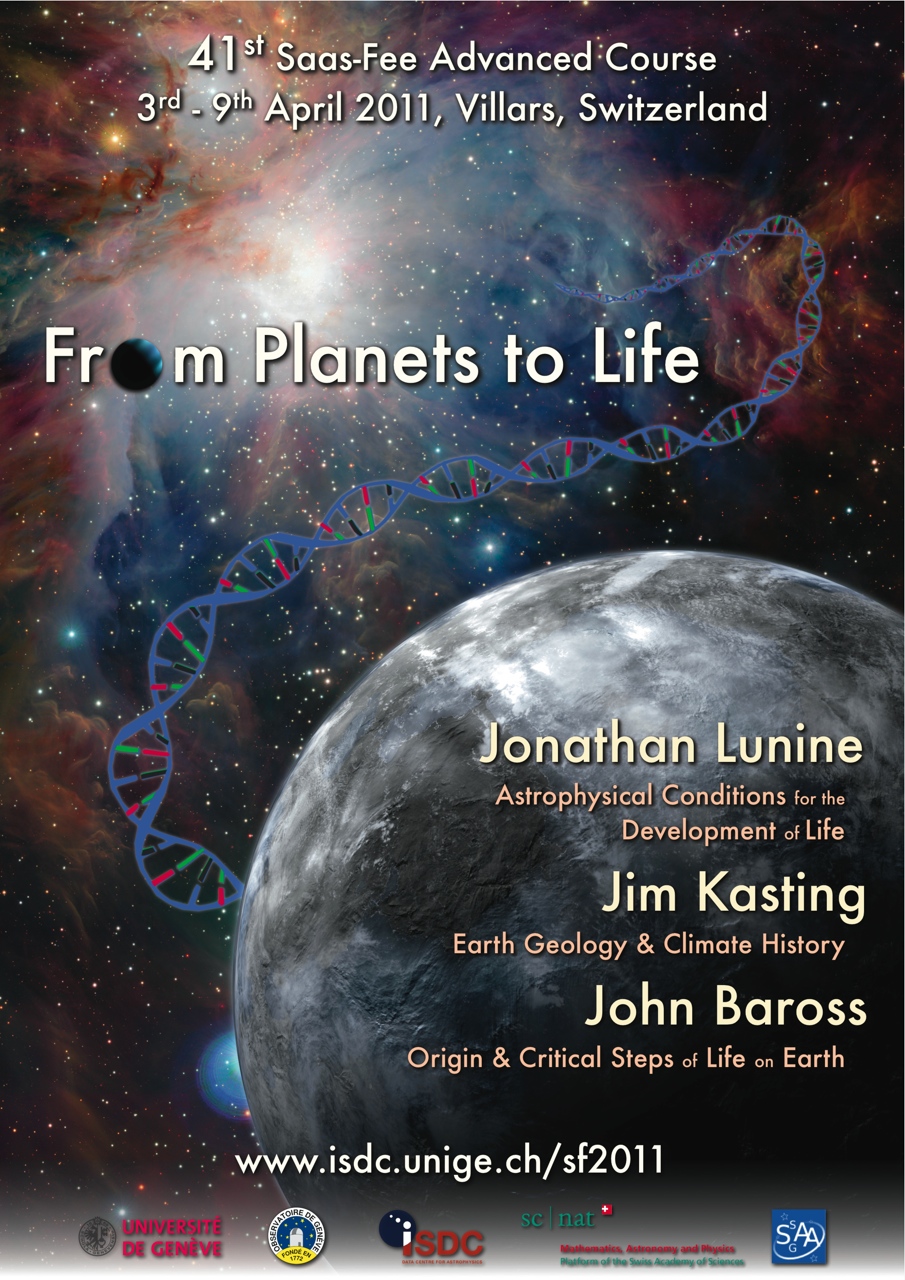
Sukrit and I just got back from the Saas-Fee astrobiology course. We learned about deep-sea life, the evolution of Earth’s atmosphere, the search for life on Titan, and more.
by Elisabeth Newton | Apr 9, 2011 | Daily Paper Summaries
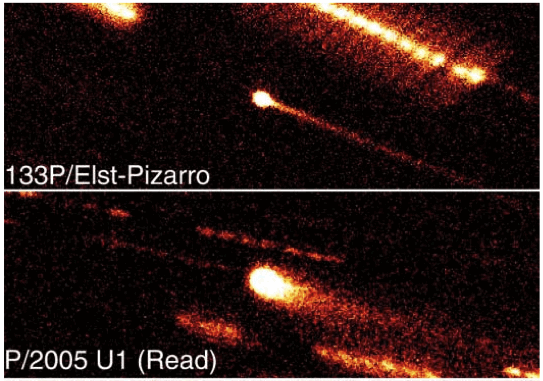
In 2006 Hsieh & Jewitt published the discovery of several main belt asteroids observed to have tails (just like comets do), which activate when nearest the Sun (just like comets do). In this paper, Licandro et al. test the origins of two so-called “main belt comets” by looking at spectra.
by Caroline Morley | Mar 30, 2011 | Daily Paper Summaries
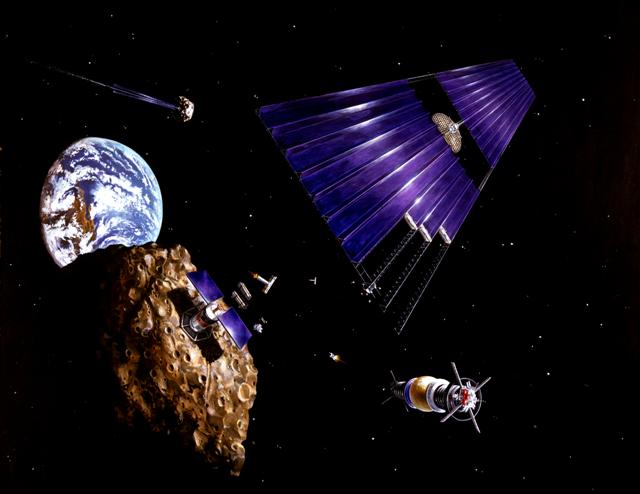
The authors consider a possible signature of an intelligent, spacefaring life form, more technologically advanced than ourselves: they consider the effects that significant asteroid mining would have on a debris disk and determine whether these effects would be observable.
by Sukrit Ranjan | Mar 26, 2011 | Personal Experiences
This past February, I had the opportunity to travel to Mars – or just about as close as you can get on Earth. I was privileged to be a part of the all-student Crew 99 of the Mars Desert Research Station (MDRS), which did work on astrobiology, mission planning, and astronomy engineering.MDRS is an analog Mars facility in the Utah desert, built, owned, and operated by the Mars Society (purpose: “to explore and settle the planet Mars”). The objective of the facility is to simulate living and working on Mars, so we can encounter, overcome, and learn to manage as many problems as we can before actual landings and exploration commence. During the January-April field season, crews of 6 head to MDRS for 2-week rotations. In addition to the general Mars exploration objectives associated with MDRS, each crew also brings with it a slate of scientific research objectives, often related to astrobiology or exploration engineering.Our crew was built around our astrobiology experiment: project LAMBDA. LAMBDA was an extension of our summer 2010 group project as part of the NASA Ames Academy for Space Exploration. LAMBDA was inspired by a couple of papers (Abrevaya et al 2010, Miller and Oremland 2008) which explored a new way to detect life: microbial fuel cells (MFCs). The idea goes as follows: all known life metabolizes, and in particular metabolizes via redox biochemistry. Microbial fuel cells use these redox reactions to generate electricity. Redox reactions in the anode chamber generate free electrons. Electronegativity differences between the anode and cathode cause electrons to be taken up by the electrodes and flow from the anode to...
by Courtney Dressing | Mar 16, 2011 | Daily Paper Summaries
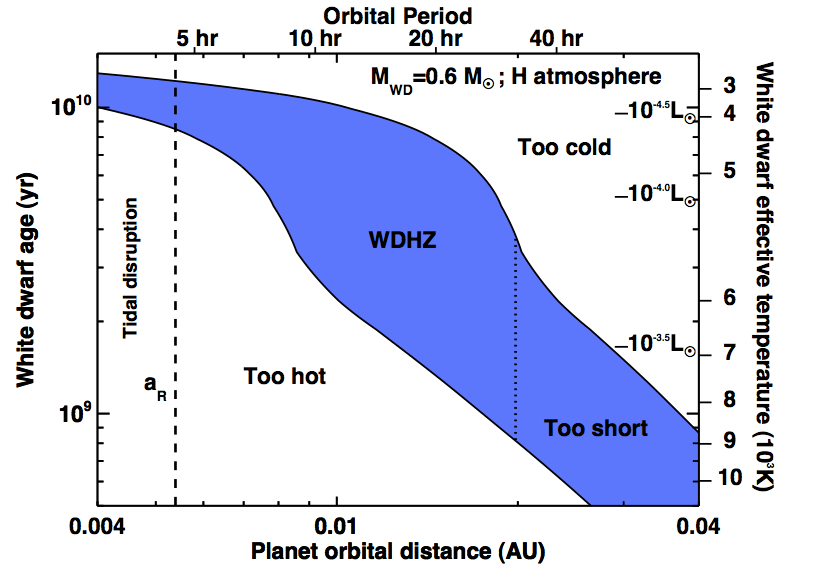
The Kepler mission is doing a fantastic job detecting planets around main sequence stars, but what about white dwarfs? Do they have planets? If they do, Agol 2011 suggests that those planets could be detected in ground-based transit surveys.
