by Michael Küffmeier | May 16, 2016 | Daily Paper Summaries
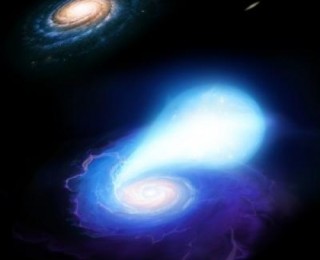
Recently, several supernovae have been observed that do not fit in any of the known categories. These Calcium-rich supernovae are challenging to explain, but in this astrobite you read that they are likely the result of an expelled merger.
by Gudmundur Stefansson | Apr 15, 2016 | Career Navigation, Daily Paper Summaries
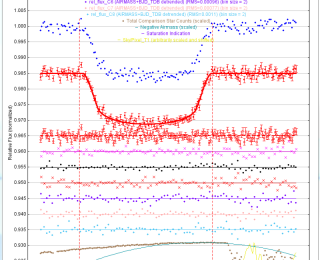
So you went observing, and you got a time series of images for precise photometry and you want to plot a light curve. Now what? Where do you start? Right here, with AstroImageJ.
by Astrobites | Mar 20, 2016 | Career Navigation
If you hold an engineering diploma and dream of exploring the universe, this Astrobite is for you: practical advice on how to take the leap into astronomy and astrophysics.
by Gourav Khullar | Feb 4, 2016 | Personal Experiences
Unlike most astrophysicists today, this one did go observing for a change. And what he finds there is out of this world. Literally.
by Mara Johnson-Groh | Jan 18, 2016 | Daily Paper Summaries
Preliminary results from a new survey looking for ultra-bright galaxies in the early universe.
by Gudmundur Stefansson | Dec 22, 2015 | Current Events, Daily Paper Summaries
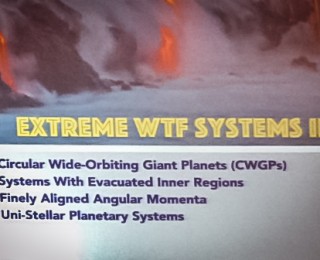
The third Extreme Solar System conference was held between Nov 29 to Dec 4th, in Kona, Hawaii, on the 20th anniversary of the first exoplanet detection around a main sequence star. This astrobite gives a brief overview of the conference.
