• RSS
  • Submit a Guest Post
  • Undergraduates: Submit your Research!
  • Suggest a Paper Topic!
astrobites
  • About
    • About Astrobites
    • Meet the Authors
    • Statement of Inclusivity
    • Copyright & Permissions
  • Latest Research
    • Daily Paper Summaries
    • Classics
    • Undergrad Research
    • Physical Review Coverage
  • Beyond astro-ph
    • Beyond astro-ph Library
    • Interviews
    • Career Navigation
    • Personal Experiences
    • Current Events
    • Teaching with Astrobites
  • Guides
    • EM Spectrum
    • Galaxies & AGNs
    • Spectroscopy and Spectral Lines
    • Adaptive Optics
    • Gravitational Waves
    • Transient Astronomy
    • Astrophysical Software
    • Graduate School
    • Writing a personal statement for grad apps
    • First Observing Run
    • …More Guides!
Select Page
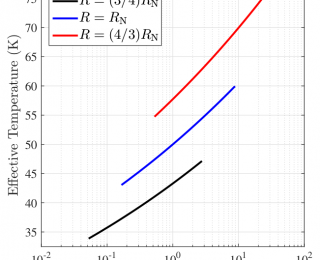
How cold is Planet X?

How cold is Planet X?

by Anson Lam | Mar 14, 2016 | Daily Paper Summaries

Simple physical models can yield useful insights into the structure of planets in the outer Solar System.

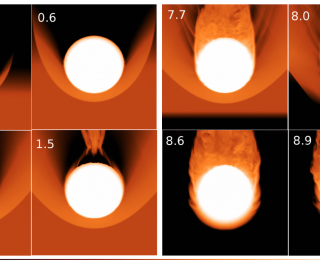
The Case of the Missing Giants

The Case of the Missing Giants

by Jesse Feddersen | Feb 16, 2016 | Daily Paper Summaries

Red giant stars are bright enough to see at the center of our galaxy, but they are missing. A new study puts stars in a wind tunnel to explore a possible way to dim the lights.
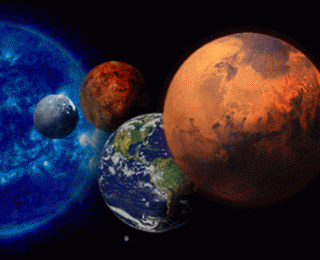
Creating a Cosmic Inventory of Rocky Planets

Creating a Cosmic Inventory of Rocky Planets

by Joseph Schmitt | Feb 12, 2016 | Daily Paper Summaries

Combining cosmology, galaxy formation, and exoplanet science together, can we calculate the number of rocky planets in the entire universe?
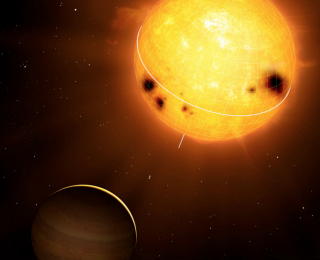
Uncovering planets and stellar activity using only radial velocities

Uncovering planets and stellar activity using only radial velocities

by Gudmundur Stefansson | Feb 10, 2016 | Daily Paper Summaries

How do we model stellar activity to disentangle planet signals from stellar activity using only RVs?
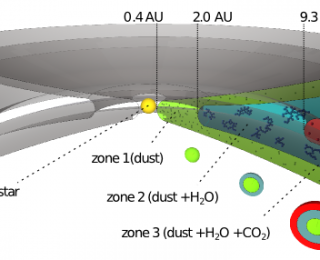
The bouncing barrier of silicates and ices

The bouncing barrier of silicates and ices

by Michael Küffmeier | Jan 27, 2016 | Daily Paper Summaries

Planets are km-size bodies, but it is particularly puzzling how solid grains have grown to sizes beyond cm to m. Water ices can improve the sticking of such grains, but does this imply that ices from other molecules improve the sticking as well?
An Overview of the Extreme Solar Systems III Conference

An Overview of the Extreme Solar Systems III Conference

by Gudmundur Stefansson | Dec 22, 2015 | Current Events, Daily Paper Summaries

The third Extreme Solar System conference was held between Nov 29 to Dec 4th, in Kona, Hawaii, on the 20th anniversary of the first exoplanet detection around a main sequence star. This astrobite gives a brief overview of the conference.

« Older Entries
Next Entries »

Loading

Follow our socials

  • Bluesky
  • Facebook
  • Instagram
  • RSS Feed

More Posts About

AAS AGN astronomy astrophysics binary stars black holes cosmology dark matter dwarf galaxies exoplanets galaxies galaxy evolution gravitational waves habitability JWST Kepler Milky Way observations planetary science planet formation protoplanetary disks radio astronomy simulations solar system spectroscopy star formation stars stellar evolution supernovae theory

Posts by Category

  • Accessibility
  • Applications
  • Beyond
  • Book Reviews
  • Career Navigation
  • Classics
  • Climate Change
  • Course Assignments
  • Crossposts
  • Current Events
  • Daily Paper Summaries
  • Game Reviews
  • Guides
  • Historical Astronomy
  • Instrumentation
  • Interviews
  • Outreach
  • Personal Experiences
  • PRJ
  • Quick Notes
  • Satellites
  • Teaching
  • Undergraduate Research

More Astronomy

  • AAS
  • AAS Nova
  • astro-ph
  • AstroBetter
  • APOD

Read Astrobites in Other Languages

  • Astrobitos (Spanish)
  • Astropontos (Portuguese)
  • staryab (Farsi)

Listen to Astrobites

  • astro[sound]bites

Discover More Incredible Science

  • ScienceBites Network
  • RSS

© 2026 Astrobites | All Rights Reserved | Supported by AAS | Designed by Elegant Themes | Powered by WordPress