by Kerrin Hensley | Apr 10, 2017 | Daily Paper Summaries
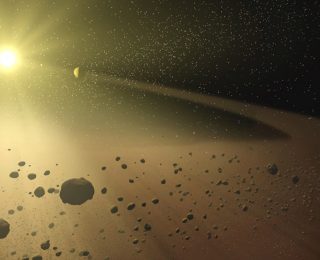
Interstellar space should be littered with debris ejected during the formation of planetary systems—but how much? Engelhardt et al. use solar system surveys and simulations to place an upper limit on the number density of asteroids and comets roaming the Milky Way without a parent star.
by Jamila Pegues | Apr 5, 2017 | Daily Paper Summaries
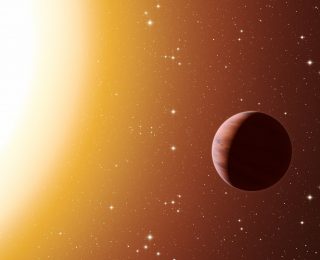
Techniques in astrostatistics help astronomers characterize large amounts of data. The authors of today’s astrobite use data-driven astrostatistics to distinguish between populations of hot Jupiters in a sample. It’s a technique that can definitely be put to good use over the next few decades, as oodles of observations pour in from the new telescopes of the 21st century.
by Jamila Pegues | Mar 6, 2017 | Daily Paper Summaries
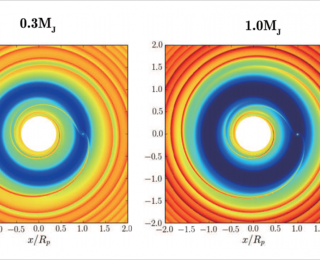
Characterizing planets through direct imaging is no easy task! But today’s authors offer a work-around formula, which estimates the crucial parameter of planetary mass from protoplanetary disk observations. In this astrobite, we discuss ‘The Theory’ and ‘The Practice’ of their cool equation.
by Jamila Pegues | Feb 28, 2017 | Daily Paper Summaries
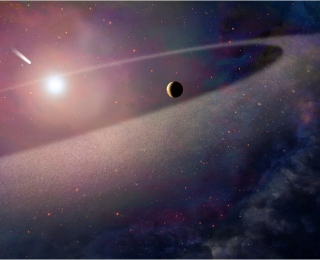
Astronomers have found hydrogen contamination in the atmospheres of helium white dwarfs – but where in the world/universe is it coming from?! The authors of today’s astrobite perform statistical tests to see if the source of this pesky hydrogen could be water-bearing rocky bodies out in space.
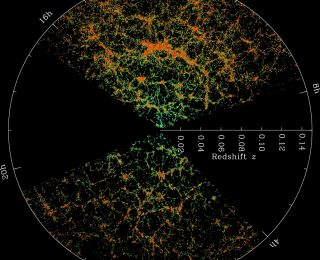
by Gourav Khullar | Feb 3, 2017 | Classics, Daily Paper Summaries
Today’s ‘beyond’ bite takes you back to 2000, when a new telescope meant to survey the night sky takes the astrophysics community by storm.
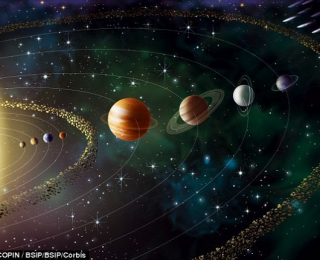
by Tim Lichtenberg | Nov 1, 2016 | Daily Paper Summaries
The puzzling architecture of the Solar system has long been a headache for planetary dynamicists. An alternative model of the gas giants’ movements may shed new light on the issue.
