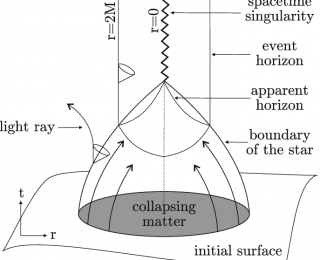
From Dust Bunnies to Black Holes: Oppenheimer-Snyder Collapse
In this summary of a classic paper from 1939, we look back at the very first theory of black hole formation: Oppenheimer and Snyder’s model of a spherically collapsing ball of dust.

In this summary of a classic paper from 1939, we look back at the very first theory of black hole formation: Oppenheimer and Snyder’s model of a spherically collapsing ball of dust.
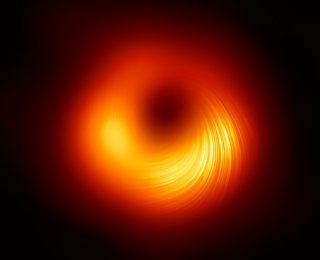
In 2019, the Event Horizon Telescope collaboration released the first image of a black hole. Now, they have new polarization measurements that probe its magnetic field.
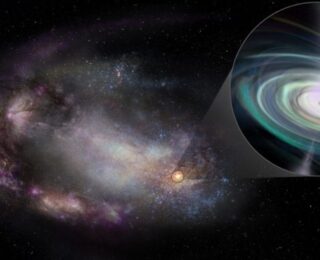
What superpower does a dwarf galaxy have?
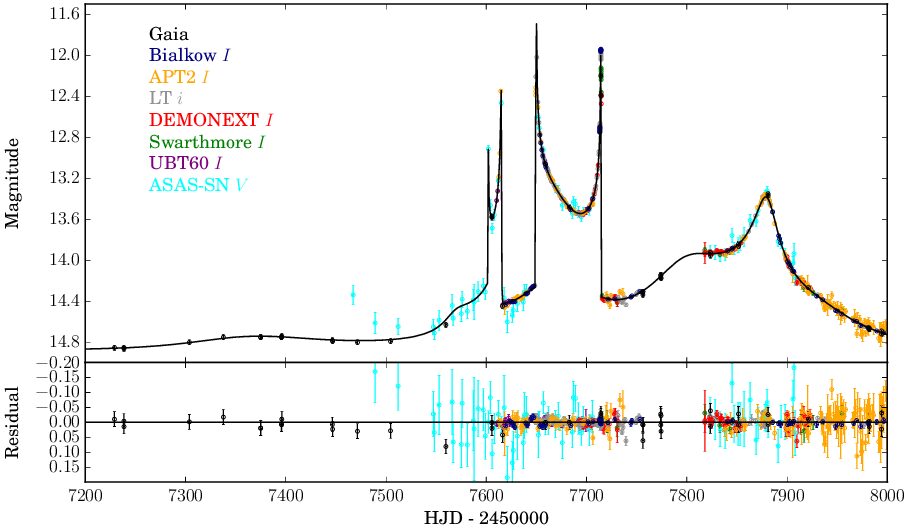
Today’s authors work out a full orbital solution for a binary microlensing system, indicating the method’s potential to probe the mass distribution of dark objects.
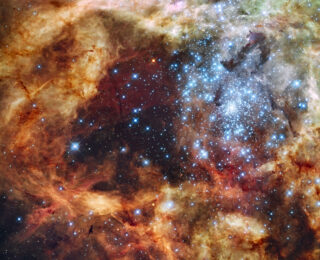
Astronomers show how the ELT will allow us to discover new black holes.
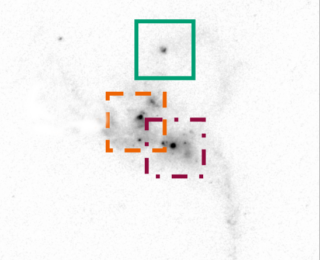
In today’s bite, Keir reports on a search for multi-AGN systems. How prevalent are they? And what can they tell us about black hole mergers?