by Kim Phifer | Apr 6, 2012 | Daily Paper Summaries
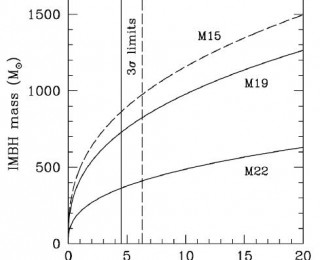
Strader et al. search for the elusive intermediate mass black holes in globular clusters.
by Kim Phifer | Mar 14, 2012 | Daily Paper Summaries
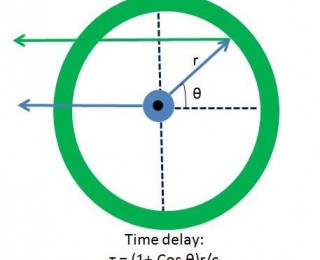
Doroshenko et al. use extensive monitoring of the continuum and broad line region luminosities of Markarian 6 to measure the central black hole mass.
by Justin Vasel | Feb 4, 2012 | Daily Paper Summaries
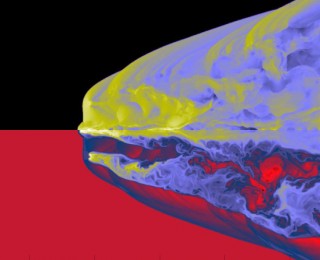
This paper considers the fate of red giants and clouds of dark gas that wander in front of the relativistic jets within AGN. Numerical simulations are performed under varying jet conditions for obstacles of homogeneous and inhomogeneous composition.
by Lauren Weiss | Jan 26, 2012 | Daily Paper Summaries
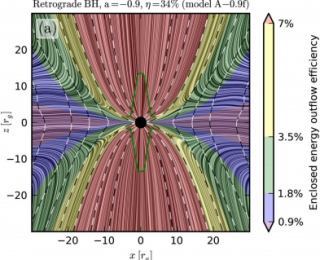
How do you measure a black hole’s rotation? Jets might be the answer!
by Lucia Morganti | Dec 16, 2011 | Daily Paper Summaries
Title: Two ten-billion-solar-mass black holes at the centres of giant elliptical galaxies Authors: Nicholas J. McConnell, Chung-Pei Ma, Karl Gebhardt, Shelley A. Wright, Jeremy D. Murphy, Tod R. Lauer, James R. Graham, Douglas O. Richstone First Author’s Institution: Department of Astronomy, University of California, Berkeley This Nature letter reports on a recent discovery that has also met with great interest in the popular press: astronomers have measured the biggest black holes ever! These two ten-billion-solar mass giants are significantly more massive than any other known black hole and more massive than predicted with the widely-used correlations relating the black hole mass to other properties of the host galaxy.First, a bit of context. Black holes are extremely compact concentrations of matter producing such strong gravitational pull that nothing, not even light, can escape. General relativity predicts such gravitational singularities of zero volume and thus infinite density. Studying stellar evolution, we learn that the explosions of heavy stars as supernovae can leave behind remnants of stellar mass-black holes. But super-sized black holes of million solar masses (called supermassive black holes) presumably originate from mergers of other black holes, or by accreting large amounts of stars and gas in an active galactic nuclei (AGN) phase.Nowadays astronomers believe that every galaxy harbours a supermassive black hole at its center, including our own Milky Way where a central mass concentration of four million solar masses has been deduced from 16-years monitoring of stellar proper motions (see also today’s astrobite on the amazing discovery of a huge gas cloud being swallowed by this black hole). As pointed out by Susanna’s astrobite, it is not possible...
by Allison Strom | Dec 16, 2011 | Daily Paper Summaries
Conference proceedings from the 2011 Fermi Symposium highlight some of the major science applications of the gamma-ray space observatory.
