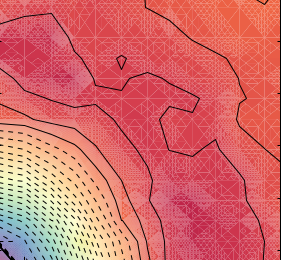
Void cosmology
The distribution of matter in the Universe has much to say about its constituents and evolution. Can the distribution of voids also help us understand the Universe?

The distribution of matter in the Universe has much to say about its constituents and evolution. Can the distribution of voids also help us understand the Universe?
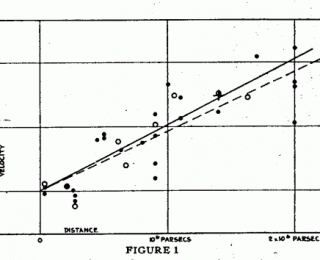
Different methods of measuring the Hubble constant yield slightly different values, but they are still in reasonable agreement.
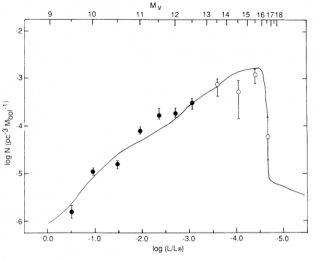
In today’s Astrophysical Classic, we hark back to 1987 and the introduction of a new method determining the age of the universe through the use of white dwarf stars.
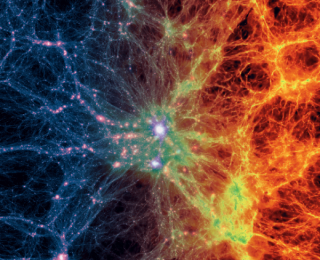
High resolution computational simulations are a valuable means by which Astronomers test our understanding of the Universe, and make predictions. The world of computational astrophysics broke new ground recently with the highest resolution cosmological simulation to date, Illustris, making for some spectacular science and some spectacular images.
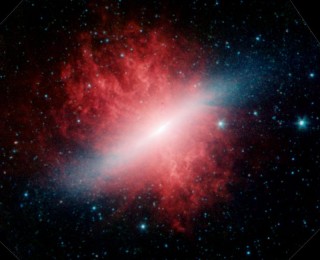
Can we find galaxies using the light emitted by their star forming regions? The authors of this paper explore a technique that would allow us to reach relatively unexplored epochs of the Universe.
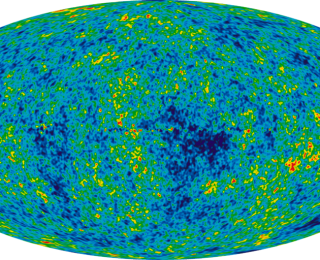
Astronomers measure the randomness in the Cosmic Microwave Background radiation to determine the cause of an anomalously cold spot.