by Andrew Emerick | Nov 12, 2014 | Daily Paper Summaries
Nature vs. nurture in the evolution of galaxies is not completely understood. Where a galaxy is found, its environment, can play an important role in determining the properties of that galaxy. This may not always be true, however.
by Andrew Emerick | Sep 29, 2014 | Daily Paper Summaries
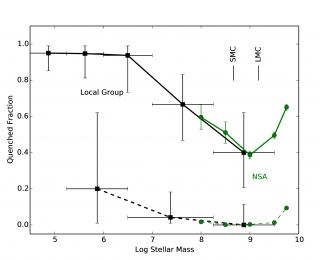
As galaxies evolve they eventually stop forming stars. There are a host of (sometimes violent) processes that can end star formation in galaxies. The authors examine how galaxy mass plays a role in stopping star formation for nearby galaxies.
by Elisa Chisari | Jun 30, 2014 | Daily Paper Summaries
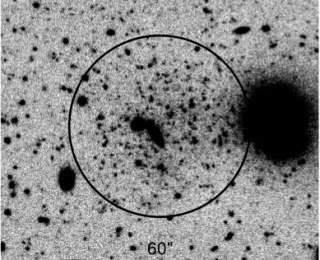
How small and faint can galaxies get? The authors of this paper report on the discovery of a dwarf galaxy in the Sculptor group.
by Becky Smethurst | Jun 17, 2014 | Daily Paper Summaries
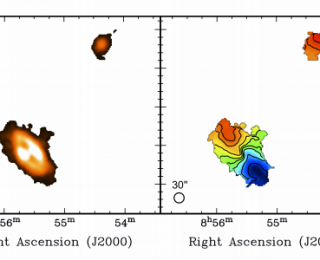
Once thought to be the main mechanism by which galaxies feed their star formation; the authors of this paper find that minor mergers cannot account for the observed star formation rates of galaxies.
by Astrobites | Jan 7, 2014 | Current Events
Keep up with all the latest happenings in Maryland with us, as we continue to liveblog the 223rd meeting of the American Astronomical Society. Also stay up to the minute with us on Twitter, @astrobites!
by Lucia Morganti | Feb 22, 2013 | Daily Paper Summaries
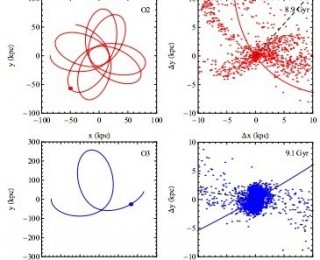
A phenomenological series of simulations of dwarf galaxies placed on different orbits around a Milky Way-like galaxy, in order to learn about the properties (and observability) of tidal tails in dwarf galaxies around our Milky Way.
