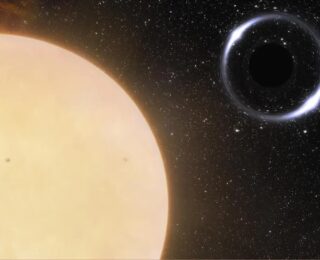
Attack of the Planet-Killer Dark Matter
Today’s bite explores exoplanets’ newest predator: dark matter. Black holes made up of dark matter may be lying at the hearts of planets…and eating them from the inside out.

Today’s bite explores exoplanets’ newest predator: dark matter. Black holes made up of dark matter may be lying at the hearts of planets…and eating them from the inside out.

Astronomers have tuned their radio telescopes to YZ Ceti, and it might be crackling with a magnetic conversation of a star and its planet. Is this a breakthrough detection, or just stellar noise playing tricks on us?
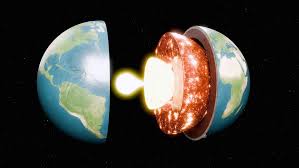
Not just the right temperature for water, but the right chemical recipe: only planets formed in a narrow nitrogen-, phosphorus-, and oxygen-balanced “Goldilocks” zone may keep life’s key ingredients available at their surface.
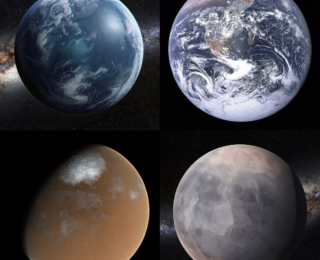
We use bottles, and sometimes a Brita, but how do planets store their water? The authors of today’s paper made a model to find out, and to evaluate whether certain planets are good at hanging on to their water or not.
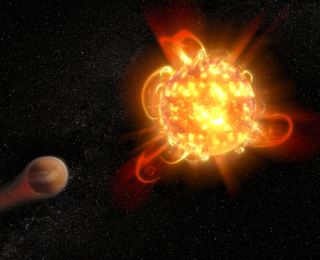
Exoplanets orbiting the most common stars in our galaxy experience intense space weather, raising questions about their ability to harbor life.
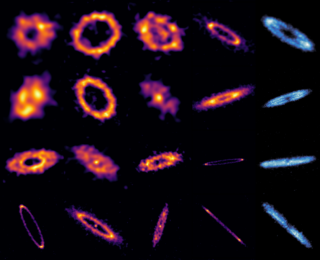
The first set of high-resolution ALMA observations of exoKuiper belts has been released, and they reveal an unprecedented wealth of structure.