• RSS
  • Submit a Guest Post
  • Undergraduates: Submit your Research!
  • Suggest a Paper Topic!
astrobites
  • About
    • About Astrobites
    • Meet the Authors
    • Statement of Inclusivity
    • Copyright & Permissions
  • Latest Research
    • Daily Paper Summaries
    • Classics
    • Undergrad Research
    • Physical Review Coverage
  • Beyond astro-ph
    • Beyond astro-ph Library
    • Interviews
    • Career Navigation
    • Personal Experiences
    • Current Events
    • Teaching with Astrobites
  • Guides
    • EM Spectrum
    • Galaxies & AGNs
    • Spectroscopy and Spectral Lines
    • Adaptive Optics
    • Gravitational Waves
    • Transient Astronomy
    • Astrophysical Software
    • Graduate School
    • Writing a personal statement for grad apps
    • First Observing Run
    • …More Guides!
Select Page
Heavy Metal Horizons: An Ultra-Hot Jupiter That Rains Liquid Iron

Heavy Metal Horizons: An Ultra-Hot Jupiter That Rains Liquid Iron

by Jamie Wilson | Mar 14, 2020 | Daily Paper Summaries

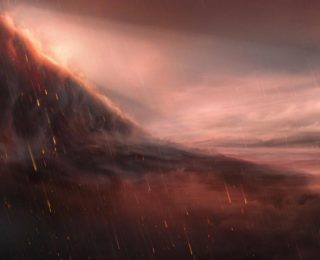
An international team of astronomers discover an ultra-hot Jupiter where liquid iron literally rains from the skies.

Emerging from the shadows: A method for detecting complex life on exoplanets

Emerging from the shadows: A method for detecting complex life on exoplanets

by Anthony Maue | Mar 12, 2020 | Daily Paper Summaries

Lifeforms like trees cast unique shadows on the Earth’s surface. Understanding this effect may enable remote detection of life on exoplanets.
The Habitability of Our Closest Neighbor

The Habitability of Our Closest Neighbor

by Guest | Feb 25, 2020 | Daily Paper Summaries

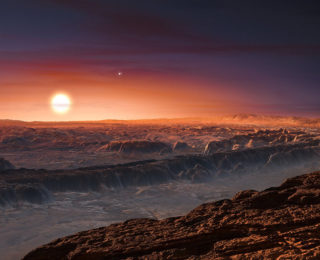
Is Proxima Centauri b habitable?

Making a “Mega-Telescope” for Exoplanets

Making a “Mega-Telescope” for Exoplanets

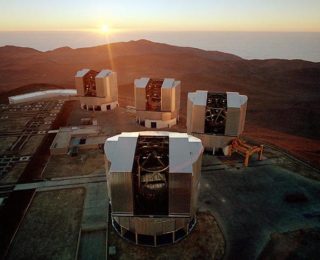
by Briley Lewis | Feb 17, 2020 | Daily Paper Summaries

How can we combine multiple telescopes to learn about exoplanets? Interferometry!
Unlocking the secrets of chaotic planetary systems

Unlocking the secrets of chaotic planetary systems

by Spencer Wallace | Feb 11, 2020 | Daily Paper Summaries

The resulting chaos in dynamically unstable planetary systems exhibits a surprising underlying order. This may be a clue to understanding this convoluted process.
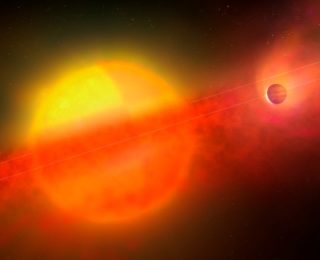
Hot planets hiding under a shroud of dust and gas

Hot planets hiding under a shroud of dust and gas

by Vatsal Panwar | Jan 12, 2020 | Daily Paper Summaries

Evaporating close-in planets could be found more efficiently if you look for them around stars enshrouded in the escaping planetary material.

« Older Entries
Next Entries »

Loading

Follow our socials

  • Bluesky
  • Facebook
  • Instagram
  • RSS Feed

More Posts About

AAS AGN astronomy astrophysics binary stars black holes cosmology dark matter dwarf galaxies exoplanets galaxies galaxy evolution gravitational waves habitability JWST Kepler Milky Way observations planetary science planet formation protoplanetary disks radio astronomy simulations solar system spectroscopy star formation stars stellar evolution supernovae theory

Posts by Category

  • Accessibility
  • Applications
  • Beyond
  • Book Reviews
  • Career Navigation
  • Classics
  • Climate Change
  • Course Assignments
  • Crossposts
  • Current Events
  • Daily Paper Summaries
  • Game Reviews
  • Guides
  • Historical Astronomy
  • Instrumentation
  • Interviews
  • Outreach
  • Personal Experiences
  • PRJ
  • Quick Notes
  • Satellites
  • Teaching
  • Undergraduate Research

More Astronomy

  • AAS
  • AAS Nova
  • astro-ph
  • AstroBetter
  • APOD

Read Astrobites in Other Languages

  • Astrobitos (Spanish)
  • Astropontos (Portuguese)
  • staryab (Farsi)

Listen to Astrobites

  • astro[sound]bites

Discover More Incredible Science

  • ScienceBites Network
  • RSS

© 2026 Astrobites | All Rights Reserved | Supported by AAS | Designed by Elegant Themes | Powered by WordPress