• RSS
  • Submit a Guest Post
  • Undergraduates: Submit your Research!
  • Suggest a Paper Topic!
astrobites
  • About
    • About Astrobites
    • Meet the Authors
    • Statement of Inclusivity
    • Copyright & Permissions
  • Latest Research
    • Daily Paper Summaries
    • Classics
    • Undergrad Research
    • Physical Review Coverage
  • Beyond astro-ph
    • Beyond astro-ph Library
    • Interviews
    • Career Navigation
    • Personal Experiences
    • Current Events
    • Teaching with Astrobites
  • Guides
    • EM Spectrum
    • Galaxies & AGNs
    • Spectroscopy and Spectral Lines
    • Adaptive Optics
    • Gravitational Waves
    • Transient Astronomy
    • Astrophysical Software
    • Graduate School
    • Writing a personal statement for grad apps
    • First Observing Run
    • …More Guides!
Select Page
The Nobel Prize in Physics 2020: Andrea Ghez

The Nobel Prize in Physics 2020: Andrea Ghez

by Briley Lewis | Oct 13, 2020 | Classics, Current Events

This week we’re celebrating this year’s astronomical awardees for the Nobel Prize in Physics. First up, Prof. Andrea Ghez and the mysteries of the Galactic Center!

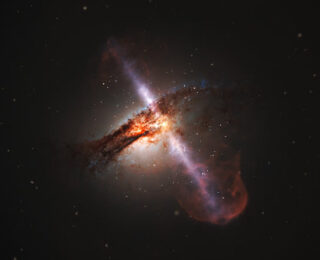
Feedback from AGN-driven Winds

Feedback from AGN-driven Winds

by Keir Birchall | Sep 23, 2020 | Daily Paper Summaries

Are the winds emanating from an AGN strong enough to shut-off star formation?
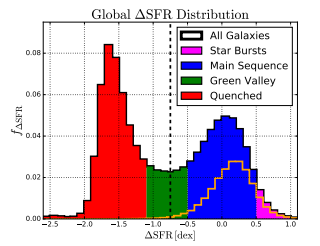
How to quench a galaxy

How to quench a galaxy

by Bryanne McDonough | Sep 19, 2020 | Daily Paper Summaries

How central and satellite galaxies transition from star forming to quiescent
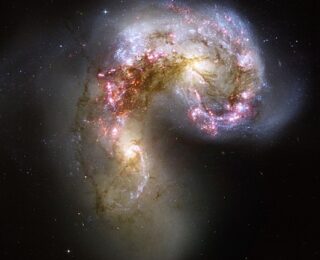
It Isn’t Gatorade Quenching This Galaxy

It Isn’t Gatorade Quenching This Galaxy

by Ashley Piccone | Aug 31, 2020 | Daily Paper Summaries

Post-starburst galaxies have stopped forming new stars, but astronomers are still trying to figure out why. Today’s paper looks at an unusual galaxy to see what might be quenching its star formation.
Investigating Black Hole Formation

Investigating Black Hole Formation

by Keir Birchall | Aug 15, 2020 | Daily Paper Summaries

In today’s bite, Keir reports on recent black hole mass measurements and what they say about how black holes may have formed in the early Universe
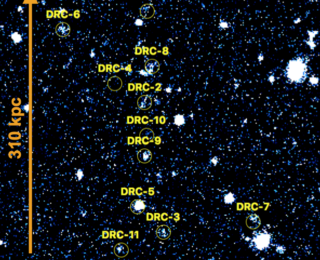
The starry, dusty origin of a galaxy cluster at z = 4!

The starry, dusty origin of a galaxy cluster at z = 4!

by Sunayana Bhargava | Aug 8, 2020 | Daily Paper Summaries

We shed some light on the inner workings of an ultra-red, massive cluster core spotted at high redshift!

« Older Entries
Next Entries »

Loading

Follow our socials

  • Bluesky
  • Facebook
  • Instagram
  • RSS Feed

More Posts About

AAS AGN astronomy astrophysics binary stars black holes cosmology dark matter dwarf galaxies exoplanets galaxies galaxy evolution gravitational waves habitability JWST Kepler Milky Way observations planetary science planet formation protoplanetary disks radio astronomy simulations solar system spectroscopy star formation stars stellar evolution supernovae theory

Posts by Category

  • Accessibility
  • Applications
  • Beyond
  • Book Reviews
  • Career Navigation
  • Classics
  • Climate Change
  • Course Assignments
  • Crossposts
  • Current Events
  • Daily Paper Summaries
  • Game Reviews
  • Guides
  • Historical Astronomy
  • Instrumentation
  • Interviews
  • Outreach
  • Personal Experiences
  • PRJ
  • Quick Notes
  • Satellites
  • Teaching
  • Undergraduate Research

More Astronomy

  • AAS
  • AAS Nova
  • astro-ph
  • AstroBetter
  • APOD

Read Astrobites in Other Languages

  • Astrobitos (Spanish)
  • Astropontos (Portuguese)
  • staryab (Farsi)

Listen to Astrobites

  • astro[sound]bites

Discover More Incredible Science

  • ScienceBites Network
  • RSS

© 2026 Astrobites | All Rights Reserved | Supported by AAS | Designed by Elegant Themes | Powered by WordPress