by Ben Cook | Nov 24, 2014 | Daily Paper Summaries
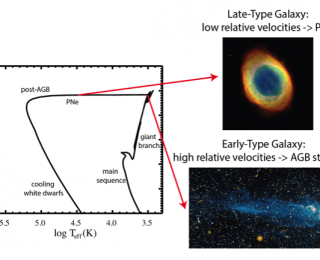
The authors of this paper pursued a mechanism which could possibly keep dead galaxies from forming new stars: mass ejected from AGB stars moving through the galaxy could heat the ambient gas.
by Andrew Emerick | Nov 12, 2014 | Daily Paper Summaries
Nature vs. nurture in the evolution of galaxies is not completely understood. Where a galaxy is found, its environment, can play an important role in determining the properties of that galaxy. This may not always be true, however.
by Anson Lam | Nov 3, 2014 | Daily Paper Summaries
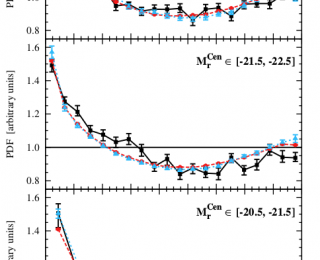
Satellite galaxies orbiting a host galaxy seem to display highly anisotropic angular distributions.
by Josh Fuchs | Sep 30, 2014 | Daily Paper Summaries
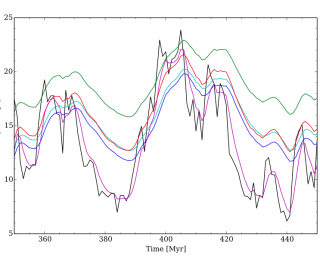
How well do the current methods of measuring the star formation rate of galaxies match then known star formation rate in simulations?
by Andrew Emerick | Sep 29, 2014 | Daily Paper Summaries
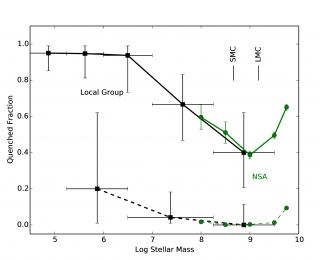
As galaxies evolve they eventually stop forming stars. There are a host of (sometimes violent) processes that can end star formation in galaxies. The authors examine how galaxy mass plays a role in stopping star formation for nearby galaxies.
by Josh Fuchs | Aug 5, 2014 | Daily Paper Summaries
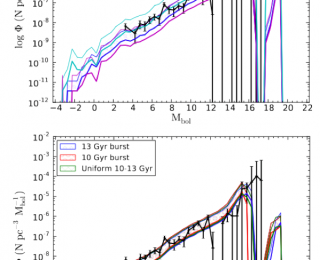
The number and luminosity distribution of white dwarfs stars can be used to help figure out the past history of the Galactic halo.
