The Milky Way’s Alien Disk and Quiet Past
The Milky Way grew by accreting many smaller galaxies. What did these doomed galaxies leave behind, and what could they say about the Milky Way’s early past?

The Milky Way grew by accreting many smaller galaxies. What did these doomed galaxies leave behind, and what could they say about the Milky Way’s early past?
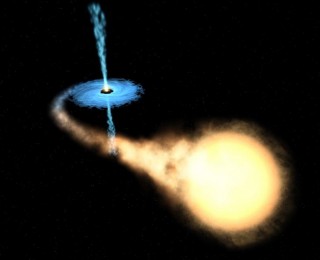
Reproducing the observed star formation history of galaxies in simulations is a fantastic test of our understanding of galaxy evolution. This is regulated strongly by “feedback”, for example, from supernova. Today’s astrobite discusses feedback from high mass X-ray binaries.
This paper reports the results of a cosmological simulation, and how smooth accretion and mergers affect three important aspects of galaxy formation: stellar mass growth, size increase, and morphology changes.
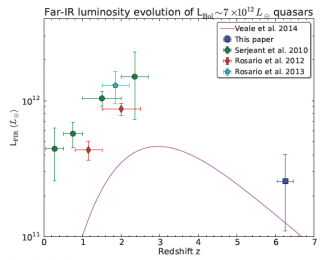
Black holes are found in most galaxies. Observations suggest that they correlate with various properties of their host galaxies. Does this correlation hold in the very early Universe, particularly in galaxies hosting supermassive black holes? The answer is ….
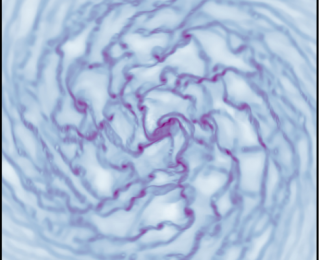
Feedback processes, like supernova and AGN, are essential for accurately simulation galaxy formation and evolution. Today’s astrobite examines the role of radiation feedback in galaxy formation in new “radiation hydrodynamics” simulations of galaxies.
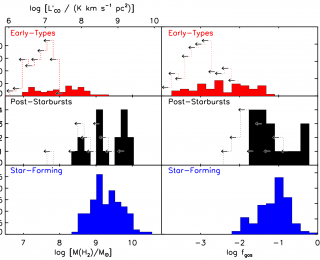
What makes galaxies stop forming stars? Is gas removed entirely, or simply heated to prevent stars from forming? Today’s paper uses observations of carbon monoxide in post-starburst galaxies to try to answer this question.