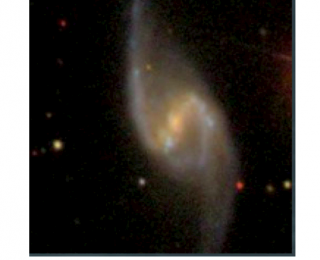
Bars: Star Mixologists
Can bars in a galaxy cause radial migrations of stars? The simulations say yes, but these observations suggest otherwise…

Can bars in a galaxy cause radial migrations of stars? The simulations say yes, but these observations suggest otherwise…
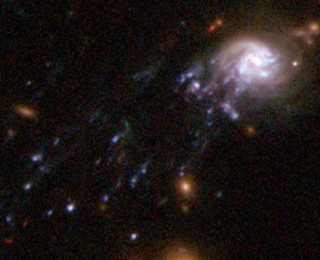
The evolution of galaxies from one type to another is not well understood. A galaxy’s environment plays a key role in its evolution. This is especially important for galaxies in galaxy clusters, which can strip them of their gas. The authors in today’s Astrobite explore six new, dramatic examples of galaxies being stripped of their gas.
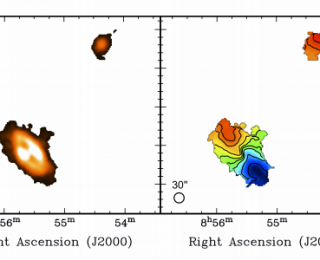
Once thought to be the main mechanism by which galaxies feed their star formation; the authors of this paper find that minor mergers cannot account for the observed star formation rates of galaxies.
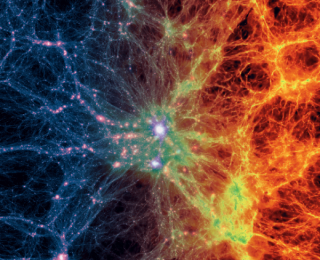
High resolution computational simulations are a valuable means by which Astronomers test our understanding of the Universe, and make predictions. The world of computational astrophysics broke new ground recently with the highest resolution cosmological simulation to date, Illustris, making for some spectacular science and some spectacular images.
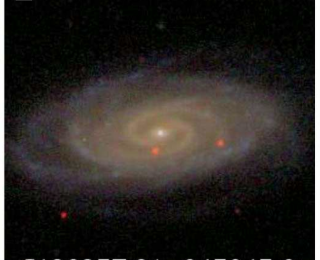
Mergers make bulges in galaxies and black holes generally live in bulges, so mergers must grow black holes – simple. That was until we found bulgeless galaxies containing growing black holes…
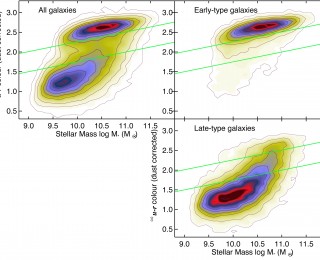
Large surveys of galaxies have revealed a bimodal color distribution: most galaxies tend to be red or blue, leaving a gap in the middle known as the green valley. The authors of this paper use morphologies provided by the Galaxy Zoo project to show that not all galaxies take the same quick path through the green valley.