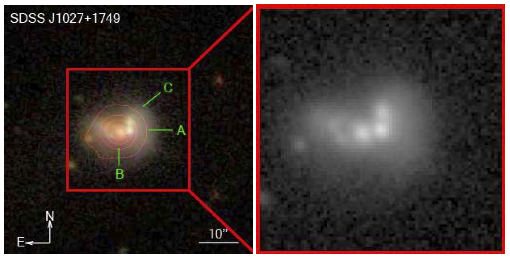
Investigating a “Cosmic Train Wreck”
In this paper, the authors describe a system of three supermassive black holes interacting on kpc scales, and use their result to estimate the frequency of such interactions.

In this paper, the authors describe a system of three supermassive black holes interacting on kpc scales, and use their result to estimate the frequency of such interactions.
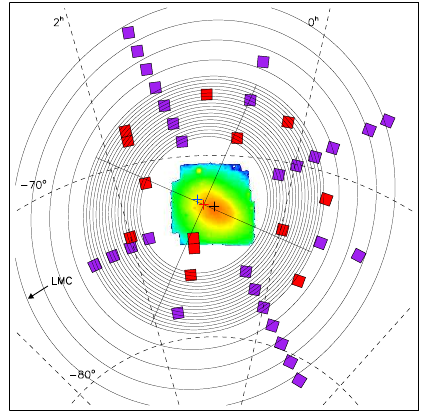
The SMC is one of the best studied galaxies in the sky, but there is still plenty to learn from the stars far from its center.
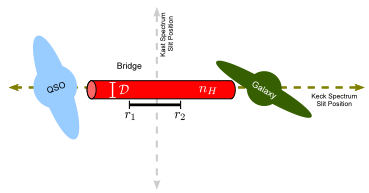
Mergers play an important role in any galaxy’s evolution. A coincidental observation of a quasar and companion galaxy linked by a photoionized gas bridge offers an exclusive look at the merger process at moderate redshift.
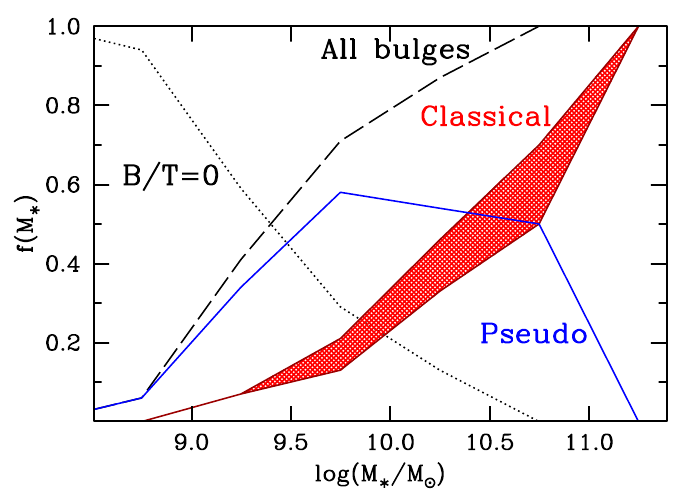
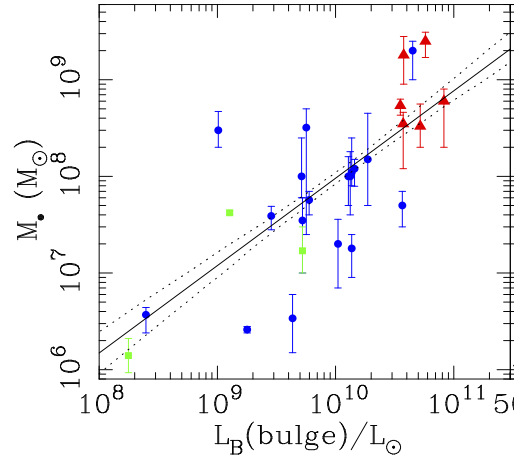
Bulges are a familar feature of spiral galaxies, but bulges seem to come in many shapes and sizes. Studying bulges can provide clues for the role of galaxy mergers in the history of the universe.
Using data from Herschel’s science demonstration field, the authors of this paper investigate the connection between star formation and activity of a galaxy’s central engine.
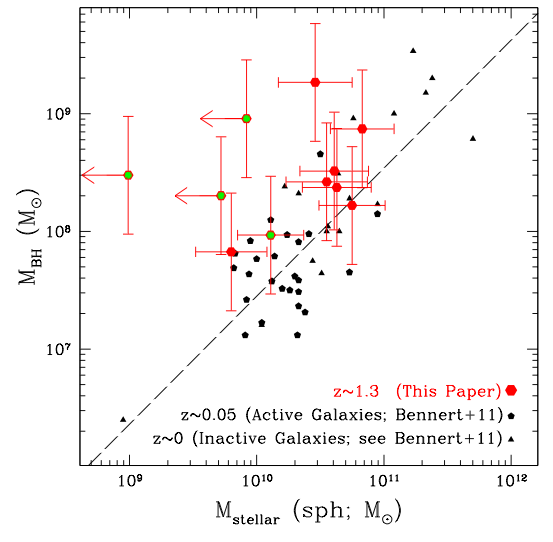
It is currently accepted that most, if not all, galaxies have a black hole smack dab in their center. These black holes are mind bogglingly massive – think millions to billions of suns! This paper focuses on whether the black holes grow before stars group on galactic scales to form the galaxy.