by Elisa Chisari | Sep 18, 2013 | Daily Paper Summaries
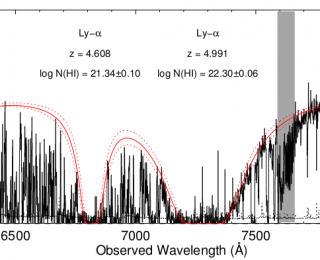
Gamma-ray bursts are the most energetic explosions in the Universe. Today, we discuss how to use one GRB as a beacon to study the properties of a high redshift galaxy, the composition of the gas in the intergalactic medium at high redshift and the formation of dust in the Universe.
by Susanna Kohler | Jul 19, 2013 | Daily Paper Summaries
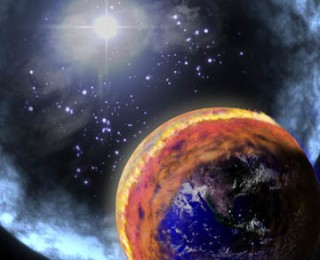
Looking for something fun to consider today? Try this on for size: what happens to life on Earth if a gamma-ray burst points at us from within our own galaxy?
by Elisa Chisari | Jun 26, 2013 | Daily Paper Summaries
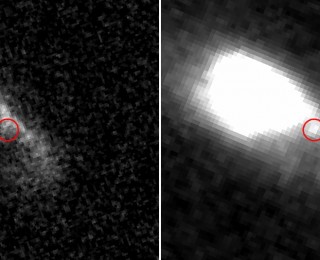
Short gamma-ray bursts, extremely energetic explosions in the Universe, might be caused by the merger of two compact objects. In the two papers we discuss today, the authors test this scenario by looking for light emitted still a few days after the explosion.
by Elizabeth Lovegrove | Mar 6, 2013 | Daily Paper Summaries
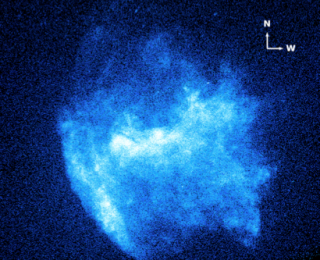
The authors discuss the possibility that the strangely-shaped supernova remnant W49B was created by a core-collapse supernova that formed strong bipolar jets instead of a spherical shockwave.
by Elizabeth Lovegrove | Dec 18, 2012 | Current Events, Guides
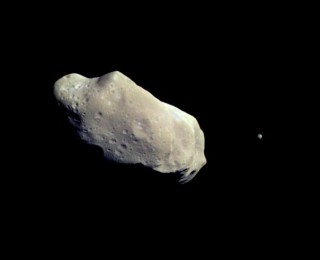
Let’s be serious for a moment: nothing dire is going to happen on December 21st. Rest easy. But in celebration I’ve decided to count down my top five favorite astronomical doomsday scenarios, ordered from most to least plausible.
by Allison Strom | Jul 29, 2012 | Daily Paper Summaries
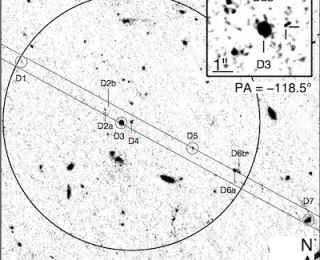
Using a combination of spectra from gamma-ray burst afterglows and photometry and spectroscopy of nearby objects, astronomers have found the galaxy counterpart to at least one high-redshift absorption system, bumping the total number of such galaxies from nine to ten.
