• RSS
  • Submit a Guest Post
  • Undergraduates: Submit your Research!
  • Suggest a Paper Topic!
astrobites
  • About
    • About Astrobites
    • Meet the Authors
    • Statement of Inclusivity
    • Copyright & Permissions
  • Latest Research
    • Daily Paper Summaries
    • Classics
    • Undergrad Research
    • Physical Review Coverage
  • Beyond astro-ph
    • Beyond astro-ph Library
    • Interviews
    • Career Navigation
    • Personal Experiences
    • Current Events
    • Teaching with Astrobites
  • Guides
    • EM Spectrum
    • Galaxies & AGNs
    • Spectroscopy and Spectral Lines
    • Adaptive Optics
    • Gravitational Waves
    • Transient Astronomy
    • Astrophysical Software
    • Graduate School
    • Writing a personal statement for grad apps
    • First Observing Run
    • …More Guides!
Select Page
Browsing the New LIGO Catalog

Browsing the New LIGO Catalog

by Brent Shapiro-Albert | Nov 2, 2020 | Daily Paper Summaries

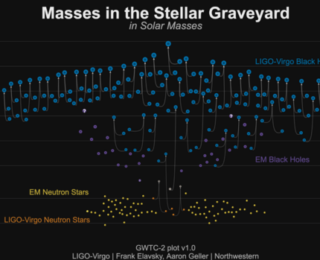
The newest catalog of compact object mergers detected by the LIGO-VIRGO Collaboration has arrived!
Supermassive Black Hole Binaries Two Ways

Supermassive Black Hole Binaries Two Ways

by Brent Shapiro-Albert | Oct 16, 2020 | Daily Paper Summaries

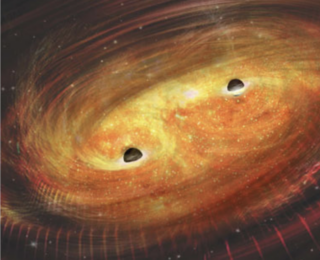
What do optical telescopes and neutron stars have in common? They can both be used to look for supermassive black hole binaries!

Mind the gap: A tale told by black holes

Mind the gap: A tale told by black holes

by Guest | Sep 2, 2020 | Daily Paper Summaries

How massive can stellar black holes be?
Lack of spacetime squiggles limit how much a pulsar can be squashed

Lack of spacetime squiggles limit how much a pulsar can be squashed

by Sumeet Kulkarni | Aug 20, 2020 | Daily Paper Summaries

Before Galileo saw it through a telescope, most people believed that the Moon was a perfect sphere. It is fascinating today that @LIGO-Virgo are able to (correctly) identify perfect spheres over a hundred times smaller than the Moon situated over 300 light years away.
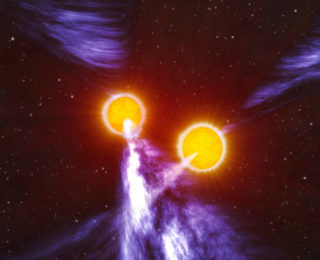
How Can Fast Radio Bursts be Produced in Binary Neutron Star Systems?

How Can Fast Radio Bursts be Produced in Binary Neutron Star Systems?

by Guest | Aug 19, 2020 | Course Assignments, Daily Paper Summaries

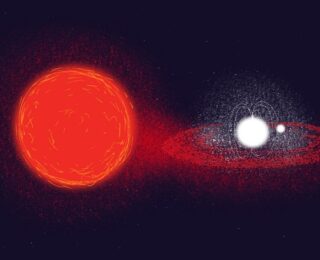
Fast radio bursts have unknown origins, but today’s guest post discusses one possibility: interacting BNS systems.

One small ripple for spacetime, one giant leap for cosmology

One small ripple for spacetime, one giant leap for cosmology

by Alex Pizzuto | Aug 13, 2020 | Daily Paper Summaries

Finding some real estate for the next gravitational wave detector might not be too hard. The problem? Getting it there.

« Older Entries
Next Entries »

Loading

Follow our socials

  • Bluesky
  • Facebook
  • Instagram
  • RSS Feed

More Posts About

AAS AGN astronomy astrophysics binary stars black holes cosmology dark matter dwarf galaxies exoplanets galaxies galaxy evolution gravitational waves habitability JWST Kepler Milky Way observations planetary science planet formation protoplanetary disks radio astronomy simulations solar system spectroscopy star formation stars stellar evolution supernovae theory

Posts by Category

  • Accessibility
  • Applications
  • Beyond
  • Book Reviews
  • Career Navigation
  • Classics
  • Climate Change
  • Course Assignments
  • Crossposts
  • Current Events
  • Daily Paper Summaries
  • Game Reviews
  • Guides
  • Historical Astronomy
  • Instrumentation
  • Interviews
  • Outreach
  • Personal Experiences
  • PRJ
  • Quick Notes
  • Satellites
  • Teaching
  • Undergraduate Research

More Astronomy

  • AAS
  • AAS Nova
  • astro-ph
  • AstroBetter
  • APOD

Read Astrobites in Other Languages

  • Astrobitos (Spanish)
  • Astropontos (Portuguese)
  • staryab (Farsi)

Listen to Astrobites

  • astro[sound]bites

Discover More Incredible Science

  • ScienceBites Network
  • RSS

© 2026 Astrobites | All Rights Reserved | Supported by AAS | Designed by Elegant Themes | Powered by WordPress