
Could Dark Matter be Black Holes?
Could LIGO have detected dark matter? Maybe dark matter is actually billions and billions and billions of black holes.

Could LIGO have detected dark matter? Maybe dark matter is actually billions and billions and billions of black holes.
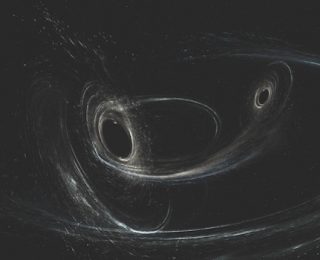
How frequent are black hole mergers in the centers of galaxies?
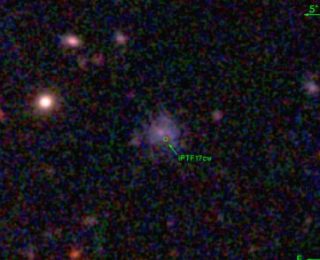
During the search for an elusive electromagnetic counterpart to the newest gravitational wave in town, GW170104, a very special supernova was uncovered. Here we discuss its classification and whether it is linked to the origin of GW170104 .
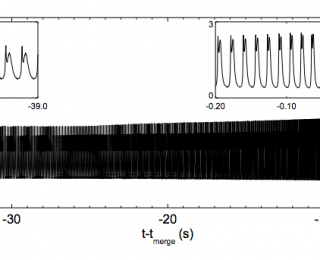
Today’s paper talks about the not-yet-observed electromagnetic counterparts to gravitational waves
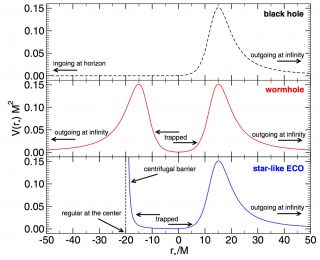
Echoes after the initial gravitational wave signal are the “smoking gun” signature of exotic compact objects (ECOs).
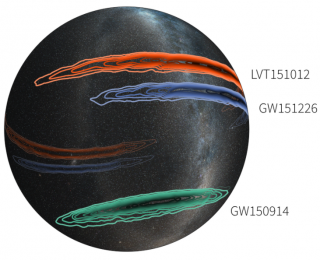
Detecting electromagnetic and gravitational signals from a single astrophysical event will be revolutionary, but how do we find the former when we don’t know exactly where the latter is?