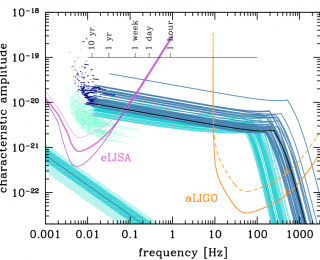
by Maria Charisi | Apr 4, 2017 | Daily Paper Summaries
If a low-frequency gravitational wave detector, like LISA, existed 5 years ago, we would have been able to predict that LIGO would detect a binary merger on September 14, 2015 at 09:50:45 plus or minus a few seconds.
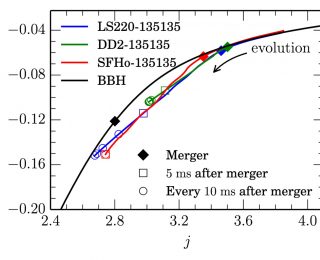
by Lisa Drummond | Mar 29, 2017 | Daily Paper Summaries
The first 10 ms after two neutron stars have merged is the period that produces the loudest gravitational waves in the entire history of the binary.
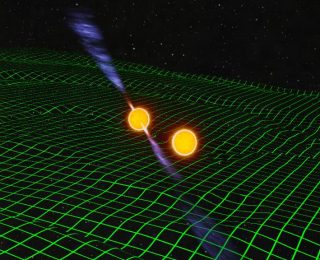
by Michael Zevin | Jan 31, 2017 | Daily Paper Summaries
Instead of sitting around and twiddling its thumbs when unused, your computer could be contributing to science! Today’s astrobite highlights the discovery of a rare system that was uncovered through the Einstein@Home project.
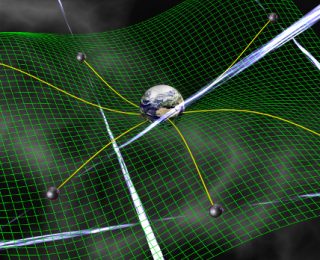
by Michael Zevin | Aug 10, 2016 | Classics, Daily Paper Summaries
Since gravitational waves are now on the tip of every astronomer’s tongue, today’s post looks back at a classic paper’s key result that is quintessential in the search for gravitational waves using pulsar timing arrays.
by Kelly Malone | Jun 9, 2016 | Daily Paper Summaries
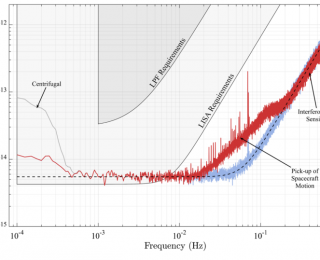
Today’s paper has exciting results from a proof-of-concept mission for a space-based gravitational wave observatory!
by Michael Zevin | May 21, 2016 | Daily Paper Summaries
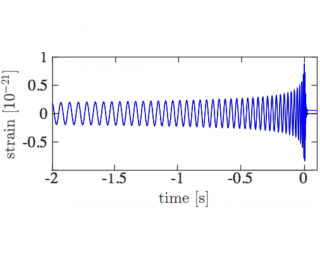
Now that gravitational waves have been directly detected, we can begin to use binary black hole mergers to probe strange consequences of strong-field general relativity. Today’s post examines the prospect of detecting an effect called gravitational-wave memory, and considers its potential for helping you get in shape for summer.
