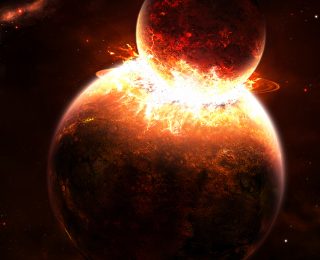
Driving planetary dynamos by giant impacts
Earlier than one billion years ago, Earth’s magnetic field had to be driven differently than today. But how? And what can we learn from this about magnetic fields on exoplanets?

Earlier than one billion years ago, Earth’s magnetic field had to be driven differently than today. But how? And what can we learn from this about magnetic fields on exoplanets?
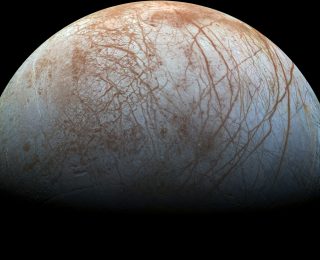
Water worlds – do they exist? Or is there an omnipotent self-regulation mechanism which makes terrestrial planets look like Earth?
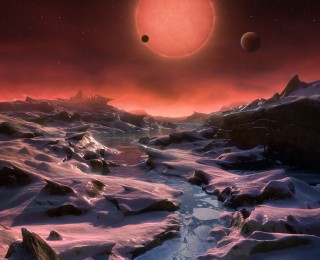
Three more potentially habitable planets that are also relatively nearby have been discovered! If they are really in their habitable zone, they should have water today, but only if they did not lose it all early on in their lifetimes. Could any of these planets have retained their water supply?
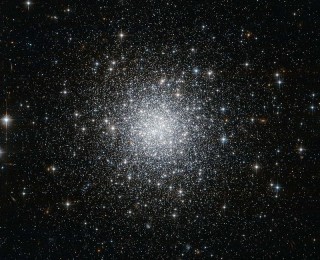
Could we find advanced civilizations in the globular clusters orbiting the Milky Way galaxy? The authors of today’s astrobite paper think we might…
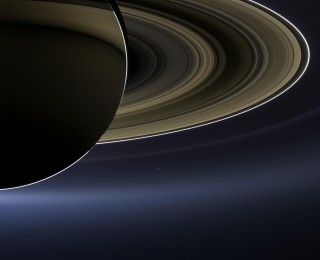
How can we find other pale blue dots? Today’s paper studies what could be the most time-effective way to search for Earth-like exoplanets, just by looking at their colors.
Planets can live very close to one another, but are planetary neighbors destructive to life, or might they help it get started in the first place?