by Caroline Morley | Jan 17, 2013 | Daily Paper Summaries
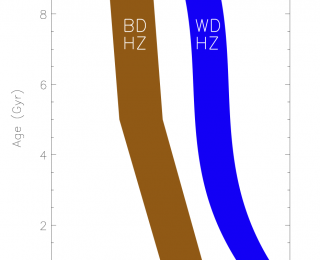
The holy grail for exoplanet science would be to find an inhabited planet. Not just habitable, but actually inhabited. But where are we most likely to find those planets? Only around Sun-like stars, or could life thrive around other types of stars? Could evolved stars like white dwarfs or neutron stars harbor life? Could brown dwarfs, the so-called failed stars, have inhabited planets?
by Courtney Dressing | Oct 26, 2012 | Daily Paper Summaries
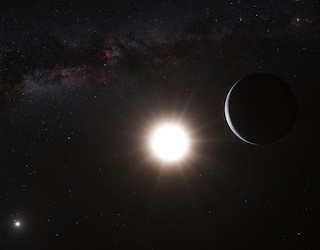
Astronomers recently announced the discovery of a short period Earth-mass planet in the Alpha Centauri system. Could Earth-mass planets exist in the habitable zones of binary stars?
by Lauren Weiss | Feb 28, 2012 | Current Events, Guides
If Kepler does not obtain additional financial support, it will “close its eyes forever.” – Natalie Batalha.
by Caroline Morley | Dec 7, 2011 | Daily Paper Summaries
Venus transits the Sun, from the frame of the Earth, about twice every century, separated by eight years. The last one happened in 2004, and another is happening in June 2012. Observing the transmission spectrum during the 2012 transit—and comparing it to measured transmission spectra of the Earth, taken during lunar eclipses—will tell us how hard it will be to distinguish two planets that look identical in mass and radius, but have extremely different atmospheric properties.
by Lauren Weiss | Nov 3, 2011 | Daily Paper Summaries
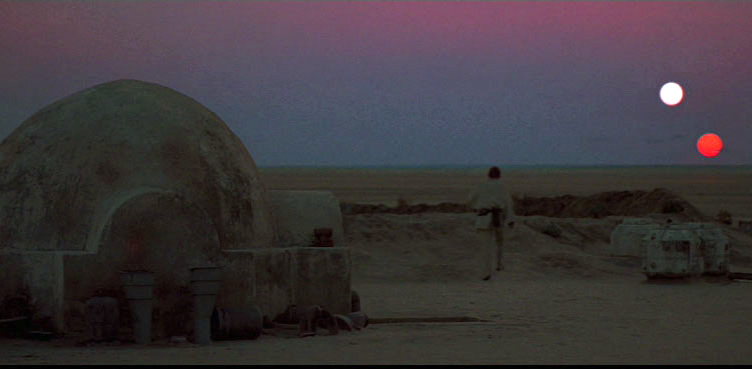
George Lucas dreamed of a planet with two suns. Now that Kepler scientists have found such a planet, the question arises: can it support life?

by Guest | Oct 13, 2011 | Personal Experiences
I’m a fourth year undergraduate from the University of Southampton, UK, studying for my masters at the Harvard-Smithsonian Centre for Astrophysics. With my summer reading completed, and a new exoplanet waiting to be discovered, I stepped off the plane into Boston Logan Int. this September and eagerly exchanged a drizzly English summer for a beautiful New English Autumn.
