
by Sukrit Ranjan | Jul 3, 2013 | Daily Paper Summaries
This paper reports that the M-dwarf star GJ667C is orbited by a system of six, maybe seven super-Earths, of which three are in the habitable zone. This is an extraordinarily closely packed system of planets, straight from science fiction!
by Joseph O'Rourke | Jun 25, 2013 | Daily Paper Summaries
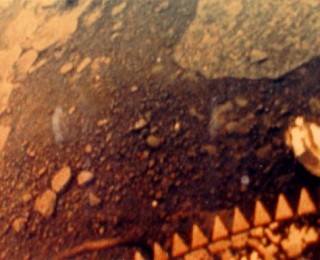
This paper considers the possibility that Earth could suffer a runaway or moist greenhouse effect, which probably turned Venus into a hellish wasteland long ago.

by Sukrit Ranjan | May 8, 2013 | Daily Paper Summaries
Caption: H. A. Sawyer loading plates into the Harvard 16” Metcalf Doublet telescope. Picture from http://hea-www.harvard.edu/DASCH/telescopes.php Paper Title: 100-year DASCH Light Curves of Kepler Planet-Candidate Host Stars Authors: S. Tang et al First Author’s Affiliation: Harvard-Smithsonian Center for Astrophysics, Cambridge, MA; Kavli Institute for Theoretical Physics, Santa Barbara, CA; California Institute of Technology, Pasadena, CA Journal: Publications of the Astronomical Society of the Pacific (Submitted) Introduction: the DASCH projectAstronomy has advanced in leaps and bounds over the last few hundred years. Perhaps the single greatest advance has been the switch from observing with our eyes to observing with cameras. Where once we inspected the heavens with our eyes and relied on sketches to record what we saw, now we attach imaging mechanisms directly to the telescope. Not only does this allow us to collect more photons, imaging mechanisms also give us the ability to store data for later analysis. A little more than a century ago, astronomers at Harvard made the switch to using photographic plates to image the heavens. Each plate, once analyzed, was cataloged, archived, and forgotten…until now.Researchers at Harvard recently recognized the promise of the data being held in these archives. Over a century’s worth of observations of the sky are recorded in these plates. By contrast, most objects observed as part of other projects have no more than a few decades worth of observations at best. This dataset offers us the remarkable opportunity to study how stars have evolved over almost a century. Who knows what long-term trends or cycles might be identified?To realize the potential of this dataset and answer questions like these, the...

by Nick Ballering | Apr 23, 2013 | Daily Paper Summaries
Detailed atmospheric models reveal that planets can be habitable much closer to their host star than previously thought, provided they have desert-like climates. This expanded definition of the habitable zone increases the number of planets that could support life by a factor of 2-3.
by Sukrit Ranjan | Mar 13, 2013 | Daily Paper Summaries
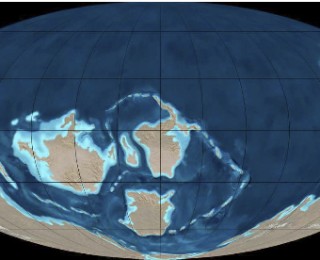
As we discover exoplanets in droves and the first hints of habitable worlds emerge, astronomers are starting to look to the next step: the search for life on those worlds.
by Erika Nesvold | Feb 7, 2013 | Daily Paper Summaries
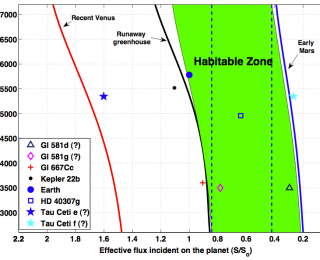
In our search for life on other planets, we begin by determining which exoplanets orbit in the habitable zone of their star. But where exactly is the habitable zone for a given star? The authors of this paper update a previous planetary climate model to predict where you should looking for your next extrasolar vacation home.
