
Strength in numbers: a smarter way to find habitable worlds
In today’s paper, we will see how Kepler-like large scale surveys on planet habitability is the smartest way to answer The Big Question.

In today’s paper, we will see how Kepler-like large scale surveys on planet habitability is the smartest way to answer The Big Question.
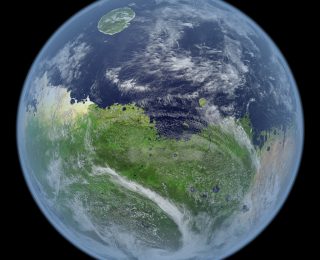
In today’s bite, we push Bayes’ theorem to the limits, in an attempt to make predictions about the prevalence of habitable planets covered in ocean.

Can volcanoes expand the region around the star in which life can survive?
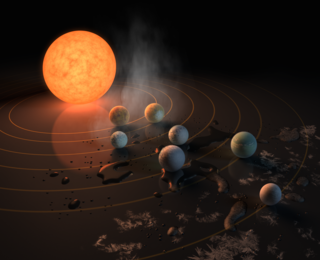
In this bite we dig into the details of the recent discovery of 7 habitable zone planets orbiting TRAPPIST-1.
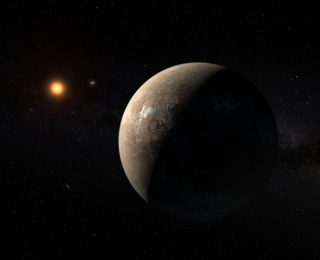
Say hello to your new neighbor. Proxima Centauri, the closest star to the Sun, has an Earth-mass planet in the habitable zone, but it wasn’t easy to find, and it’s in a bit of a dangerous place.

When stars move on to their final stages of life, the habitable zone around them moves outward, putting planets like Jupiter and Saturn into the habitable zone. Do these outer planets have enough time to develop life before the star dies?