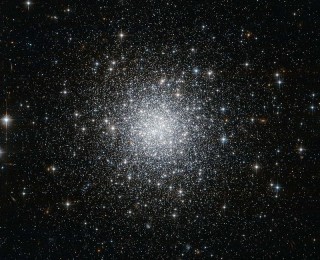
Globular Clusters as Cradles of Life and Advanced Civilizations
Could we find advanced civilizations in the globular clusters orbiting the Milky Way galaxy? The authors of today’s astrobite paper think we might…

Could we find advanced civilizations in the globular clusters orbiting the Milky Way galaxy? The authors of today’s astrobite paper think we might…

There are more moons than planets in our Solar System that harbor liquid water, and these moons may offer us the best chances of finding life off of Earth. Today’s paper takes the search for habitable moons a step further by investigating how telescopes of the near future might allow us to see and characterize these moons around exoplanets.
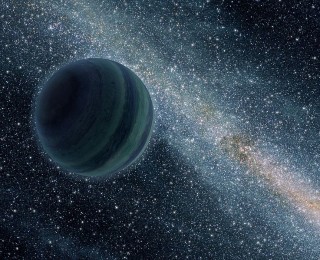
If parallel Universes exist, their fundamental laws of physics may be different to ours. How sensitive is the existence of life to these laws? Read on to find out.
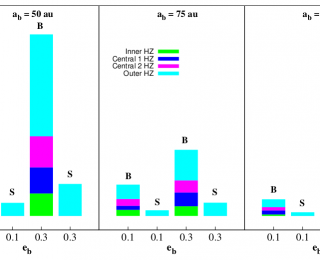
Planets in binary star systems can receive a sizable amount of water from asteroids getting perturbed out of their orbits
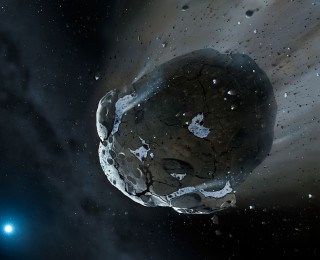
Earth’s oceans may have originated mainly from accreted impactors. But do planets in other systems experience the same water delivery mechanism? Or do they even get more water than our world? Find out why you would want to think about this and what the consequences might be.
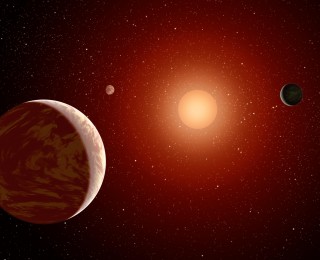
Could the properties of an M-dwarf that might make it inhospitable also give it transformative powers? Could the star’s gravity and violence strip away a planet’s thick atmosphere, or envelope, to reveal a habitable core?