by Caroline Morley | Feb 14, 2013 | Daily Paper Summaries
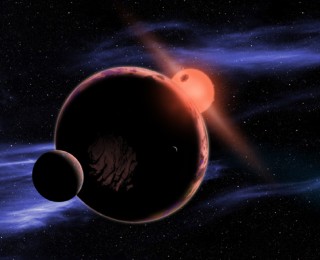
The census of planets for smaller stars—M dwarfs—is now basically complete. In this paper, Courtney Dressing and Dave Charbonneau use this M dwarf advantage to determine the occurrence rate of small planets around M dwarfs.
by Erika Nesvold | Feb 7, 2013 | Daily Paper Summaries
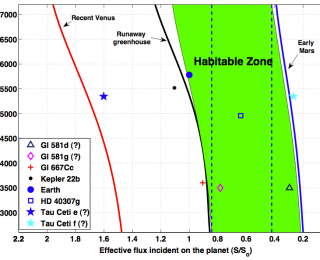
In our search for life on other planets, we begin by determining which exoplanets orbit in the habitable zone of their star. But where exactly is the habitable zone for a given star? The authors of this paper update a previous planetary climate model to predict where you should looking for your next extrasolar vacation home.
by Caroline Morley | Jan 17, 2013 | Daily Paper Summaries
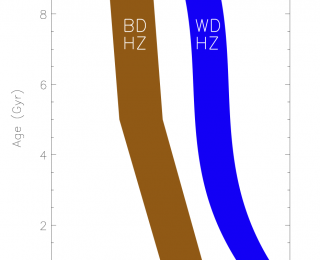
The holy grail for exoplanet science would be to find an inhabited planet. Not just habitable, but actually inhabited. But where are we most likely to find those planets? Only around Sun-like stars, or could life thrive around other types of stars? Could evolved stars like white dwarfs or neutron stars harbor life? Could brown dwarfs, the so-called failed stars, have inhabited planets?
by Lauren Weiss | Feb 29, 2012 | Daily Paper Summaries
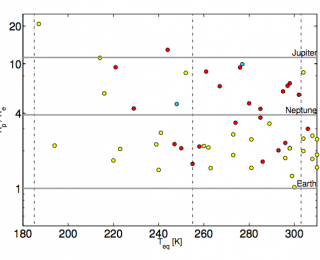
Of Kepler’s 2,321 planet candidates, many are in the “habitable zone.”
by Courtney Dressing | Dec 8, 2011 | Current Events
The First Kepler Science Conference is occurring this week at NASA Ames. Check out this summary of the conference to learn about the exciting results from the Kepler mission.
by Elisabeth Newton | Dec 6, 2011 | Current Events
Yesterday, NASA confirmed another new exoplanet from the Kepler mission, Kepler-22b. From some of the headlines, you’d think it was time to pack your bags. The discovery of Kepler-22b is undeniably exciting, but there’s a lot we don’t know about this planet.
