by Jaime Green | Feb 28, 2014 | Daily Paper Summaries
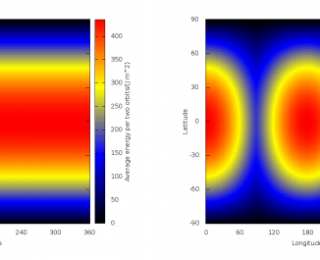
Planets orbiting close to type-M dwarf stars are in the habitable zone, but if their orbits are in a 3:2 spin resonance, do their long, strange days and nights have a chance of supporting photosynthetic life?
by Jaime Green | Feb 5, 2014 | Daily Paper Summaries
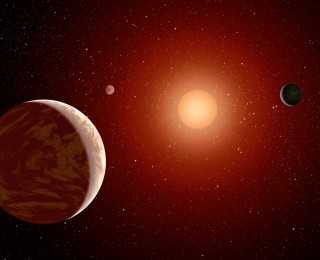
For planets too old for plate tectonics, a companion planet could drive tidal heating to keep conditions primed for life.
by Erika Nesvold | Jan 17, 2014 | Daily Paper Summaries
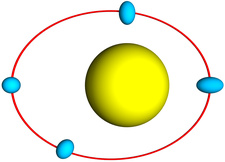
Today’s paper is too awesome to be contained in merely one astrobite, so we’ve split it into two parts. In Part 1, find out how you can keep warm even if you’re far outside your star’s habitable zone (if “you” are a planet or moon, that is). Tune in tomorrow for Part 2: Superhabitability and You!
by Sukrit Ranjan | Aug 13, 2013 | Daily Paper Summaries
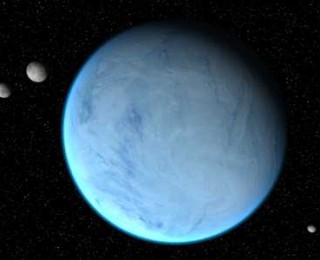
This article uses theoretical modeling to estimate the influence of ice and snow on the habitability of extrasolar planets. This work differentiates itself from past efforts by including the influence of the atmosphere, and by considering planets orbiting M-dwarfs in addition to Sun-like stars.
by Erika Nesvold | Jul 25, 2013 | Daily Paper Summaries
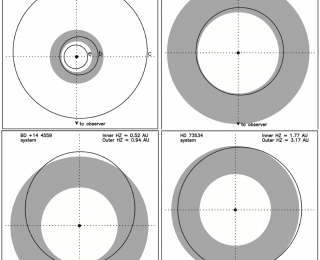
The search for exoplanets in their habitable zones continues. But exomoons could be habitable, too! This paper models hypothetical exomoons in four real systems to determine the habitability of moons around planets that don’t necessarily stay in the habitable zone.
by Nick Ballering | Apr 23, 2013 | Daily Paper Summaries
Detailed atmospheric models reveal that planets can be habitable much closer to their host star than previously thought, provided they have desert-like climates. This expanded definition of the habitable zone increases the number of planets that could support life by a factor of 2-3.
