
On the Habitability of the Kepler 16 System
George Lucas dreamed of a planet with two suns. Now that Kepler scientists have found such a planet, the question arises: can it support life?

George Lucas dreamed of a planet with two suns. Now that Kepler scientists have found such a planet, the question arises: can it support life?

I’m a fourth year undergraduate from the University of Southampton, UK, studying for my masters at the Harvard-Smithsonian Centre for Astrophysics. With my summer reading completed, and a new exoplanet waiting to be discovered, I stepped off the plane into Boston Logan Int. this September and eagerly exchanged a drizzly English summer for a beautiful New English Autumn.
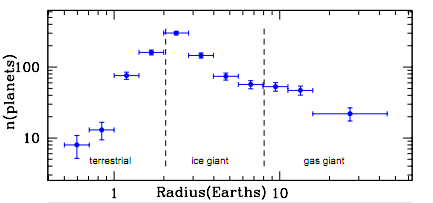
The answer to the above question, according to a new analysis of data from NASA’s Kepler mission, may be roughly one-third.
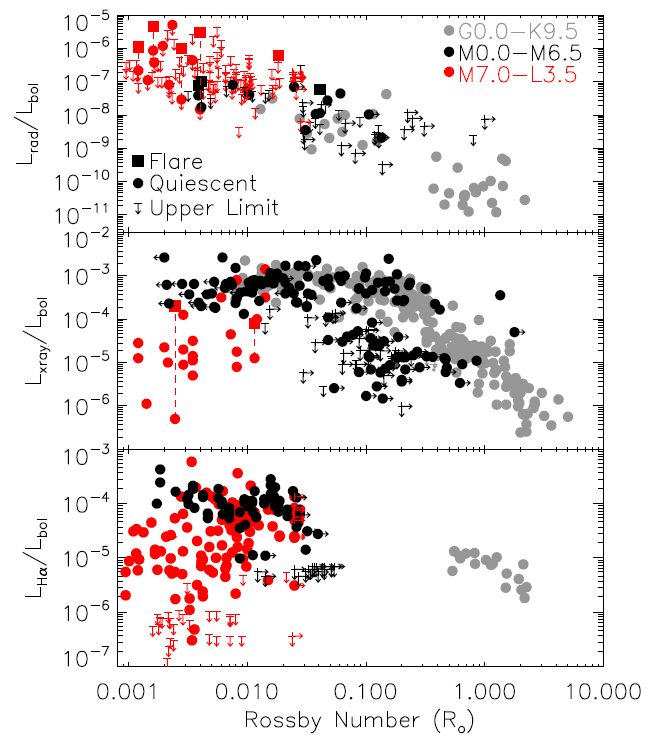
McLean et al. observe a new sample of late-M and L dwarfs with the Very large Array to search for a relation between rotation rate and radio activity for ultracool dwarfs.
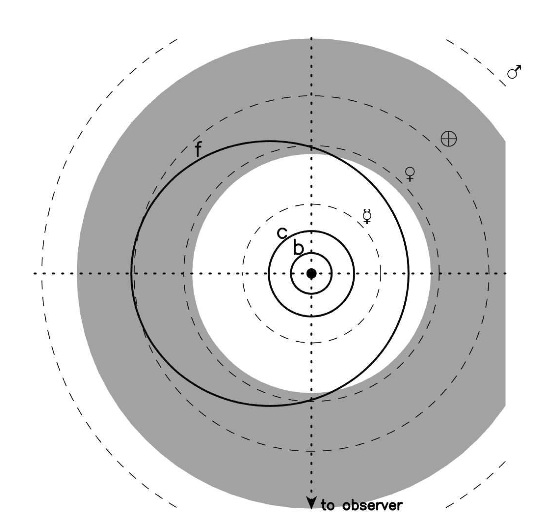
Improving stellar astrophysical measurements will help us to better characterize exoplanets. The interferometric observational techniques applied here allow scientists to precisely measure the stellar parameters (including star’s radius) of a nearby system with exoplanets, including a transiting super-Earth.
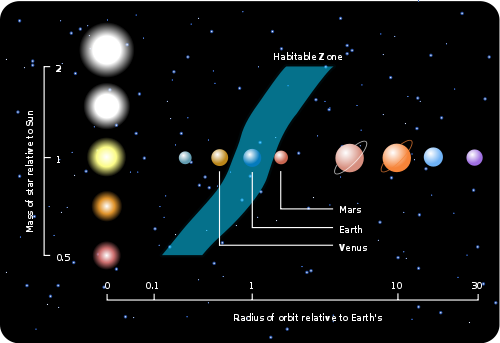
This eye-catching theory paper asks an elegant but simple question: when dark matter is gravitationaly captured by a planet, can the energy released when it annihalates provide enough heat to make the planet habitable?